IMAGINATION. INSPIRATION. COURAGE.
Rhea Almeida · In Her Own Words
Her Story
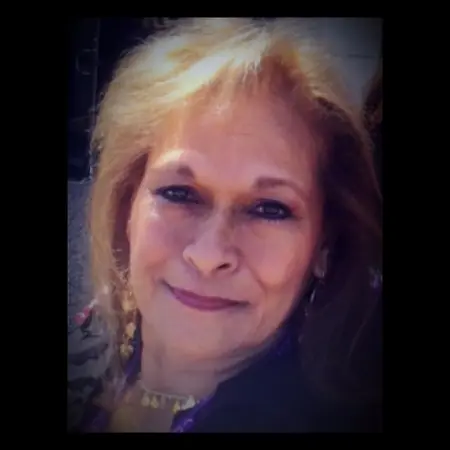
About Rhea
Rhea Almeida is a family therapist, educator, author, and the Founder and Executive Director of the Institute for Family Services, Inc. With nearly four decades of leadership and more than 30 years of clinical experience, she has dedicated her career to transforming the way mental health services are delivered. Holding a Master of Social Work from Columbia University, Rhea has become a nationally recognized advocate for approaches that move beyond traditional pathology-based models and instead emphasize healing through connection, community, and human resilience.
Throughout her career, Rhea has challenged conventional mental health frameworks by developing and advancing Liberation-Based Healing, a decolonial approach that centers individuals within their family, cultural, and social contexts rather than defining them through diagnoses. Her work focuses on identifying strengths, fostering critical consciousness, and building supportive communities that empower individuals and families to navigate life’s challenges. This innovative model has produced exceptional outcomes and has influenced clinicians, educators, and community leaders across the United States and beyond.
As a thought leader and scholar, Rhea is also the creator of the annual Liberation Based Healing Conference, a globally recognized gathering now entering its third decade. The conference brings together mental health professionals, academics, artists, educators, and activists to explore transformative approaches to healing, social justice, and collective liberation. Through her clinical practice, teaching, writing, and conference leadership, Rhea continues to inspire a new generation of practitioners committed to creating equitable, community-centered pathways to healing and social change.
Her Interview
Ten minutes with Rhea
01What do you attribute your success to?
I think a lot of different things contributed to my success, but probably the most important thing was that I grew up with a disability. Growing up with a disability really inclined me to focus and be thankful for all of the different people along my path that were really helpful towards me and brought a lot of grace into my life. I realized that I needed that community of helpers along my life to really get me to where I was, and so there's a value in that that I think a lot of times people don't pay much attention to. That experience shaped my understanding of the importance of community in healing and helped me develop the work I do today.
02What’s the best career advice you’ve ever received?
The best career advice I received was from one of my professors in my master's program. He would read my papers and kept telling me I should publish. At that point, publishing was not even on my horizon, not even in my brain. But I think he was very influential in really dropping that idea into me that my work was sufficiently interesting that I should consider taking it to the public. That encouragement to share my work more broadly really shaped the direction of my career.
03What advice would you give to young women entering your industry?
We do a lot of training with interns who come in from social work, Marriage and Family Therapy, and Counseling Psychology programs. My advice to them is to begin to interrogate what they come with from the academy, which is an over-focus on individuals and individual healing. I encourage them to begin to think about what it would mean if they connected people to their contexts and actually worked with people from more of a positive, celebratory place, rather than focusing on just the challenges and emphasizing their deficits. What we offer is not just a theoretical position - they can actually see us work in community and they can actually engage in it themselves, so it becomes real practice, not just theory.
04What are the biggest challenges or opportunities in your field right now?
I think the biggest challenges in our field right now are that the individual model still dominates. One of the biggest obstacles is how the academy has not really taken on the idea of healing in community. From psychiatry to social work to marriage and family therapy, the models are still very restricted to individual and sometimes family work, but they don't value community as much as they should, even though we know that communities actually serve to heal people in multiple ways. You have different programs all over the United States that are invested in community healing, but for the most part, they're driven by a very individualistic model. The system supports insurance companies that pay more for individual therapy and make group and family therapy a lesser reimbursement, which basically says there's more power in working with individuals rather than recognizing the research that shows individuals heal faster in community. It's completely counterintuitive - in hospitals, people are put into multiple groups every day because we know people build positive endorphins around other people and overcome depression faster, but then when they're discharged, they're sent back to individual therapy.
05What values are most important to you in your work and personal life?
The values that are really important to me are centered on the belief that all people have the ability to thrive, and not just survive. I think most human beings and most of us have the ability to thrive and be successful and have meaningful lives. It's really important to me to focus on people celebrating their life instead of creating paths where people are harmed consistently or not allowed to see their humanity grow and get fertilized. I also believe strongly in the power of community - this culture has evolved into places where people live very alone, isolated lives, and I think this country has lost a lot of its community engagement in many ways. Restoring that sense of community is really important, especially for young kids and youth.
Join Influential Women and start making an impact. Register now.