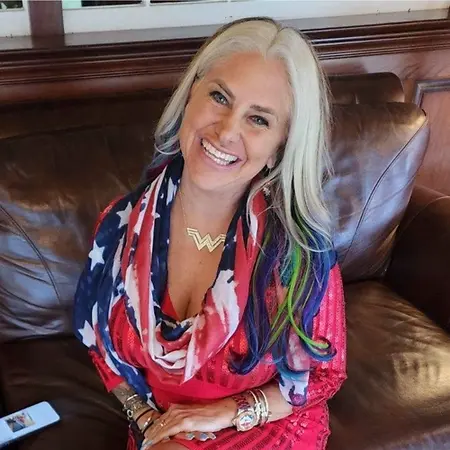
Her Story
About Robbin
Robbin Cappa is a healthcare executive, entrepreneur, and mental health advocate who has dedicated her career to expanding access to compassionate behavioral healthcare for underserved populations. As Chief Operating Officer and partner at Supportive Care, she oversees psychiatric and psychological services across approximately 300 nursing homes and assisted living communities spanning six states. Under her leadership, the organization has experienced remarkable growth, expanding from a small regional operation serving a handful of facilities to a multi-state provider delivering tens of thousands of patient visits each month. Known for her hands-on leadership style, Robbin remains deeply connected to the communities and residents her organization serves, treating every facility as an extension of her healthcare family.
Robbin's path into healthcare was shaped by both personal experiences and a lifelong passion for helping others. After studying Human Nutrition, Food, Exercise and Health Promotion at Virginia Tech, she pursued nursing and built a diverse career that included emergency care, fitness training, and healthcare operations. Drawn to mental health by a desire to support individuals often overlooked by traditional healthcare systems, she found her calling in behavioral health. Her own experiences overcoming addiction have given her a unique perspective and a deep sense of empathy, allowing her to connect authentically with patients, families, and professionals working in recovery and mental health services.
Throughout her career, Robbin has championed a philosophy centered on compassion, dignity, and meaningful human connection. Affectionately known by colleagues as the "Wonder Woman of Healthcare," she became a symbol of hope and positivity during the COVID-19 pandemic by bringing energy, encouragement, and laughter to residents and staff during challenging times. In addition to her leadership responsibilities, she is an active participant in healthcare organizations and industry associations, including LeadingAge and the Connecticut Association of Health Care Facilities. Whether mentoring teams, supporting long-term care communities, or advocating for mental health awareness, Robbin remains committed to her mission of changing lives one person at a time and ensuring every individual receives the care, respect, and support they deserve.
Her Interview
Ten minutes with Robbin
01What do you attribute your success to?
Honestly, the OCD and ADD that I have never been diagnosed with, but I feel like I have. I am so organized and so passionate that I can tell you in all 300 of my homes what day my staff is there, and I can tell you the administrators off the top of my head. It makes me super successful because the buildings are not just another number to me. They are a part of our community and corporation, and I treat them as such. I think the connections I have made are what I love most about my work. I always tell anyone that I meet, you have to get to know people. It is not business, and it is not a used car salesman. You make relationships, and I have made so, so, so many over the years. The business comes, and I think the friendships, relationships, and networking that I have done has changed me as a person. It has helped me grow personally and professionally, and it has just been an amazing road for me.
02What advice would you give to young women entering your industry?
I am full of one-liners, and my team knows me for it, too. I would say, you know, never give up, and for each setback is a stronger comeback. If you ever think about the times that you have failed, think about all the times that you have succeeded, and failure is not an option when you have the right people around you. If you increase your network, you become who you surround yourself with.
03What are the biggest challenges or opportunities in your field right now?
One of the biggest challenges in behavioral healthcare today is overcoming the stigma surrounding mental illness while addressing the lack of psychiatric and psychological oversight in many long-term care communities. At the same time, there is tremendous opportunity to expand behavioral health services into underserved facilities, leverage emerging technologies, and build stronger professional networks that ultimately improve patient care and outcomes.
04What values are most important to you in your work and personal life?
Family above all else. I truly believe in that statement, that your family is forever. First and foremost, my nieces, through and through. That is just my passion. I always want them to grow up like me, so I take time to spend any time that I have with them. I love sitting on their sidelines at sports. Anything to do with family. I take care of my dad, he lives with me, so I make sure that he is always taken care of. In my work, I believe in treating people with compassion and not judging them. So many people turn a blind eye to those with mental illness and judge them in a different way, but I want to be their angel. I want to come in and understand the disease that they have. Changing one life a day makes all the difference. I help people view mental health as a positive, and it is a disease. It was not a choice for anybody. I did not wake up and say, hey, I want to become a drug addict and have severe depression. Owning what I went through has made me stronger where I am today, and it helps people relate better to me. I have been where you are, and look at me now. This can be you.
Join Influential Women and start making an impact. Register now.