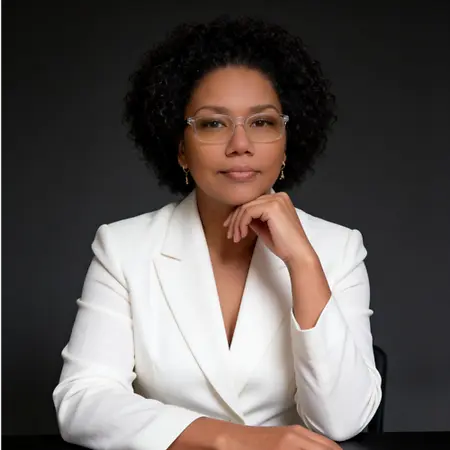
Her Story
About Rosa
Rosa María Bell, is a bilingual education leader, Afro-Latina educator, and advocate for culturally sustaining pedagogy and global biliteracy. Based in Ewa Beach, Hawaii, she serves as a World Language Department Chair and Spanish Language and Culture teacher at James Campbell High School within the Hawaii Department of Education. She is also the creator of The Crown Framework™, a model designed to elevate identity, leadership, and cultural responsiveness in language education. Throughout her career, Bell has built a strong foundation in educational leadership across multiple states, including Kentucky, Nevada, Washington, and Hawaii. Her experience spans early childhood, elementary, middle, and secondary education, along with leadership roles in military childcare programs and school-based instructional support. She has also served in key professional leadership positions, including President of the Hawaii Association of Language Teachers (HALT) and State Director of the Sociedad Honoraria Hispánica (SHH), while contributing to national and international conversations on multilingual education. Bell is widely recognized for her impact in advancing bilingual education and teacher development through initiatives such as Cafecito Cultural, a professional learning community that connects educators globally. Her work emphasizes equity, cultural identity, and student empowerment through language learning. She has received honors including recognition as Hawaii Teacher of the Year and a national volunteer service award, reflecting her commitment to service, leadership, and expanding opportunities for multilingual learners.
Her Interview
Ten minutes with Rosa
01What do you attribute your success to?
I attribute my success to my education and experience in educational leadership, as well as my work in building and leading programs. I rely on discipline and a clear sense of purpose to guide my decisions and actions. I also recognize the important role that the support and collaboration of colleagues and the broader community have played in my growth and achievements.
02What’s the best career advice you’ve ever received?
Do not wait for permission to build what your community needs.
Lead with purpose, not position. Titles may open doors, but service, authenticity, and impact are what truly sustain leadership.”
03What advice would you give to young women entering your industry?
I would advise young women entering this field to lead with purpose and a clear understanding of their goals. Educational leadership requires navigating complexity with integrity while recognizing that growth is an ongoing process and no one begins with all the answers. I value mentorship, reflection, and continuous learning, and I encourage emerging leaders to stay open, remain humble, and actively develop their practice while sharing their learning with others. It is also important to build a strong vision without isolating yourself, as leadership can feel lonely without collaboration and support. Seek out networks of people who challenge you while also believing in your potential, and remember that leadership is not just about managing systems, but about creating environments where people feel seen, valued, and capable of thriving. In education especially, people may forget specific policies or meetings, but they will always remember how leadership made them feel, so I encourage future leaders to be prepared, well-informed, and willing to lead even in uncertain conditions rather than waiting for perfection.
04What are the biggest challenges or opportunities in your field right now?
One of the biggest challenges in my field is the clear gap in local supports for bilingual learners and bilingual communities, which often limits equitable access to academic success. At the same time, there is a strong opportunity to influence district and superintendent-level policy to expand and strengthen support systems for multilingual students. Another important opportunity lies in intentionally integrating culture and Afro-descendant perspectives into language education to ensure learning is more inclusive, relevant, and representative. Additionally, leadership is often most clearly tested when funding becomes limited or fades, requiring leaders to be innovative, resourceful, and committed to sustaining meaningful programs despite constraints.
05What values are most important to you in your work and personal life?
My values are deeply rooted in humility, purpose, integrity, and the belief that education has the power to transform lives when people feel truly seen and valued. I believe leadership begins with listening, not simply to respond, but to understand people’s lived experiences, cultures, and aspirations.
I also value collaboration and community. One of my strongest convictions is that no educator, student, or leader should feel isolated in their journey. During one of the most challenging periods in education, I helped build a professional learning initiative centered on culture and diversity that evolved into a global community of educators committed to learning from one another and uplifting multilingual voices. That experience reinforced my belief that meaningful change happens through human connection and collective purpose.
Another core value in both my personal and professional life is representation. Through the creation of The Crown Framework™, I have worked to elevate Afro-Latino identity, bilingualism, and culturally responsive practices in ways that empower educators and students to recognize their identities as strengths rather than barriers.
Ultimately, I strive to lead with authenticity, compassion, and service, creating spaces where people feel respected, empowered, and inspired to grow while honoring who they are and where they come from.
Join Influential Women and start making an impact. Register now.