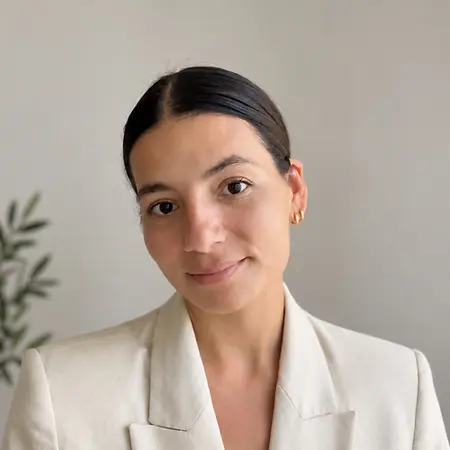
Her Story
About Rosana
Rosana Marino has spent five years working in mental health, a path shaped by her personal experience with grief and therapy after losing her mother as a young adult. After a career as a choreographer in Argentina and relocating to the United States, she began studying psychology with an interest of helping others navigate emotional challenges.
She earned an associate degree in psychology while working as a behavior technician, completed her bachelor’s degree in June 2024, and is currently pursuing a master’s degree in marriage and family therapy.
Today, she works as a substance use counselor at Downtown IMPACT, a program of the nonprofit Community Research Foundation (CRF), supporting individuals experiencing homelessness who live with schizophrenia and other mental health conditions. Previously, she worked as an education and employment specialist at Kickstart, a Clarvida program supporting young people experiencing first episode of psychosis.
Throughout her career, Marino has emphasized the importance of self-care for mental health professionals. She remains motivated by the belief that it is never too late to pursue one’s goals with patience and consistent effort.
Her Interview
Ten minutes with Rosana
01What do you attribute your success to?
I attribute my success to resilience and not giving up on myself. I am intrinsically motivated to keep learning and deepen my understanding.
02What’s the best career advice you’ve ever received?
One of my best friends’ moms once told me that it’s never too late to pursue what you want and that you can achieve what you set your mind to. I’ve carried that advice with me throughout my career. It reminds me to believe in myself and keep going, knowing that reaching my goals takes time, patience, and effort.
03What advice would you give to young women entering your industry?
Remember to take care of themselves as well. In this career we tend to give a lot, mentally and also emotionally. Holding space for so many people can feel heavy at times, and our own needs deserve attention and compassion as well. Caring for yourself is part of being able to care for others.
04What are the biggest challenges or opportunities in your field right now?
I think one of the biggest challenges is making consistent mental health care accessible, especially for people who are also facing homelessness or substance use concerns. It’s difficult to focus on recovery when basic needs like housing and safety are unmet. I see opportunities in early intervention and community-based care that meets people where they are. Connecting treatment with practical support can help us care for the whole person and build trust over time.
05What values are most important to you in your work and personal life?
I value freedom, integrity, and curiosity in both my work and personal life. I try to be true to myself, act honestly and in line with my values, and stay open to learning. In my work, that also means respecting each person’s autonomy, listening with an open mind, and supporting my clients goals.
Join Influential Women and start making an impact. Register now.