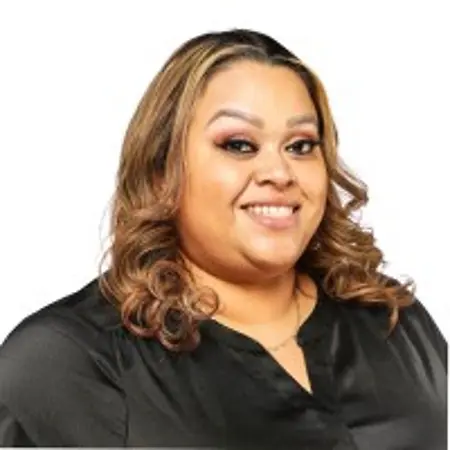
Her Story
About Rosana
Rosana Solis-Garcia is a Community Health Worker and project management professional originally from California, raised in a Hispanic household where both parents migrated to the United States without speaking English. From a young age, she became the family’s interpreter, helping translate documents and navigate essential systems—an early experience that shaped her lifelong commitment to advocacy and education. Throughout her career in finance, collections, and legal-adjacent roles, she consistently found herself in a teaching and support role, ensuring individuals understood financial documents, loan terms, interest rates, and the implications of their decisions.
Her formal transition into community health work began during the COVID-19 pandemic, when she served as a bilingual contact tracer. In that role, she supported individuals who tested positive, provided guidance on isolation and protective measures, and connected families with critical resources such as food, water, masks, and workplace documentation. As vaccine efforts expanded, she led targeted outreach within Hispanic and underserved communities, helping organize large-scale events that reached hundreds of individuals. She has since continued her work with the University of Arkansas for Medical Sciences (UAMS), contributing to diabetes education programs, community-based research initiatives, and the training and mentorship of Community Health Workers across clinics, schools, pharmacies, food banks, and libraries.
For nearly four years, Rosana has been deeply engaged in advancing the Community Health Worker (CHW) field at both the state and national levels. She has participated in a Families USA fellowship and serves on an advisory committee with Partners In Health, where CHWs across the country collaborate to strengthen policy and sustainability for the profession. Her work focuses on building a lasting infrastructure for CHWs and advocating for reimbursement pathways through Medicaid and Medicare so that community-based health support can be sustained and expanded. Through her leadership, training efforts, and advocacy, she remains committed to ensuring communities have trusted, accessible support systems wherever people live, work, and gather.
Her Interview
Ten minutes with Rosana
01What do you attribute your success to?
I attribute my success to my upbringing and the experiences that shaped me from a young age. Growing up with Hispanic parents who didn't speak English, I found myself interpreting documents and translating for them starting at around 10 years old. I didn't realize it at the time, but I was already doing community health work - I'm still my parents' personal assistant to this day. Throughout every role I've had, whether in finance, collections, or legal work, I always found myself going back to educating people and making sure they understood what they were getting into. I would explain documentation, interest rates, loan terms, and how credit worked because people would just focus on the monthly payment without thinking about the bigger picture. That passion for helping people understand and navigate systems has been the thread through my entire career. When COVID hit and I became a contact tracer, it felt like everything came together - my bilingual skills, my drive to educate, and my connection to the community. Now, working with CHWs and being part of advisory committees even outside my paid hours, I do this work because I'm passionate about it. I have a very supportive boss who checks in on me and gives me flexibility to work from home when needed, which helps me stay organized and focused. I use my Outlook calendar religiously, block off time for mental health days, and take time off when needed. It's a lot of long hours and juggling multiple hats, but having that dedicated space and support system makes it possible.
02What are the biggest challenges or opportunities in your field right now?
The biggest challenge and opportunity in my field right now is sustainability of CHW work and getting it reimbursable through insurance. The CHW Access Act went through as a law last year in early February, and our association is currently working with the Department of Health on how CHW work can be reimbursable. Right now it's very easy for them to reimburse within a clinic setting working with a provider, but my ultimate goal is to get that type of work sustained through Medicaid and Medicare. Once those entities adopt it, then bigger companies like Blue Cross Blue Shield and UnitedHealthcare will basically adopt as well, and we'll see CHW work continue to be so much bigger and everywhere. This work isn't just for low-income people - we work with cancer patients who are insured and had good jobs, but life happened and they don't know how to navigate resources, file claims to get specialists, or handle FMLA when they've lost work. Everybody needs this type of help. Another challenge is funding - unfortunately we've lost funding and had to lose some people, so we're working with what we have. That means longer hours and wearing multiple hats. But the opportunity is huge because we're training CHWs not just in community-based programs but in pharmacies, food banks, libraries, schools - just anywhere people are congregating and asking for help. There's also a big push around maternal health right now since Arkansas unfortunately has a high mortality rate, and our current governor did put some funding into that.
Join Influential Women and start making an impact. Register now.