Her Story
About Rose
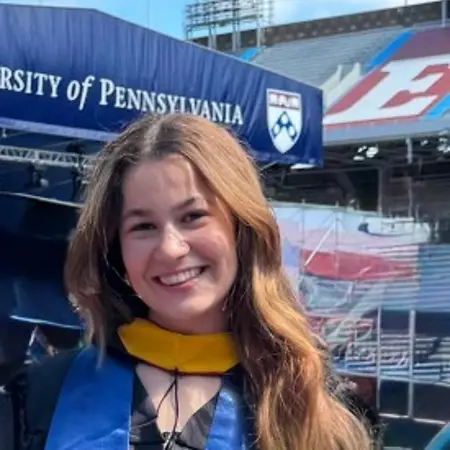
Rose Barragan is an Applied AI Consultant and AI Business Strategy Analyst specializing in responsible AI, technology policy, and data-driven decision-making. With over five years of global experience, she translates complex data into actionable insights that guide strategic outcomes across industries including retail, education, government, and telecommunications. She holds a Master of Science in Data Analytics and Policy from the University of Pennsylvania and is recognized for her ability to bridge technical innovation with ethical and business considerations.
Throughout her career, Barragan has advised C-suite executives and senior leaders on designing and implementing AI strategies that prioritize transparency, fairness, and measurable impact. Her work includes developing AI governance frameworks, leading enterprise-level ethical AI initiatives, and creating tools to assess organizational readiness for emerging regulations such as the EU AI Act. She has contributed to international thought leadership through collaborations, conference speaking engagements, and cross-sector partnerships, helping organizations align artificial intelligence adoption with long-term value and accountability.
In addition to her consulting work, Barragan is actively engaged in academia and global development. She serves as an Associate Professor at the United Nations System Staff College, where she teaches predictive analytics and generative AI to professionals across UN agencies. Her work as a researcher and educator focuses on advancing data literacy, equitable AI systems, and human-centered design. As a Fulbright Scholar and advocate for responsible innovation, she is committed to shaping the future of AI in a way that promotes social good, ethical governance, and inclusive technological progress.
Her Interview
Ten minutes with Rose
01What do you attribute your success to?
I attribute my success to two main things. First, don't accept a no for an answer. Everything you do, people will tell you no along the way so many times, and that's the truth. You have to be resilient enough to not accept that as a final answer, but always think outside the box and find the gaps. You have to be the one finding the gaps and working around those gaps, coming back to those conversations from a completely different lens that gets you from a no to a maybe, and keep pushing that maybe into getting a yes. That's exactly what took me to be successful in everything - resiliency, being constant, and definitely persistence, regardless of how many no's you got. Second is having a winner's mindset. Always think of yourself as winning, always think of yourself as achieving things, and visualize yourself and how you're going to do that. Mindset is everything. How the brain thinks of yourself and how you talk to yourself really conditions how your work and your life is going to turn out to be. For me, the idea or concept of having a winner's mindset is a mantra to me.
02What’s the best career advice you’ve ever received?
Never compare yourself with anybody. Everybody has their own path. Everybody has their own journey. By comparing yourself to other people, it's not going to do you any favor, so focus on yourself. Focus on your growth. Focus on who you were before and how far you're getting. Never compare yourself, just focus on your own journey. When you set the goals for yourself, focus on that journey. You have to be the one taking the reins of your life and your professional life. That's something that right now really resonates with me at the moment.
03What advice would you give to young women entering your industry?
You will come into fields where you might feel like a fish out of the water or have this fear that you don't belong there. In reality, you do belong there, because everything you have done took you to the moment you are in and you're supposed to be there. You're going to be part of spaces in which you will face moments where you are questioning yourself, questioning your value, hearing the no's, thinking maybe they're right, maybe this is not the right angle. It will somehow put you in a loser's mindset. Don't think for a second that's the case. Trace back everything you have done so far, how resilient you are, how you had to push for every single thing you get in your life. Remember that strength has never come from outside, but from within, so keep pushing. Keep pushing until you get where you know you should be.
04What are the biggest challenges or opportunities in your field right now?
One of the biggest challenges is keeping up with all the innovations and advancements in AI. It's advancing so quickly that what we focus on now is completely different from just a few years ago. Five or three years ago, we were talking about artificial intelligence solutions that were more data-oriented, and now we're talking about hyper-performance automation with AI agents, and this happened in a span of three or less years. How we are keeping up with AI is definitely a challenge, because that also implies how we speak of AI, how we think about it, how it's becoming part of our lives, and how we make sure that the artificial intelligence is ethical and will preserve or protect our privacy and dignity. I'm always hearing about layoffs and how people are being laid off because there's new AI automations happening in the workplace. I love the spirit of never laying people off, but really retraining people, because at the end of the day, technology has historically improved. We came from the caverns, then agriculture, then mass production, and now we're here. It's all about how we're making technology better, but we can never forget the human aspect. You're training better models, but you need to make sure that your humans are retrained as well to keep up with everything, and that requires a different type of leadership and mindset. Another challenge is how to strike a good balance between authenticity and superficiality of artificial intelligence, keeping your agency, your humanity, keeping your traditional activities and the world outside technology, but also making sure that by doing that you're not being left behind.
05What values are most important to you in your work and personal life?
Being kind is the first value and top of the list for me. Being humble is also essential - never think of yourself better than anybody else. Persistence is crucial. When you're walking down or creating a path for yourself, resilience and persistence are two values that need to be intrinsic within yourself. For my personal values, it's definitely God and family. I believe that I will not be here without the support of my family, so for me, family values, being rooted in family, knowing where you're coming from, it's humbling. Right now you might be successful, but you should never forget who helped you get here, and in my case, it's always been my family. Personally, I always think that everything happens for a reason. In the moment, you might not understand the process, but in hindsight and with perspective, I always thought of everything happens for a reason, and every single step of my way has led me to the next one, and that's part of God's plan.
Join Influential Women and start making an impact. Register now.