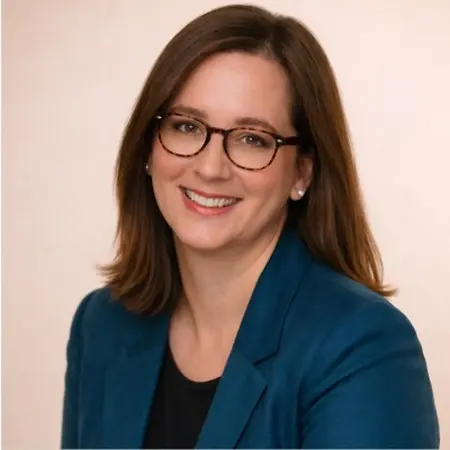
Her Story
About Sabrina
My career journey has been quite a winding path. I started in theater arts doing props, then moved into higher education administration working in medical schools and professional settings. I did an internship in mental health counseling where I discovered I enjoyed helping people change, but the compassion fatigue became too heavy for me. Someone at work suggested I go into IO Psychology so I could help organizations change instead, which wouldn't be as emotionally draining. I took that route, earned my PhD in business psychology, and landed my first consulting job after school in Workday implementations. I found that I really like performance reviews and PIPs - I know it's weird, but I genuinely enjoy developing and designing those systems. I've been in consulting for about 8 or 9 years now. My main expertise is in Workday talent and performance, learning, and PECON employee voice. I focus on designing these systems, explaining the concepts to clients, and training them on how to use the system to the best of its capabilities. There's also a very strong mentorship component to what I do - I'm currently mentoring 3 different people just because they want to learn about Workday. I love bringing them in, walking through it, talking through it, and getting them the experience they need to actually help clients in the future. I consider myself a bit of a unicorn in my field because of all the certifications I have. There are probably only about 10 people in the entire world who are PECON certified, so there aren't that many of us. I also ran an IO psychology department for about 11 years. I'm a Workday Kickstarter, which means I help facilitate conversations and networking events with different clients. They told me I've done the most Kickstarting events they've ever seen any Kickstarter do, and I got an expert badge for it. They say they can always count on me - even if it's not my area, they'll throw me into payroll and I'll come help.
Her Interview
Ten minutes with Sabrina
01What do you attribute your success to?
I attribute my success to having the ability to reflect after challenging times. When you're going through difficult times, sometimes you may not see how much you've overcome or how much you were able to persevere or just ask for help. But once you're past it and you can be like, yeah, this is what I did right, that's when the learning happens. I think just having that ability to reflect after challenging times and even getting that other person's perception about what had happened - like, hey, this is how I saw it, would you have seen it any other way - just to kind of learn from that experience, I think that was a big thing for me.
02What’s the best career advice you’ve ever received?
The best career advice I ever received was that perception is their reality. I was told this as I was getting used to consulting, and it gave me a mindset change. If there's a reason somebody's reacting the way that they are, it's because they see something in a certain way, and that becomes their reality. If I perceive something a certain way, it becomes my reality, and I need to get past my own perception and see other people's perceptions to really get to the root cause and get through any blockers. Resistance is not fun for anybody, and I'd rather go the route of understanding what's going on and understanding your perception to get there.
03What advice would you give to young women entering your industry?
I would say that in Workday consulting specifically, imposter syndrome is so normal until you get through a couple projects, and I don't think people talk about it enough. There's all this push to know what you're doing and present to clients in certain ways, but some younger consultants just have never done that before. They push them to a point where they just feel alone and abandoned, and then they get into the imposter syndrome. For me, I'd rather have the capabilities for people to mentor, to shadow, to kind of grow that line, instead of just throwing them into the fire, into the wolves. I think that's one of the big issues with younger consultants - not all firms have that capability or that financial ability to allow for that mentorship and shadowing.
04What are the biggest challenges or opportunities in your field right now?
I call myself a bit of a unicorn based on all the certifications that I have, because there's probably only about 10 people that are PECON certified in the entire world. For me, we've got the challenge of too many projects and not enough people, so burnout is a real thing. The other big challenge is being able to navigate the AI concept. AI is great, and I'm very thankful for it, but you still have to have that human aspect to it. You still have to take what you can get from AI and think about how it affects people and how it's going to be reacted to. You have to look at it with that humanistic point of view. There's such a push for AI that the human portion kind of gets forgotten a bit. For me, it's about making sure we can reinforce that with people and still have them understand and utilize AI, but also realize that it's not 100% correct and you're affecting people's lives. You still have to have that human perspective.
05What values are most important to you in your work and personal life?
Empathy is a big, big one for me. I've beat cancer twice myself, even while working, and I found I did the best when I had people that were empathetic or compassionate, and that actually sat, listened and cared about me as a human being, not as a number. They didn't just get on me about being behind on something - they looked at me as a person. Hope is also a big one for me. It's multifaceted - my daughter's name is Hope, and she really helps me have hope for the future. She was our last hope for a second child, so that means a lot. I realized it's really hard to get through life if you don't have hope. If someone crushes your hope, your motivation goes completely down and you crash and burn. Just having that little bit of hope, even if it's tiny, helps consistently. And then just humanistic as a whole - we are humans. Anybody that I mentor or work with, I ask how are you as a person, and they're like, you really want to know how I am as a person? And I'm like, yeah. It's not all about work. We work remotely, but I still want to care about you as a person and hear about anything fun you're doing.
Join Influential Women and start making an impact. Register now.