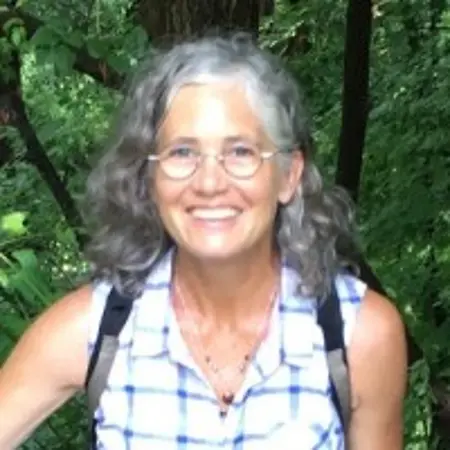
Her Story
About Sally
I came to education through a winding path that started with my passion for the arts and child development. As a full-time mom raising my son, I discovered I had a real gift for working with kids. I created a theater project using my performing arts background at O'Hanlon Arts, then became an assistant at a Montessori-inspired independent school where I quickly became indispensable, moving from part-time to full-time. That experience inspired me to pursue formal training as an instruction specialist for children with mild-moderate disabilities through an accelerated program at the University of San Francisco. I worked across three California school districts over 20 years - West Contra Costa, Mill Valley, and Petaluma - alternating between public school work and private practice because special education in public schools is incredibly demanding, like the Marines. My expertise lies in connecting to individual children and providing systematic, explicit reading instruction, particularly for students with dyslexia. I've had tremendous success getting kids who couldn't decode to start reading and helping students write their first sentences when other teachers had no luck. I made significant impacts in all three districts by updating special education programs and providing comprehensive literacy assessments. The work was thrilling, especially in West Contra Costa where students faced real hardship and poverty. Now retired at 65, I spend my mornings writing novels and pursuing my other passions of sailing and singing, though I remain open to consulting work with principals or mentoring new special education teachers.
Her Interview
Ten minutes with Sally
01What are the biggest challenges or opportunities in your field right now?
The biggest challenges I faced in special education were the tensions between general education teachers and specialists around differentiation. General education teachers are exhausted and burned out, often working with 30 kids, and they haven't been properly supported or educated on how to differentiate instruction. Everything I was trained to do to support students with learning differences felt like a kerfuffle for them because they're trying to get everybody through with the same curriculum. It was hard being the lone wolf as a learning specialist, having to have expertise across all grades from kindergarten to sixth, and being mandated to provide not just reading support but math and writing support too. The behavior challenges were intense, especially with students on multiple medications whose behaviors were very disturbing. I told one principal I wasn't trained as a psychiatric nurse and couldn't support a student without neglecting others in the room. The fundamental issue is we live in a capitalist society where teachers are overworked and can't embody the mindfulness and social-emotional practices they're being trained in. Teachers need dedicated time and proper compensation. The system is too factory-oriented rather than human-centered, and there's this expectation that schools should raise kids because parents are working so hard to earn money. But that doesn't work at all - parents need to be parents, and there needs to be good boundaries and collaboration.
Join Influential Women and start making an impact. Register now.