A personal account of attending "Hey 23 Weekend," an One Tree Hill fan event in Wilmington, North Carolina. The author shares encounters with cast members, highlights from the basketball game and fashion show, and reflects on the welcoming community of fans known as Ravens.

Verified Member
Influential Woman · Mental Health / Therapy
Samantha-Ann Hagger, MA
Clinical Therapist, The Barry Robinson Center
Norfolk, VA 23502
1Article published
4Awards received
Her Story
About Samantha-Ann
Samantha-Ann Hagger is a compassionate clinical therapist and Resident in Marriage and Family Therapy who has spent nearly a decade helping individuals, children, and families navigate emotional and behavioral challenges while strengthening family relationships. Currently serving as a Clinical Therapist at The Barry Robinson Center, she works closely with military children and their families, providing individual and family therapy in both in-person and virtual settings. As the spouse of an active-duty service member stationed in Norfolk, Samantha-Ann brings both professional expertise and personal understanding to the unique challenges military families face. Known for creating a warm, welcoming, and safe therapeutic environment, she is deeply committed to building relationships rooted in honesty, trust, empathy, and transparency so clients feel supported throughout their healing journey.
Samantha-Ann’s path into therapy was inspired by her passion for helping families stay together. Although she initially pursued a degree in Human Services with plans to become a lawyer, her perspective shifted during an internship at the The Salvation Army, where she worked with pregnant and parenting girls living in transitional housing. Witnessing the challenges these young women faced and recognizing the need for stronger family support systems inspired her to pursue a career in therapy instead. She later earned her Master’s degree in Marriage and Family Therapy from Northcentral University and has since gained experience across outpatient, residential, and community-based mental health settings, including positions with Family Insight, P.C., Inspire to Grow, LLC, Comprehensive Psychology Services, and Western Tidewater CSB. Throughout her journey, she has been guided and supported by mentors, including Audrey King, whose influence has contributed to her professional growth and commitment to clinical excellence.
Dedicated to continued learning and advocacy, Samantha-Ann is currently pursuing advanced doctoral studies in both Psychology and Special Education. She is completing her PhD in Special Education and continuing her doctoral work in Psychology with the goal of transitioning into a clinical psychology program focused on child development and assessment. In addition to her clinical work, she serves on the Virginia Beach Special Education Committee for Virginia Beach City Public Schools, where she helps advocate for families and ensure students receive appropriate educational support and protections. While completing her residency toward full licensure, Samantha-Ann continues to balance her professional growth, motherhood, and service to her community with unwavering dedication to helping children and families thrive.
Her Interview
Ten minutes with Samantha-Ann
01What do you attribute your success to?
I've had a lot of good supervisors, but at the same time, you have those bad ones too. I've had a supervisor in the past that told me that you weren't supposed to have empathy for people, and I'm like, I also have empathy - that just doesn't make sense. But then I talked to someone here when I was going through training, and they were like, you can't have too much empathy, and I appreciated that because I was told I had too much empathy. I feel like being in my position, empathy is a really big part of it, especially with the children that come into residential that feel like their parents might not love them, or they have trauma or have tried to end their lives or something. They need you to have that empathy because they don't feel like they have that love or that connection to other people, so they need that empathy. Learning from both good and bad leadership has shaped who I am as a therapist.
02What’s the best career advice you’ve ever received?
Keep your resources that you've had throughout the years, always ask for help, and take self-care. I know it sounds silly, but you can burn out in the field because you tend to carry your client's baggage - you can carry all their emotions and it'll weigh you down. Be patient with yourself, because changes happen over time. I started grad school in March of 2016, and before that I got my bachelor's in Human Services because I originally wanted to be a lawyer. I never really thought I was gonna be a therapist, but I had an internship at the Salvation Army of Syracuse working with girls that were in transitional houses that were pregnant and parenting, and I saw that they needed help to keep their families together, and that's where I kind of got the idea to go into therapy.
03What advice would you give to young women entering your industry?
Make sure you explore all three different degrees - whether it's social work, whether it's marriage and family, whether it's licensed professional counseling majors - because they all do different things. Research the licensing career path, and I know that sounds silly, but a lot of people don't know how they all work when they go to get licensed, and every state is different too. Understand what supervising is, how many hours you need, and what goes towards them as well. With my job, I struggled to get supervision and I didn't have a lot of people to be able to supervise me, and I had to pay out of pocket. Yes, it makes me kind of unique in that circumstance, but I did struggle to pay for supervision because I had to pay out of pocket. That made it harder for me to gather those hours and to get the family system hours, because I had to have a certain amount of relationship hours with families or couples. That's kind of crucial because a lot of people don't know what's the difference between the three degrees and the requirements for the states as well.
04What are the biggest challenges or opportunities in your field right now?
One of the biggest challenges I've faced is being told I'm too nice. A parent once requested a different counselor because I was too nice - they wanted me to be a harder, stern counselor, but I feel like I should offer that same warm, comforting environment. Another major challenge is miscommunication with parents. I recently had parents think that I was pushing all the information back on them, that they were the problem, when I was just trying to gather information as the client was getting transferred to me. Sometimes parents can think that they're the problem, and by any means, sometimes in a family system it's a little bit of everything, but that was never the issue. I've also had struggles with CPS situations - I've come home crying because they didn't do anything when they should have, and I've been physically attacked by a client when I was pregnant after calling CPS. On the opportunity side, there's a lot of room for growth in my field. I can become a supervisor and supervise other therapists, I can become a clinical psychologist and do testing, and once I'm fully licensed I can open my own practice. My workplace offers tuition assistance and people are moving up into counselor roles from direct client work.
05What values are most important to you in your work and personal life?
I think honesty is crucial - my kid clients are like, I like that you're so blunt, and I tell them, to be honest with you, I have no reason to lie to you because that's just gonna delay your process, and I want you to be honest too. I want you to have a safe environment, so why would I lie to you? Trust is very important because obviously if the client doesn't trust me, if my kids don't trust me, how is life gonna be beneficial? Safety is good too - especially in therapy, I want my kids to have a nice trust environment. I want everybody to feel loved. I want my clients to feel loved, have a loving atmosphere. They always say my office feels very warm and welcoming, and I want my kids to feel that same way. I had my clients help me try to tell me how they wanted my office to be decorated. I just kind of want that same feeling for everybody.
Her Content Hub
Articles by Samantha-Ann
A Woman’s Guide to Tree Hill: How to Navigate the Fandom Without Going Overboard
A Raven's Guide to the Ultimate One Tree Hill Fan Experience at Hey 23 Weekend
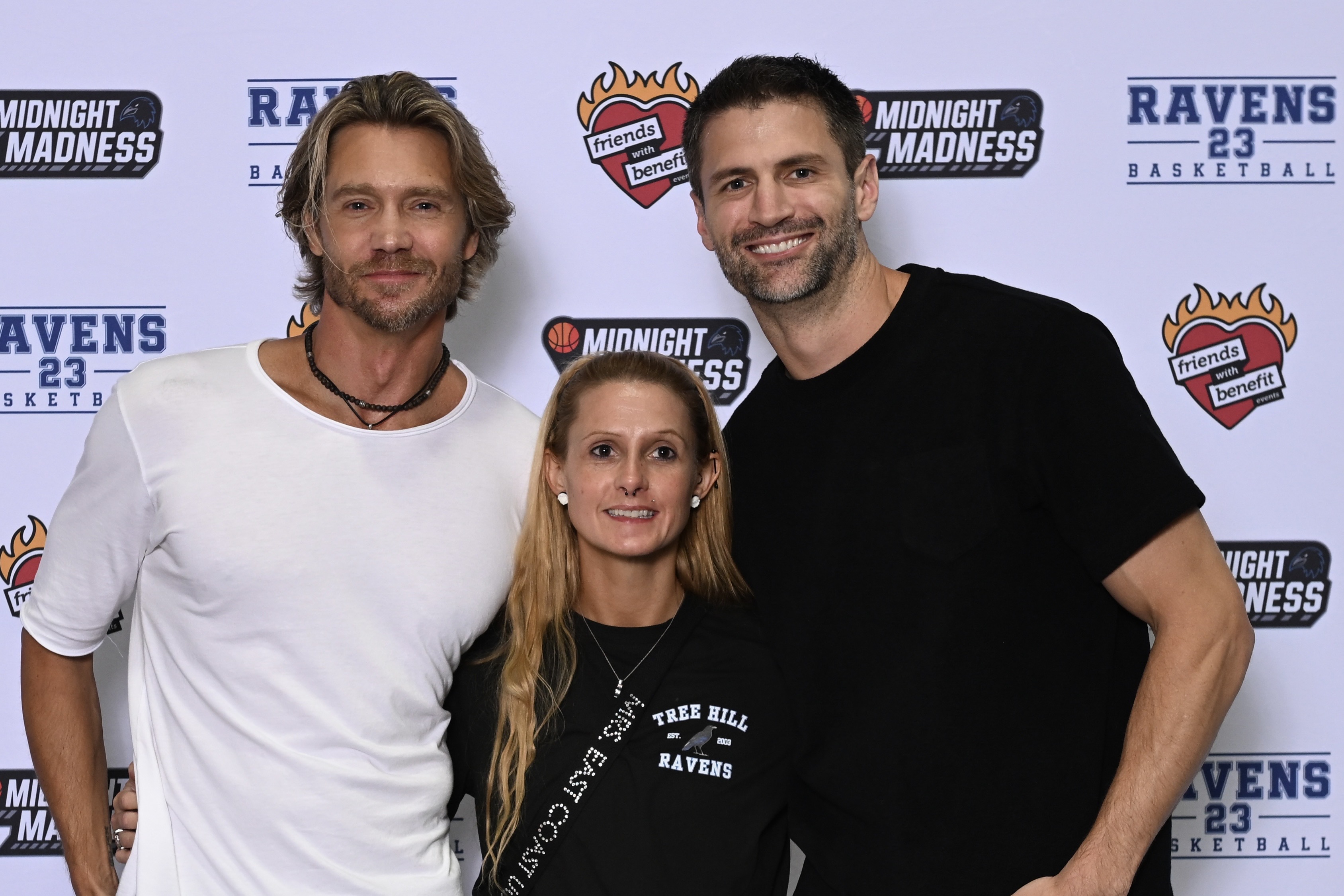
Last weekend, I embarked on an adventure to “Hey 23 Weekend,” hosted by Friends with Benefits (FWB) in Wilmington, North Carolina. This trip had been in the works for nearly eight months with a close friend I met last year in Chicago after attending my first FWB event in memory of my dad’s third anniversary.
One Tree Hill was our go-to show before DVRs existed, and I never imagined how passionate its fans are. People shell out thousands for meet-and-greets, like the “boy toy” audition I heard about last fall. This year, Chad Michael Murray auctioned off his shoes after the basketball game. I thought, “Who would want sweaty shoes?” But someone did, and they had multiple bids. I believe the proceeds went to St. Jude’s, as they did last time.
During the game, the crowd was electric, all trying to catch the attention of James, Chad, and other actors. I stayed calm, soaked in the atmosphere, snapped photos, and recorded videos. Chad ended up right in front of me, even putting his armpit near my face to hand the woman behind me his championship ring as I ducked down. A friend later told me she would have been over the moon with excitement if she were me.
Later, Chad noticed I wasn’t feeling well. I hadn’t had a chance to eat and was lightheaded from all the running around. He asked if I was okay, and I explained that I just hadn’t had time to eat. Even with VIP access, you’d think things would run more smoothly, especially when schedules are off (I get it, life happens). Every time I lined up for food, someone called me over for a photo or autograph. Chad later checked in to see if I was feeling better, which was sweet.
After four or five photos with him just that day and being up close during the game, it was my third One Tree Hill event with him. Most of the cast were incredibly kind, especially when I had my 20-month-old son with me for part of each day.
The pep rally wasn’t what I expected. I expected cheerleaders and ballplayers, but it was quite different. The concert was fantastic, the game didn’t disappoint, and I skipped the press conference.
The fashion show was scheduled for two hours but lasted only about thirty minutes. The female models’ outfits were so short that, as I sat at the end of the runway, even others commented on how much we saw. I wanted to buy a skort at the end of the show; they said a medium would fit, which is fine, but I prefer a large because I’m too old to have my butt showing. The company makes junior to women’s sizes, so I figured they ran smaller. The highlight of the fashion show was Robert Buckley strutting down the runway and shaking it; it was priceless.
I also attended non-FWB events that weekend, like the One Tree Hill Live Tour hosted by Antwon Tanner. It was amazing; they offered photos, gift bags, and merchandise. I promoted the Comet Airbnb, the Lucas house from the show, and visited Hell’s Kitchen to eat, Black Cat to shop, and a souvenir shop to ensure I left with the best OTH items.
If you haven’t been to an OTH event, keep it simple; don’t go overboard and buy a ton of stuff, even if they say volunteers will help you. I learned this the hard way this year and missed out on a lot, even with VIP access.
But what I did learn is that the people you meet, known as Ravens (Tree Hill lovers), are the friendliest folks ever. I made so many new friends. So, if you love One Tree Hill, come to their next event; it’s definitely worth it, and maybe you’ll see me there!
Join Influential Women and start making an impact. Register now.