Her Story
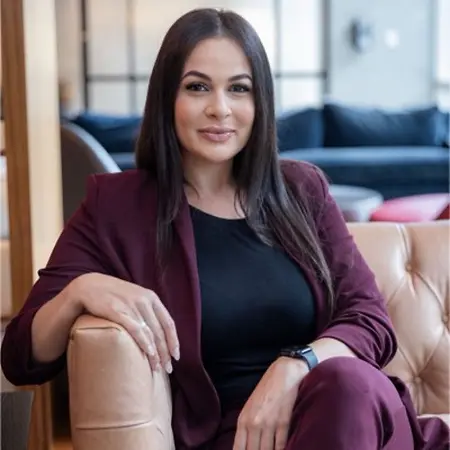
About Samantha
My path to social work wasn't a straight line - it started when I thought I wanted to become a lawyer. I got my bachelor's degree in criminology and became a paralegal, working mainly with clients in divorce and immigration. But I realized there was a lot of hardship in that field, and I wanted to do more than just legal things with them. I connected with friends in counseling and therapy, and an opportunity came up to work as a college counselor, which opened a new door for me. That's when I decided to pursue my master's in social work from New York University because I wanted to continue to empower others and help people feel supported. I saw how many people were underrepresented in the legal field, and I recognized the importance of mental health. Now, 5 days a week I work as a school social worker with high school students, where I do counseling, deal with crisis situations, mediate between students, advocate for students with parents and administration, and serve as a restorative justice coordinator facilitating circles. Twice a week I work as a psychotherapist in a clinic, seeing about 10 patients ranging from kids to teenagers to adults. In this clinical role, I diagnose clients, create treatment plans, and provide a safe, comfortable space where people can open up. What I've learned is that it's not just about the diagnosis - everyone is going through something, and every situation is unique. I'm proud of how far I've come in learning to navigate these challenges and just be there for people and listen. The most rewarding part is seeing the growth in my patients. I've been doing clinical work for about 2 and a half years now, and I'm working toward my LCSW license. My goal is to open my own clinic within the next 2 years while continuing my school social work, and I'm also considering moving into a higher education role eventually.
Her Interview
Ten minutes with Samantha
01What do you attribute your success to?
I'm very proud of how far I've come in this field, especially juggling school social work and seeing patients in the evening. At first, I thought it would be so difficult to sit and figure out what a client or patient needs, to diagnose them in such a clinical way. But eventually I learned that it's not about the diagnosis - every single person is going through something, and everyone's situation is unique. In terms of personal growth, I've learned how to navigate these things and just be there for people and listen to people. It's not just a diagnosis, it's life, right? Life happens, and people go through things, and there's always a solution for them. I'm glad that I'm able to be in that role and that I've grown into understanding that being present and listening is what really matters.
02What advice would you give to young women entering your industry?
I would say keep going, don't give up. Sometimes people say that social workers have heavy burnout, and this is why self-care is important. In our field, we do see and help many people, and we are always dedicated to our work, but we also need to take time for ourselves. Self-care is very important to me, and I encourage everyone else to do self-care if they choose this field. It's a rewarding career at the end of the day. If you wake up and do what you love, it's never gonna feel like a job - it's gonna feel more like a calling. And boundaries are important too, because we need to take care of ourselves so we can continue to be there for others.
03What are the biggest challenges or opportunities in your field right now?
I think as social workers, sometimes we're underrepresented in many ways. Our field is underrepresented, and sometimes our pay is underrepresented too. This is why many social workers and therapists have more than one income, because the field of social work is not really acknowledged as it should be. We carry a very important role, especially in hospital settings and other places, but people don't see the value of mental health sometimes. Mental health is hidden - it's not something that's publicly shown by many. I think that's one of the issues in the field of social work, that people don't really respect the career as much as it should be respected. We need more recognition for the critical work we do.
Join Influential Women and start making an impact. Register now.