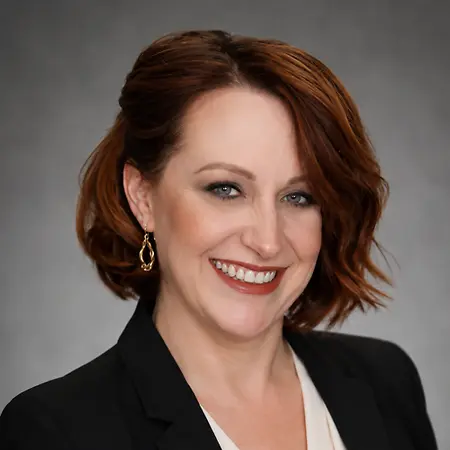
Her Story
About Samantha
Samantha Johnson serves as a Master Sergeant in the United States Army, holding the role of Operations Non-Commissioned Officer in Charge (NCOIC) for the Army National Guard G2, the Intelligence Division at the National Guard Bureau. In this capacity, she manages national-level policies, programs, and daily operations spanning all 54 states and territories under National Guard authority. Her nearly 17 years of military service, which began in 2009, have taken her through leadership positions in multiple states as well as international deployments to Kuwait and Ukraine. Her most recent deployment was to Ukraine in 2020-2021, where she trained Ukrainian Armed Forces in preparation for NATO integration and built lasting relationships with the local population. Alongside her military career, Johnson has built an extensive academic foundation in behavioral science. She holds a bachelor's degree in political science and government from Ashford University. She went on to complete a master's degree in psychology with a concentration in forensic psychology at Southern New Hampshire University. She is currently a doctoral candidate in clinical psychology with a specialization in forensic psychology at Walden University, balancing her coursework and dissertation research with her ongoing military duties and brand-new motherhood journey. She is also an advocate for military sexual trauma survivors, reflecting her broader ambition to reform support systems for survivors of military sexual trauma from within the organization. Beyond her military and academic pursuits, Johnson is a published author, having co-written the children's social-emotional learning book My Feeling Friends: A Social-Emotional Learning Picture Book About Big Feelings for Kids alongside Dr. Karine Clay and fellow contributor Amanda Whack. The book can be purchased at https://amzn.to/4eysvS9. Through her association with the nonprofit organization Higher Potential for Learning, she has helped extend psychological and educational support to children across the Caribbean islands. This nonprofit organization can be reached at https://higherpotentialforlearning.com. Guided by mentors who shaped her clinical and professional outlook, Johnson continues to draw on her military discipline and psychological training to advocate for systemic change and to support the next generation entering the field.
Her Interview
Ten minutes with Samantha
01What do you attribute your success to?
I attribute my success to hard work, perseverance, and the strength of my personal and professional networks.
First and foremost, I would like to thank God for allowing me not only to be a mother and a leader, but also to be recognized for those accomplishments. This journey has been full of twists, turns, and unexpected challenges. Through his grace, mercy, and guidance, I have not only been able to excel in the avenues I have chosen for my life but also been blessed to share this journey with amazing mentors, friends, and family.
Professionally, I would like to thank Dr. Karine Clay. She is a clinical psychologist and advocate for neurodivergent children. She is also a professor at Walden University. Her ability to teach in an empathic manner is outstanding. The passion that she has for this field, her students, and her clients is undeniable. She has been a truly great opportunity to learn from and now work beside on future endeavors as I begin my journey into the world of clinical psychology.
And I would also like to thank a great leader, mentor, and close friend, Mr. Steven Fuquay. I have had the opportunity to work for and alongside Mr. Fuquay in my most recent roles. His ability to influence, mentor, lead, and guide is second to none. In working with him, I have learned to challenge myself to grow in new ways, embrace compassionate change, and remember humility in all my work. His influence has truly impacted how I will be as a leader and mentor in my future assignments and roles.
Personally, I would like to thank one of my best friends and closest advisors, Larry Kessler, who has been instrumental in my journey. Larry is a long-time friend that I met through the Army almost a decade ago. He is a truly selfless man who always has the best interests at heart for those closest to him. He has supported me through many seasons of my life, through my professional, educational, and personal journeys. His support, mentorship, and friendship have been invaluable to me over the years. His support and guidance have given me a chance to build confidence in myself, my abilities, and my future endeavors.
My brother, Kirk Jarrett. He has always been one of my biggest supporters through every endeavor that I have ventured into over the years. He has never wavered in his support; he has never questioned my abilities to take on challenges, and he has always been a steadfast person throughout my life. And now, in my new role, as I take on my brand-new motherhood journey and transition into the final phases of my doctoral journey, he has continued to be a pillar of unwavering support.
And finally, my partner, Leon Faircloth. The path I have chosen for my life has brought many obstacles, challenges, and life lessons. I would not be able to take on those challenges and overcome those obstacles without my partner's support. Leon has selflessly created a space of support, love, and understanding that allows me to excel in both my military, professional, and educational careers. He has also been my pillar throughout this new adventure with our son. I am truly grateful for the partner God has given me. His love and support have been a foundational cornerstone of my success and continued journey in both the professional and personal worlds.
02What’s the best career advice you’ve ever received?
The best career advice I received was from a subject-matter expert who encouraged me to pursue a doctorate so that I could work to change the military sexual assault response system from within and better serve survivors. He stated that to see the change, I had to become the change that I wanted to see. I took those words of advice and began my doctoral journey.
03What advice would you give to young women entering your industry?
I would tell her to make sure she understands her voice and how to find it. Clinical psychology is an incredibly impactful field with many different paths you can take, and understanding your voice will help you determine which path is right for you. You have to have a genuine drive to help people. Knowing your voice and knowing who you are allows you to understand the type of leader, clinician, and scholar-practitioner you want to become.
04What are the biggest challenges or opportunities in your field right now?
The biggest challenges in my field are reforming military sexual assault response programs and addressing systemic shortcomings within legal and incarceration systems. At the same time, I see real opportunity in driving that reform from within through advanced clinical training, and in expanding psychological services internationally through nonprofit partnerships.
05What values are most important to you in your work and personal life?
Service, mentorship, resilience, and compassion for survivors are the values that matter most to me, along with a continued commitment to improving systems so that others have better access to the care they need.
Join Influential Women and start making an impact. Register now.