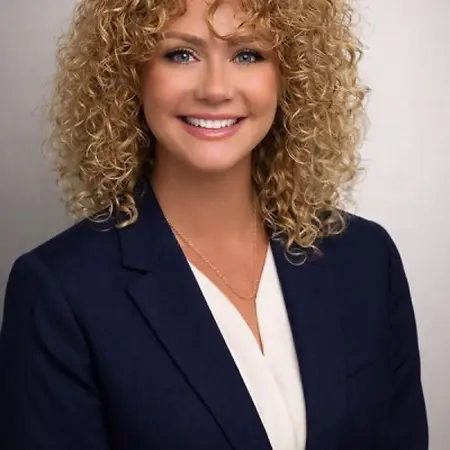
A powerful reflection on how motherhood, perseverance, and mentorship shaped a journey from medical assistant to CEO-in-Training, revealing that career success comes not from perfect planning but from taking the next step.
“
I started as medical assistant and became Practice Manager. My career pivot from frontline care to healthcare leadership proved that meaningful careers grow from experience.
Samantha Jones, MPH · In Her Own Words
Her Story
About Samantha
Samantha Jones, MPH, is a healthcare leader with nearly two decades of experience spanning frontline patient care, healthcare operations, public health, and organizational leadership. Today, she is expanding that experience as a CEO-in-Training with The Pennant Group, developing the knowledge and skills required to lead a home health and hospice operation.
Samantha began her healthcare career as a medical assistant. What started at the bedside and in direct patient care gradually grew into a desire to understand the larger systems surrounding healthcare: how teams perform, how culture influences outcomes, how operations support clinical excellence, and how leadership can transform both organizations and people.
Her path into leadership was not predetermined. It was built through experience, education, curiosity, and leaders who recognized potential in her and gave her opportunities to grow.
As a working mother and first-generation college graduate, Samantha continued her education while building her career and raising her family, ultimately earning her Master of Public Health. Those experiences shaped a leadership philosophy grounded in resilience, accountability, continuous learning, and the belief that developing people is one of a leader’s greatest responsibilities.
Throughout her career, Samantha has gained experience in healthcare operations, team development, financial performance, quality improvement, strategic planning, patient advocacy, and organizational growth. Her transition into home health and hospice represents a new chapter—one in which she is intentionally becoming a student again.
As a CEO-in-Training, Samantha is deepening her understanding of reimbursement, clinical quality, financial stewardship, growth, workforce strategy, regulatory compliance, and the operational disciplines required to lead a successful healthcare organization.
For her, the opportunity is about much more than preparing for a future title.
It is about learning how to build organizations where people understand the mission, know what is expected of them, take ownership of results, and are given the opportunity to grow into leaders themselves.
Nearly twenty years after beginning her career as a medical assistant, Samantha is still learning, still stretching, and still becoming.
Her journey is a reminder that leadership does not begin when someone gives you a title.
It is built in the years that prepare you to carry the responsibility of one.
Her Interview
Ten minutes with Samantha
01What do you attribute your success to?
I attribute my success to a combination of resilience, curiosity, and a deep commitment to the work I do. Healthcare is complex and constantly evolving, so I have always believed in staying curious—continuing to learn, ask questions, and look for better ways to improve systems and outcomes for patients.
Over the past 20 years in healthcare, I’ve also learned that success isn’t achieved alone. I’ve been fortunate to be mentored by strong leaders—many of them women—who challenged me to think strategically, lead with integrity, and never lose sight of the human side of healthcare.
Resilience has played a significant role as well. Healthcare leadership often requires navigating difficult decisions, operational challenges, and policy barriers. Being able to remain focused on long-term impact while adapting to change has helped shape the leader I am today.
Ultimately, my success comes from a genuine passion for improving healthcare—especially in areas like women’s health and access to care—and a belief that thoughtful leadership can truly make a difference in the lives of patients and the communities we serve.
02What’s the best career advice you’ve ever received?
One of the best pieces of career advice I’ve ever received was to focus on solving problems, not just doing a job. Early in my career, a mentor told me that the people who truly make an impact in healthcare are the ones who look beyond their title and ask, “How can we make this better?”
That advice stayed with me throughout my career. Healthcare is filled with complex systems and challenges, and real leadership comes from being willing to step back, analyze the bigger picture, and work collaboratively to improve it. When you approach your work with that mindset, opportunities naturally follow because people begin to trust your ability to create solutions.
I’ve also learned that careers are rarely linear. Being open to growth, continuing to learn, and staying committed to the mission of improving patient care have been guiding principles for me over the past 20 years in healthcare leadership.
03What advice would you give to young women entering your industry?
My advice would be to stay curious, speak up, and never underestimate the value of your perspective. Healthcare needs strong, thoughtful leaders who are willing to ask questions, challenge outdated systems, and advocate for both patients and providers.
For young women entering the industry, it’s important to remember that leadership doesn’t always mean having the loudest voice in the room. Often, it’s about being the person who listens carefully, understands the complexity of the system, and works collaboratively to create solutions.
I would also encourage them to seek mentors and surround themselves with people who challenge and support their growth. Throughout my career, many of the leaders who helped shape and guide me were women who showed me what strong, compassionate leadership looks like.
Most importantly, don’t be afraid to pursue roles where you can influence change. Healthcare is evolving rapidly, and there is tremendous opportunity for women to lead the future of healthcare delivery, policy, and innovation.
04What are the biggest challenges or opportunities in your field right now?
One of the biggest challenges in healthcare today is the growing disconnect between clinical care, operational systems, and financial sustainability. Many healthcare organizations are facing workforce shortages, rising costs, and increasingly complex regulatory environments. When those pressures aren’t addressed strategically, they can create systems that make it harder for clinicians to focus on patient care.
At the same time, these challenges present significant opportunities. Healthcare leaders now have the chance to rethink how care is delivered by building systems that better align clinical practice, operations, and financial strategy. When those elements work together, organizations can create environments where providers can thrive and patients receive higher-quality care.
Another important opportunity lies in advancing women’s health and preventative care. There is growing recognition that investing in early intervention, chronic disease management, and comprehensive women’s health services can significantly improve long-term health outcomes.
For leaders in healthcare, this moment requires thoughtful innovation, collaboration, and a willingness to redesign systems so they work better for both patients and providers. It’s a challenging time—but also one with tremendous potential to shape the future of healthcare delivery.
05What values are most important to you in your work and personal life?
Integrity, compassion, and resilience are the values that guide both my professional and personal life. In healthcare leadership, integrity is essential because the decisions we make impact not only organizations but also the lives of patients and the teams who care for them. I believe leaders must be transparent, ethical, and willing to stand by their decisions.
Compassion is equally important. Healthcare is ultimately about people—patients, families, and the professionals who dedicate their lives to caring for others. Creating environments where people feel respected, supported, and valued leads to stronger teams and better outcomes.
Resilience has also been a defining value for me. Healthcare can be challenging and constantly evolving, and success often requires the ability to adapt, learn from difficult experiences, and continue moving forward with purpose.
In both my work and personal life, I strive to lead with these values while staying committed to making a positive difference in the communities I serve.
Her Content Hub
Articles by Samantha
I Didn’t Have a Career Map. I Had a Reason to Keep Going.
From Medical Assistant to CEO-in-Training: A Journey of Growth, Motherhood, and Becoming
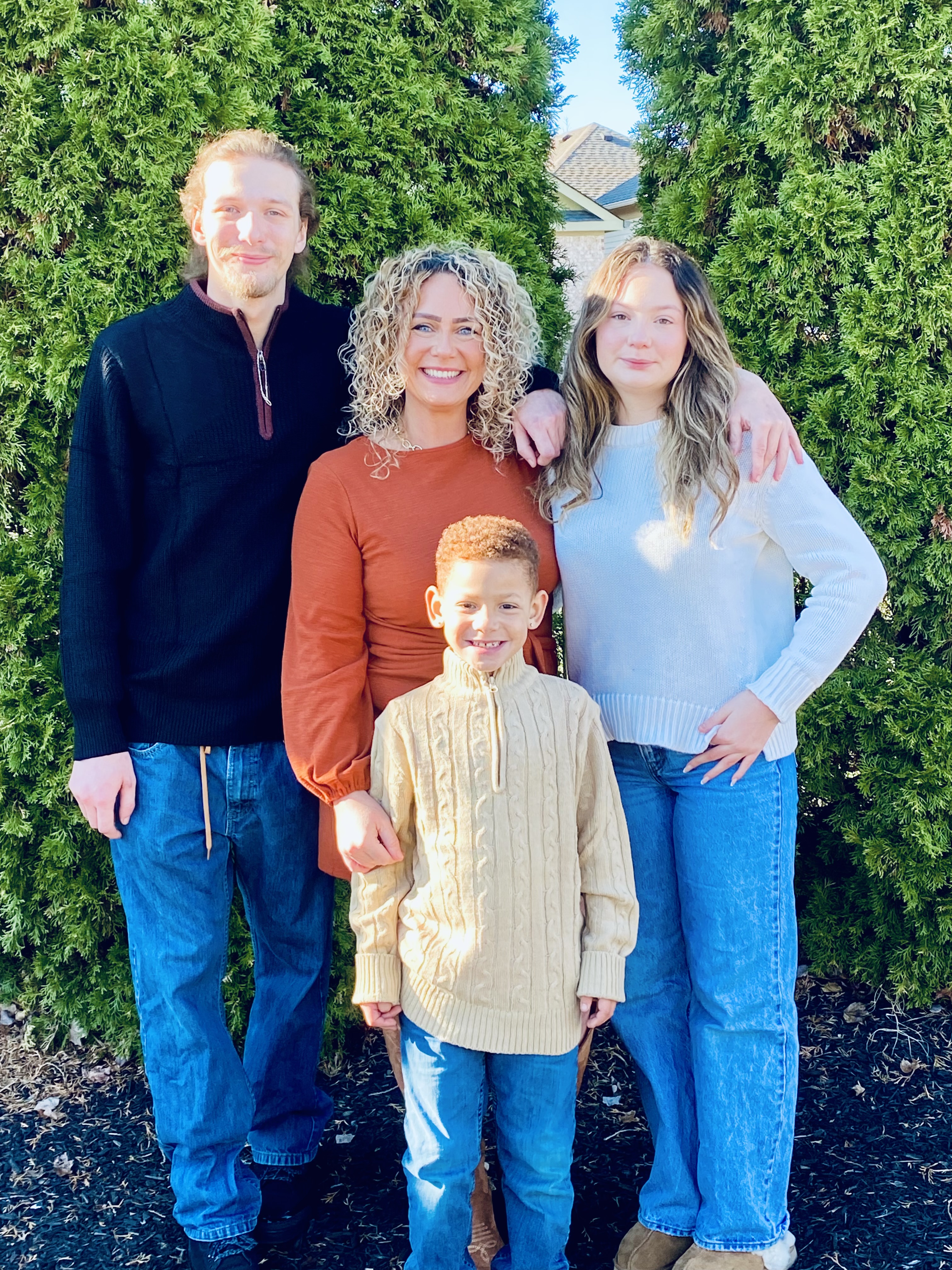
There is something surreal about seeing the words CEO-in-Training next to my name.
Not because I never wanted more for myself.
I always did.
But because if you had asked the younger version of me what her career would look like someday, I don’t think she would have known how to answer.
I became a mother young. I started my healthcare career as a medical assistant. I was working, raising children, paying bills, and figuring out adulthood at the same time I was trying to figure out who I wanted to become professionally.
There was no perfectly designed career plan.
There was just the next step.
And then the next one.
I learned the clinical side of healthcare first. Eventually, I became curious about everything happening around it.
Why did one team thrive while another struggled?
Why did some leaders make people want to become better while others simply managed their work?
Why could two organizations serving similar patients produce completely different cultures and results?
Those questions pulled me toward leadership before I ever realized leadership was where I was headed.
As my responsibilities grew, so did my education.
Becoming a first-generation college graduate was a milestone I once wasn’t sure would belong to me. Earning my Master of Public Health while working and raising my family stretched that belief even further.
But my career was never happening separately from motherhood.
The two were growing up together.
My children experienced every version of me along the way.
They knew the mom studying after work.
The mom with another meeting.
The mom taking on the bigger opportunity.
The mom who didn’t always get it right.
And the mom who kept going anyway.
For years, I think many working mothers have carried an unspoken pressure to prove that motherhood hasn’t somehow diminished our professional capacity.
My experience has been the opposite.
Motherhood expanded mine.
It taught me how to make decisions when every option carries a consequence.
It taught me how to prioritize when everything feels important.
It taught me patience, advocacy, accountability, sacrifice, adaptability, and the uncomfortable truth that sometimes loving people means expecting more from them.
Those lessons followed me into every team I have led.
And then something else happened along the way.
Great leaders began investing in me.
They didn’t simply tell me I was doing a good job. They challenged me. They gave me responsibilities that made me uncomfortable. They expected me to think bigger than the position I occupied.
Some saw leadership potential in me before I had language for it myself.
That changed me.
Because once someone helps you see what you’re capable of becoming, you have a responsibility to do the same for someone else.
That belief has become one of the foundations of how I lead.
And now, almost two decades after I first entered healthcare, I have reached a milestone that deserves a moment of reflection.
I am a CEO-in-Training.
I am learning an entirely new side of healthcare leadership—one that requires me to think beyond departments and individual metrics and understand how people, clinical quality, operations, growth, culture, and financial stewardship all come together.
And I love being uncomfortable enough to have so much left to learn.
Because I’ve realized that every major transition in my career has started the same way:
Someone opened a door.
I walked through it.
And then I worked hard enough to be ready when the next one appeared.
This milestone means a great deal to me professionally.
But as a mother, it means something different.
My children have had a front-row seat to the entire journey.
They didn’t meet me at the finish line.
They watched the building.
They watched me work before I had the title.
They watched me go to school when it would have been easier not to.
They watched opportunities work out—and others not work out.
They watched me question myself and keep moving anyway.
And now they get to watch me become a student again, this time preparing for executive leadership.
One day, when they are standing in front of an opportunity that feels bigger than who they believe themselves to be, I hope they remember that.
You don’t have to see the entire road before you begin.
You don’t have to come from a family that has already done it.
And you certainly don’t have to have your life perfectly mapped out.
Sometimes you just have to be willing to take the next step, learn everything you can from it, and become ready for the one after that.
Nearly twenty years ago, my next step was becoming a medical assistant.
Today, it is becoming a CEO.
And I’m still becoming.
Join Influential Women and start making an impact. Register now.