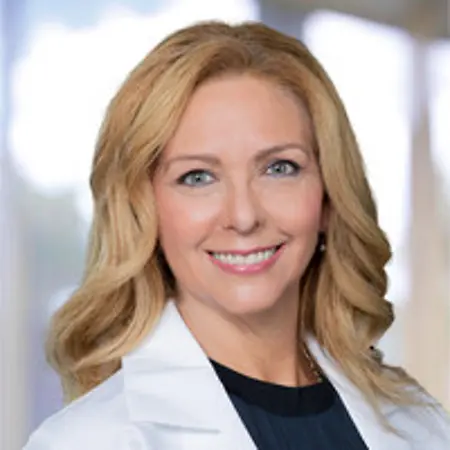
Her Story
About Sandra
Sandra Oglesby is a highly accomplished healthcare executive and registered nurse with 40 years of clinical experience and 30 years in progressive leadership roles. She is also the co-owner of ClinAxis Solutions, a Healthcare Performance Company. Her nursing background spans a wide range of specialties, including trauma, high-risk obstetrics, and perioperative care, providing her with a strong clinical foundation that informs her executive decision-making and operational leadership in complex surgical environments.
She currently serves as the Administrator of a high-volume, multi-specialty ambulatory surgery center at TGH Brandon Health Plex in Tampa, Florida. Under her leadership, the center has achieved national recognition from Newsweek magazine as one of America’s Best Ambulatory Surgery Centers, consistently ranking among the top three in Florida for the past five years. She leads a multidisciplinary executive team responsible for daily operations while providing strategic oversight at the governing board level.
Sandra is recognized for transforming surgery centers through culture-driven leadership, high-impact hiring practices, and a unified “one team” approach that strengthens physician engagement, staff retention, and operational efficiency. She has directed ASC enterprise operations for seven facilities across six states and brings deep expertise in ASC operations and revenue cycle management. Known for her ability to scale organizations and elevate performance, she remains committed to building strong, sustainable cultures that drive exceptional patient experiences, physician satisfaction, and measurable business outcomes.
Despite her executive responsibilities, she continues to serve as a hands-on nurse who remains visible and actively engaged in supporting her clinical teams when needed.
Quote:
“My team works harder for me because I work for them. They do the hard work every day. I just provide the resources and support they need to deliver the highest level of care to every patient, every case, every day.”
Her Interview
Ten minutes with Sandra
01What do you attribute your success to?
I would attribute my success to knowing the type of leader I want to be based on leaders I've had that I definitely don't want to be. As a staff nurse, I worked for some leaders that I would consider not to be very good leaders. So throughout my entire leadership career, I know the type of leader I want to be. I know what my team needs. When they call me and they need help or support, I can go out there and be there for them, whether it's transporting a patient, mopping a floor, or starting an IV. When they need help and the administrator, the CEO of the surgery center gets up and goes and helps them, it drives that engagement. They work harder for me because I work for them. They do the hard job every day. I'm just here to give them the tools to do their job. If they're short-staffed or they need an extra set of hands, I have two hands fully capable of helping. This drives engagement, decreases staff turnover, and many people on my team today have worked for me in other facilities and ended up here because they had an opportunity and reached out.
02What’s the best career advice you’ve ever received?
The best career advice I have received is that change doesn't happen overnight. You have to stick with it to see sustainable change. A lot of times people want to make a quick change and then forget about it, but you have to stick with it. You have to hold people accountable. Creating a positive culture and a positive team helps to drive sustainable changes. It's easy to start a job, but not finish it. You have to be committed. It's just like anything you do, you have to commit to making a place better for everyone, whether it be the patients, my team, my physicians, or the organization I'm working for. Another piece of advice is to surround yourself with good people and don't micromanage. Give clear direction and let them do their job.
03What advice would you give to young women entering your industry?
I think nursing is a way of life, it's not really a job, it's not a career. It changes everything about you. I think you become a more compassionate person when you actually take care of people all day, every day. If you're not a compassionate person, it's probably not a good field for you to get into, because people are scared and that's what you got into it for - to care for patients and to give them that strength and that support that they need to get through whatever the situation is, whether it's surgery, trauma, or having a baby. Compassion is one of the most important things to have when you are in nursing.
04What are the biggest challenges or opportunities in your field right now?
The biggest challenge in my field is staffing, because there is a huge nursing shortage. Contrary to popular belief, a nurse is not a nurse. In my setting, you have to be highly specialized because we don't have a code team or all of the resources that an inpatient hospital would have, so these nurses have to be highly skilled at recognizing if a patient is starting to go south and treating it before it happens. They're highly skilled and highly specialized. Most of my nurses have worked in an ER or an ICU in the past - in fact, they're required to have an ER or ICU background to work in pre-op or PACU. Since we are a multi-specialty surgery center, all of my intraoperative staff have to be skilled in multiple specialties like orthopedics, general surgery, and urology, whereas in a hospital, staff often specialize in one service area. Another challenge is keeping physicians engaged, because physicians are who bring the patients to us. We have to be very efficient with accurate scheduling times so physicians are not waiting and there's no downtime between cases. On the opportunity side, I think the biggest area of opportunity is probably on the financial side with payers - making sure we have all the authorizations we need, that everything goes through smoothly, and understanding what the limitations of our payer contracts are.
05What values are most important to you in your work and personal life?
The values most important to me are authenticity, integrity - doing the right thing because it's the right thing to do, not because someone's watching - and creating a culture of respect where no one's job is more important than anyone else's job. Trust in a healthcare setting is super important, so having trust that your team will do the right thing and being able to have those conversations and explain why it's important to do the right thing and getting them on board with that thought. I also value vulnerability - being able to admit when you're wrong or when you've made a wrong decision or made a mistake. Ultimately, I believe in leading by example. You can't lead by 'do what I say, not what I do.' Even though I'm an administrator and I've been in leadership for 30 years of my 40, I'm still a hands-on nurse. If somebody needs an IV started, I'm out there. I'm very visible on my team. I can operate and function in any nursing role that I lead. I may not be as quick as them or have the electronic health record down as quickly as they do, but I can do the job. You can't lead from an office. Your team needs to know that you're visible and willing to roll up your sleeves and jump in and help when they need help.
Join Influential Women and start making an impact. Register now.