Her Story
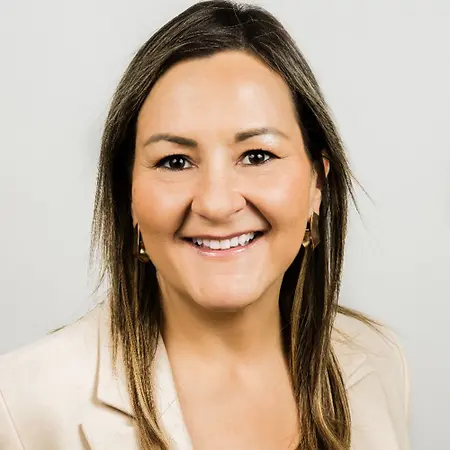
About Sandra
I started my career in banking in Colombia, my hometown, where I was part of the marketing team in a huge bank. When I moved to Miami, I actually started in a small town called Fort Myers in Florida, taking English classes because I came here with zero English. I started working in a telecom company for 10 months, and then I was talking with my best friend from kindergarten, and we decided to open our company. That's how we opened Smart Network Solutions in 2002. It was complicated to be a woman working in technology in 2002, where only 4% of women were owners or co-founders in the tech industry, so we were part of that 4%. Right now, we have offices here in Miami, Mexico, and Colombia. I work with my team handling sales, marketing, and business development. My goal three or four years ago was to sell to the government, so I started attending a lot of events here in town to learn how the system works, how to apply for certifications, and how to become a vendor for cities and counties. Since three years ago, we are vendors for technology to the counties, and we have all the certifications and permits to sell to the state and even to federal contracts in the United States. I'm pretty busy with government accounts right now, managing relationships and my team. In technology, you need to learn every single day to stay current with AI, cybersecurity, and all the changes that happen constantly.
Her Interview
Ten minutes with Sandra
01What do you attribute your success to?
I think the most important thing is persistence - you don't need to quit, you need to be resilient and active all the time. But I really believe everything is about the people, it's not the transactions or how many sales you make. The most important thing is the connection with the people and building relationships. People matter to me. It's not about the credentials or what you have in your portfolio, or if I have a lot of certifications in AI - everyone right now can do that if you're learning AI for 6 months, you'll have 10 diplomas in your room. But the trust, you need to build trust with the people. I think, for me, the success that I have right now here in town is because of that. It's because people matter to me.
02What’s the best career advice you’ve ever received?
The best advice I've received is that we need to build together as a team - that's the only way. The other piece of advice that really stuck with me is don't stop until you are proud. When I started four years ago trying to understand government contracts, I was completely confused. I said, no, this is not for me, this is impossible. But someone told me one day, don't stop until you are proud. So I started attending all the meetings and building relationships. It's not like one day you go to an event, you know someone, you send an email, you make a phone call, and that's it. No, you need to show up. You need to build your relationships, you need to build a reputation, you need to be a trustworthy partner and ally for other companies, especially for the government. Many people were saying about the FIFA World Cup, no, that's impossible, FIFA is too big, they will not give you opportunities. I always said, no, let's go together, let's have a team, let's put all the strengths together, and let's apply. What seemed impossible was not just a dream - if you pursue your dream and you can be persistent, I think you can get it. It's not impossible. You don't need to stop until you can get it.
03What advice would you give to young women entering your industry?
The most important thing I learned when I came to the United States is that we need to work together and build bridges together in order to go for a different future. We can build together - we are not competitors with each other. In my country, Colombia, and in Latin America, the culture was that women were seen as competition for each other. People would say don't share your secrets, don't tell what you're doing in that job. But when I came here, I learned that the world is completely different. Now when I go to a meeting and I meet another girl in tech, I'm not afraid that she can be my competitor or I will be her competitor. I immediately invite her - what are you doing? Let me know what your skills are, and let's collaborate. It's the opposite - it's not more my competition, it's more my allies right now. I do that all the time here in the community because it's the only way to grow, especially if you're going for government contracts. I cannot do it by myself. I can have the skills, I can have all the certifications, but if you have a strength in cybersecurity and another person has strength in project management and someone else has knowledge in different things, together we can build a team and we can pursue that type of contract. That's the only way.
04What are the biggest challenges or opportunities in your field right now?
The biggest challenge right now is everything about AI - we need to not forget the human part. For the last 24 years in this tech company, the human part has become more important. In this time when AI can do everything, the human-to-human contact is the most important right now, so we need to build that and be very strong and strict with that part. Last year, many counties here like Miami-Dade County and Broward County hired our company to do trainings in AI and cybersecurity, and we started to say, hey, you need to have this part of the training in the human side, in the human adoption, in emotional intelligence. Because finally, the people that will be managing the AI need to have very strong values. AI will do everything, whatever you want, good or bad. So good people need to be in charge of that AI - people with good values, with good philosophy in life. We created some programs in AI, cybersecurity, and everything about technology, plus the human impact. The challenge right now is to bring this type of thing to the community and to companies - they don't need to invest only in technology, they need to invest in their people, in the human skills, in the soft and power skills, in purpose. Because everything can change in one minute through AI, but if you have a very strong human team managing that, the outcomes can be different. Everyone talks in business like B2B, B2C, B2G, but what happened with the H2H, the human-to-human? That's the main challenge right now - we need to involve the H2H as part of all the programs and all the things that we deliver. It needs to be with the people first.
Join Influential Women and start making an impact. Register now.