Her Story
About Sara
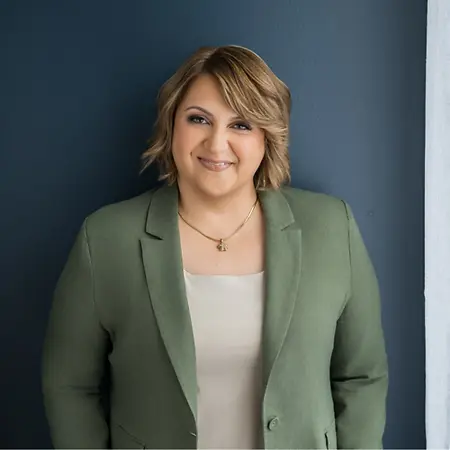
Sara Farahmand is a globally recognized skin scientist, board-certified toxicologist, and regulatory leader with extensive expertise in consumer product safety, dermatopharmaceutics, clinical research, and cosmetic science. As Director of Toxicology, Regulatory, Claims, and Clinical at The Honest Company, she leads multidisciplinary teams responsible for product safety, regulatory compliance, clinical evaluation, and scientific claims substantiation. Her work spans toxicological risk assessment, skin absorption modeling, formulation science, and the development of innovative, science-backed consumer products grounded in safety, performance, and regulatory excellence.
Over the course of her career, Sara has held leadership roles at major global organizations including Procter & Gamble, Georgia-Pacific, Avon, The Clorox Company, Edgewell Personal Care, and Living Proof. Throughout these roles, she has led global toxicology and clinical safety initiatives across cosmetic, personal care, healthcare, and consumer product categories. Known for her strategic leadership and scientific rigor, she has extensive experience designing and evaluating in vitro, in vivo, and in silico models, developing regulatory and clinical strategies for international markets, and guiding organizations through evolving global compliance requirements and safer chemistry initiatives.
In addition to her scientific leadership, Sara is a passionate mentor, advocate, and certified life and career coach dedicated to empowering professionals and advancing human-centered leadership. She serves as a mentor for organizations including the Society of Toxicology and Upwardly Global, supporting immigrants, refugees, and emerging scientists in their professional development journeys. Sara studied management at Harvard Extension School and completed advanced scientific training at University of California, San Francisco. Recognized for her ability to bridge science, strategy, and empathy, she is widely respected for fostering collaborative teams, advancing sustainable toxicology practices, and championing innovation grounded in both scientific integrity and human impact.
Her Interview
Ten minutes with Sara
01What do you attribute your success to?
I attribute my success to my passion, my perseverance, and my attitude of gratitude. I was always grateful and hopeful throughout my journey. I also had tremendous support from mentors who believed in me and gave me opportunities. As an immigrant who didn't know the culture and was just building a fresh, fragile life, having mentors had an effect beyond words. The first person who opened the door of America to me was Professor Howard Maibach of UCSF, who accepted me as a postdoc in his lab - he opened the door not just to me, but to my son, my husband, and our entire family. There were so many kind people who welcomed me, believed in me, accepted me, let me grow, and let me shine. They didn't think, okay, you're from another country, you have no place here - they gave me opportunities. I also credit my family, especially my grandparents, who planted great seeds in my mind. They were very growth-oriented and always encouraged me to keep getting better and better. They had a high bar for me, but also were assuring me so much that I was doing good, and that was super helpful.
02What’s the best career advice you’ve ever received?
The best career advice I've received came in two parts. First, that this is not a sprint, it's a marathon. I never viewed it like that - I was just running and wanting to get there fast and everything, so that advice helped me approach my career more wisely and save my energy. The second piece of advice was to pick your battles - you can't fight for everything. I heard this in my first or second year when I arrived in the United States, and I had never heard something like this before. It was very new to me, and I know it's a very common phrase used in the United States, but oh my god, it really helped shape and appreciate my perspective on how to navigate workplace challenges.
03What advice would you give to young women entering your industry?
I would say, first and foremost, apply self-compassion to yourself, or be self-compassionate. Really make it your daily practice to be compassionate to yourself. This is something I missed, and I wish I had truly understood it and applied it earlier - it's just in recent years that I truly understood it, and I'm trying to do it for myself. Secondly, keep growing and don't settle. Don't think you have enough - just keep learning and growing. But yet have compassion for yourself. Appreciate everything you have done, and speak gently and kindly to yourself. Know that you are enough for yourself, so you don't need anybody else to give you approval or support you all the time. You just do what you need to do. If they're not there, then that's fine - just keep going.
04What are the biggest challenges or opportunities in your field right now?
I would say one of the biggest challenges in my field is regulators working more closely with scientists in a more efficient and effective way to understand new scientific developments, especially in testing methodologies. They need to find a framework to approve these new processes faster to enable more innovation. Specifically speaking of non-animal test methods, there are lots of them being developed, but not all of them are approved by regulators. We know a lot of regulatory agencies like FDA have great scientists, but the process is just not efficient, I believe. If they could find a way to work more closely with industry and academia and let the scientists fill in the gaps faster and provide approval, that would be super helpful. That's one of the biggest challenges we face.
05What values are most important to you in your work and personal life?
The values most important to me are integrity, courage, and compassion. These three values guide everything I do in both my work and personal life. I try to approach all situations with honesty and authenticity, the courage to stand up for what's right and take on new challenges, and compassion for myself and others as we navigate our journeys.
Join Influential Women and start making an impact. Register now.