Her Story
About Sara
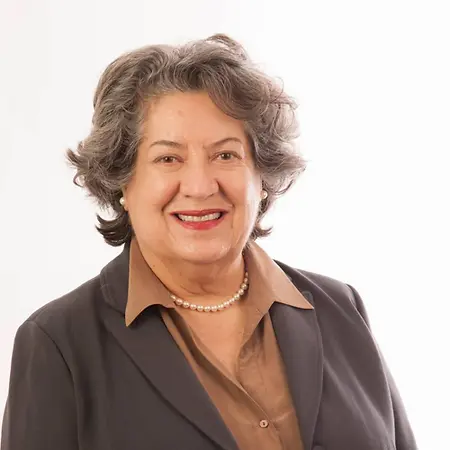
Sara Garcia, PhD, is Professor Emerita at the School of Education at Santa Clara University, with approximately three decades of experience in higher education, teacher education, curriculum development, and educational research. Her academic background includes educational psychology, language development, cognition, and learning theory. Throughout her career, she has focused on preparing teachers to better serve multicultural communities by examining the relationships among language, culture, identity, and students’ classroom experiences. Before joining Santa Clara University’s faculty in 1992, she worked in teacher education at California State University, Fullerton, taught at Channel Islands High School, and conducted program evaluation and bilingual education work associated with UCLA.
At Santa Clara University, Sara directed the Teacher Education Program, developed curriculum, designed master’s-level educational programs, and helped secure state accreditation for teacher education initiatives. Her work extended beyond traditional classroom instruction to include community-based learning, environmental education, and collaborative scholarship. As a Fulbright Scholar, she conducted field research in northern Mexico on environmental education for teachers, including topics related to water and ecology. She later received a Fulbright Specialist grant to lead a research methods seminar and assess faculty research in Bogotá, Colombia. Her publications explore bilingualism, language policy, cultural identity, and the historical and social influences shaping education. She credits international academic relationships and mentorship as important influences on her professional development.
Following her retirement in 2022, Sara has continued to maintain research connections and academic networks while exploring educational issues and alternative approaches to teacher preparation. Her interests include environmental sustainability, cultural understanding, language and identity, and ways of connecting educational theory with practical experience. She values learning from colleagues across countries and disciplines and has been influenced by mentors who encouraged critical inquiry, publication, and the integration of theory and practice. Outside her academic work, she enjoys gardening, reading Spanish-language books, and spending time outdoors. She remains interested in how teacher credentialing and educational institutions can evolve to better prepare educators for the diverse communities they serve.
Her Interview
Ten minutes with Sara
01What do you attribute your success to?
I attribute much of my professional growth to the people I have met, the mentors who have guided me, and the international relationships I have developed throughout my career. Working with colleagues in different countries has expanded my perspective and taught me a great deal. I have also benefited from mentors who encouraged me to ask questions, connect theory with practice, publish my research, and develop my ideas. Receiving the Fulbright grants was especially meaningful because they gave me opportunities to work internationally and pursue my long-standing interest in learning from other cultures and educational systems.
02What are the biggest challenges or opportunities in your field right now?
I see opportunities to develop alternative approaches to education and teacher preparation, particularly by drawing on the knowledge of educators who have extensive experience in the field. I am interested in how teacher credentialing and educational institutions can evolve to respond to changing needs in schools and communities. I also believe it is important to look beyond traditional classroom curricula and help teachers understand the cultural, linguistic, environmental, and social contexts that shape students’ experiences. I remain interested in developments within California’s teacher credentialing system and in how schools may change in response to broader social and political developments.
03What values are most important to you in your work and personal life?
I value curiosity, continued learning, cultural understanding, collaboration, and connecting educational theory with real-world practice. Throughout my career, I have been motivated by a desire to understand how language, culture, and students’ experiences shape learning. I value working with people from different backgrounds because those relationships challenge my assumptions and help me grow professionally. I also believe education should extend beyond the classroom, connecting teachers and students with their communities and the wider environment. In my personal life, I value reflection, reading, spending time outdoors, and remaining open to new ideas and experiences.
Join Influential Women and start making an impact. Register now.