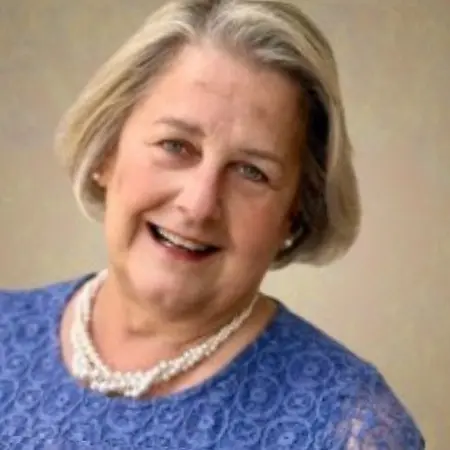
Her Story
About Sara
Sara Lewis, DNP, APRN, PMHNP-BC, is a board-certified psychiatric mental health nurse practitioner, entrepreneur, and mentor with more than three decades of experience in healthcare. She began her nursing career in 1985 and became a nurse practitioner in 1993, initially practicing as a pediatric nurse practitioner. While working in a large multi-provider pediatric practice, she developed a focused interest in behavioral and mental health after clinicians began consistently referring children with psychiatric needs to her, prompting her to pursue additional specialization in counseling and psychiatric care.
To further expand her clinical expertise, Dr. Lewis completed advanced training in counseling through seminary-based education and later returned to obtain her psychiatric mental health nurse practitioner certification, gaining essential expertise in psychopharmacology and comprehensive psychiatric treatment. Driven by a commitment to continued growth, she went on to earn her Doctor of Nursing Practice in 2018. Today, she operates a virtual pediatric psychiatry practice specializing in the treatment of mood disorders, anxiety, and attention-related conditions, combining medication management with psychotherapy to help patients achieve improved emotional balance and daily functioning. She also leads a clinical team that includes two nurse practitioners who support the delivery of care within her practice.
In addition to her clinical work, Dr. Lewis is the founder of The Psych NP Consultant and Thrive NP Academy, where she mentors psychiatric nurse practitioners in building and scaling successful private practices. Drawing from her own experience establishing and growing a thriving virtual practice, she provides structured guidance on practice development, patient care systems, and sustainable business growth. Her work is grounded in a mission to help clinicians achieve autonomy and confidence while expanding access to quality mental health care. Beyond healthcare and education, she is also the founder of My Medical Missions, a nonprofit organization that collects and delivers medical supplies and medications to underserved communities in Zambia, where she travels twice yearly to provide hands-on clinical support, and she has also completed 16 mission trips to Cuba. Her humanitarian work reflects a lifelong belief in making a meaningful difference by serving individuals one person at a time.
Her Interview
Ten minutes with Sara
01What do you attribute your success to?
I attribute my success to hard work and a genuine desire to help others. If it were easy, everybody would do it. The challenges in healthcare are exactly what make the achievements meaningful, and staying dedicated to the work is what separates those who succeed from those who walk away. I've learned through my mission work and clinical practice that while I can provide exceptional care to the individuals in front of me, I cannot save the entire world. I live by the starfish story, where a boy was throwing starfish back into the ocean one at a time. When told he couldn't possibly save them all, he picked one up and said he could save that one. I apply that philosophy to my work, to my mission trips, and to everything I do. You do your part, you do what you can, and you can't save everyone, but you can be influential to other people.
02What’s the best career advice you’ve ever received?
The best career advice I've ever received is that you can do anything if you put your mind to it. My personal motto is, if you can dream it, you can do it, which actually comes from the character Figment at Disney World. I pair that mindset with Scripture, specifically the promise that I can do all things through Christ who gives me strength. These two principles are what I live by. They remind me to never place artificial limits on my own potential or career trajectory, and they ensure that no matter how difficult the clinical or regulatory landscape gets, I always have the internal strength to keep moving forward. I've reinvented myself so many times throughout my career, morphing into different fields and paths as I've gone through my life, and I'm always open to what's next.
03What advice would you give to young women entering your industry?
Get in, get your experience, and make sure you've got a solid foundation working as a nurse before you go on to an advanced degree. Once you have that unbreakable foundation, by all means, go for it. Get your master's, get your doctorate. Being a lifelong learner and continuing to learn new things is essential. I'm always trying to learn new things to help my patients. Yes, you have to take orders as a nurse, but as a nurse practitioner, you can write the orders. And we have that sixth sense about us, that feeling when something's not quite right even when everything looks good on paper. Nurses have that intuition, and doctors who work with experienced nurses respect that opinion because they know we've been right many, many times. At some point, doctors are going to run out, and nurse practitioners will be there to fill that gap. You can be influential to other people in this field.
04What are the biggest challenges or opportunities in your field right now?
The biggest challenge in my field is not having complete autonomous practice in the state of Florida for nurse practitioners. Whereas like 25 other states allow you to practice on your own without having a physician, I have to pay someone every month for the three of us because it's a collaboration agreement. But in the state of Florida, the collaborating physician doesn't have to do anything, so she just gets a paycheck once a month. That's a huge, huge thing for me because we're smart enough and intelligent enough and have the drive, but in nursing, we've been squashed by medicine for many, many decades. A lot of doctors and medical societies believe that we're a risk, even though there's research to show that our care is very safe and we know our lane and we know when we need to refer. I think they're afraid that we'll take their patients. But the data is very clear that nurse practitioners are safe, and they actually have less of a malpractice risk and lower lawsuit percentages than doctors too. One of the reasons why I got my doctorate was to help elevate the profession.
05What values are most important to you in your work and personal life?
My most important values are family, ethics, and helping others. At the same time, I've learned that I can't save the world. I live by the starfish story, where you do what you can for the individuals in front of you, even though you can't save everyone. When people ask me how I deal with the suffering I see in my work and on my mission trips, I tell them you do your part, you do what you can, and you can't save everyone. The world's too big for one person to save, but you can be influential to other people. My mission work has shaped who I am because you see suffering, and you can only do so much. I've had to learn that while I can provide exceptional care and help, like when I see a diabetic patient who went blind and died because they didn't have insulin, I have to accept that I can't take enough insulin to save everyone's life. You have to do what you can and find that balance.
Join Influential Women and start making an impact. Register now.