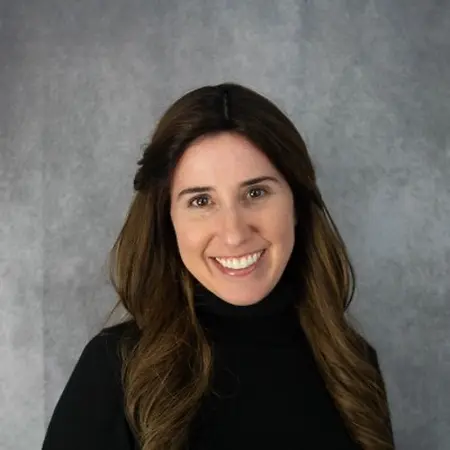
Her Story
About Sara
I've spent over 20 years in patient advocacy, and really my whole career has been with the Life Raft Group. After I left my Master's in public health at University of Michigan, I came to this organization when it was like a small kitchen table type of nonprofit. In those early days, I wore a lot of different hats - I was building chapters across the world, starting webinars, doing grants, running the website and newsletter, really everything under the sun to help get the mission out. We support gastrointestinal stromal tumors, GIST, and nobody really knew about it until a few years before I started. The field has just tremendously grown - there's more treatments available, we've really expanded our team, and we do a lot more with research. When the founder left over 4 years ago, I took over the executive director position. I think I've been part of helping to shape the professionalism and the reputation of the organization in this oncology space. My typical day involves a lot of meetings with the team, talking with different partnerships with stakeholders, developing projects, checking in about how we're advancing research in the field, working on our budget and how we can leverage our money to help fund research. It's operational, but also strategic planning, and a lot of conversations with my internal team as well as external stakeholders.
Her Interview
Ten minutes with Sara
01What’s the best career advice you’ve ever received?
The best advice I received came from my mentor Norman Scherzer, who founded the Life Raft Group. He taught me that when you're in patient advocacy and you face systemic or institutional hurdles or barriers that get in the way as an advocate, don't let those barriers push you down. Step up. See if you can talk to the person in charge - who's the leader at that company, or at that hospital? Really push what that patient perspective is, what's important, and if they don't do the right thing, because really what drives us is doing the right thing, what ethically and morally is the right thing, and if they aren't doing that, you say 'I understand, but that is unacceptable.' You really have to take a stance. I even did this past weekend, advocating with big corporate pharma. They are on this wheel, this momentum of doing their thing, but they don't pause and think about what's important to the patient. You have to use your voice to step in to say 'I understand, but that's unacceptable. How you're doing this and how you're moving forward is not keeping the patient in mind,' and they need to hear that. It is so important that they continue to hear that, and people don't feel shy or quiet about something that's important to the community that you represent.
02What advice would you give to young women entering your industry?
I would say be curious, be passionate about what you do, and don't hesitate to reach out, ask questions, meet people in the space, get to know what they're doing, how you can connect with them, how you can collaborate. I think that helps somebody both on a personal basis, but also a professional basis. When you meet people, they can help you grow your interests and possibly get involved in building a skill set that can really help advance your career.
03What are the biggest challenges or opportunities in your field right now?
In general, nonprofits don't have a lot of money, and usually you do a lot and you have people that you hope really care about the mission to get it done, but usually a challenge is bandwidth. I'm very thankful that my team is so synergistic and we love working with one another, that when there's a will, there's a way. We find a way to get it done - I always say we're small but mighty. In terms of broader challenges, it's hard in the rare cancer space, hard in the rare disease space for people to pay attention to you. For federal funding, for foundations, or just in general, people pay attention to the big cancers like breast cancer and lung cancer. But when you really break down these larger cancers, they all kind of fit into smaller rare cancers, because now we learn about precision medicine and there's all these mutations and specific subtypes that are smaller amounts of people. The rare cancer community is so important to pay attention to, especially the one I represent, gastrointestinal stromal tumors, because the first ever oral cancer drug - and by the way, it's the 25th anniversary of Gleevec this past month - set in motion precision medicine and progress in cancer. Before that, it was all IV chemo. A drug that treats our cancer really set the precedent for future cancer development. I think it's important to pay attention to us because we can serve as a model for curing other cancers, because of the molecular nature of our disease and the targets for our disease. The challenge is having the people with the money, the decision makers, the policy makers, put more funding to help support these diseases, because I think it will pay off in the long run to really make a difference in the health of our population.
Join Influential Women and start making an impact. Register now.