Her Story
About Sarah
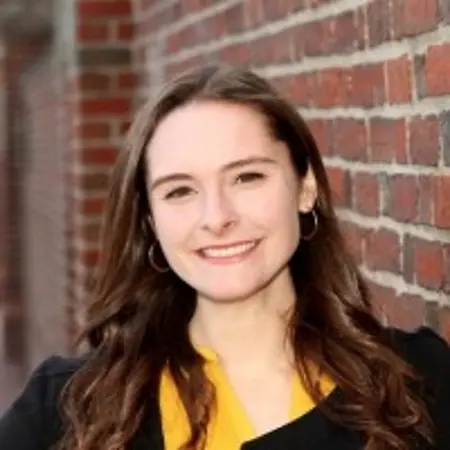
Sarah Burns is a dynamic energy policy professional and sustainability leader focused on advancing the clean energy transition across New England. Currently serving in a strategy and transformation role at National Grid, she plays a key role in driving initiatives to meet ambitious carbon reduction, safety, and operational efficiency goals. With a background that blends utility experience and consulting, Sarah has led efforts in renewable energy integration, decarbonization strategy, and large-scale transformation planning, helping organizations navigate the complexities of the evolving energy landscape.
Prior to her current role, Sarah worked at Accenture, where she led the development of an Environmental Sustainability Dashboard and supported utilities in building actionable pathways to net-zero emissions. Earlier in her career at National Grid, she managed large-scale distributed generation projects and developed innovative programs to streamline solar interconnection and improve access to renewable energy. A graduate of Columbia University with a Master of Public Administration in Environmental Science and Policy, Sarah combines technical expertise, policy insight, and strategic thinking to deliver impactful, forward-looking solutions.
Beyond her professional work, Sarah is a published author of a children’s book on sustainability, an advocate for plant-based living, and an active supporter of environmental and community initiatives. She is also an ultramarathon runner and eco-tourism enthusiast, bringing the same energy and discipline from her personal pursuits into her professional life. Known for her leadership, creativity, and passion for climate action, Sarah is committed to inspiring the next generation and building a more sustainable and resilient future.
Her Interview
Ten minutes with Sarah
01What do you attribute your success to?
I would say having a motivator and being clear on my why, like my reason for doing my job, which for me is sustainability and working on that issue. That's the biggest thing for me. Having that clear purpose and understanding why I'm doing this work has really driven my success throughout my career.
02What’s the best career advice you’ve ever received?
The best career advice I received was from Gina McCarthy, the former Environmental Protection Agency administrator. She was nice enough to allow me to talk with her on a Zoom call because I think she's really cool. She told me that it's a good idea to have a direction that you want to go, but not to pigeonhole yourself into something specific, because we don't know what the world is going to look like in the future. So just know the direction generally, but try not to know exactly what the title is and where you're going to be working, because that will likely change. I had told her I wanted to be the administrator of the EPA someday, and she said don't do that, because you don't even know if that's going to exist 30 years from now. And I was like, yeah, you're right, I guess so. That is a long time. That advice really stuck with me.
03What advice would you give to young women entering your industry?
I would say, believe you can do whatever you set your mind to. And that's really it. I think if you think you can do it, or if you want to do it, believe that you can do it, because I think that's the only way that you'll be able to do it. Basically, you can do anything you set your mind to. I think a lot of men are told that, you know, you can do whatever you want, you're so valuable, and that is true, and I think women need to be told the same thing. So we can also do these wonderful, great things that we have dreamed of.
04What are the biggest challenges or opportunities in your field right now?
In terms of challenges, I would say definitely learning to speak up. That was really tough for me. I usually struggle with being confident about my ideas, because I think in the past I have sometimes been shut down, or I feel that other people speak louder than me, so I would say confidence is a big one, and being outspoken, especially in meetings. I also think really knowing my worth and knowing my value. I think a lot of women sort of struggle with that, just because it's so new that we're in the workforce and rising, and no one really taught me that, and they don't teach you it in school, so I just have to teach it myself. As for opportunities, there are definitely a lot of opportunities for women in leadership. Especially at National Grid, we really value women in leadership positions, and most of our leadership in New England is women-based. We have a CEO who's a woman, our president is a woman, so we really value the women's perspective. I would also say just in the energy field, there's a lot of opportunities with grid modernization, which is basically making sure that our electric grid is in a place where we can have more renewables added to it and it can hold the capacity that we need to incorporate AI into it, since AI uses a lot of electricity. We need people who are going to be able to help that happen and help it happen in a way where it doesn't overload the system. So I think there's a lot of strategy and sustainability and engineering careers that are going to be opening up soon.
05What values are most important to you in your work and personal life?
I think values that are really important are empathy and compassion. I think also authenticity. Those are the top ones for me. These values guide both how I approach my work and how I live my personal life.
Join Influential Women and start making an impact. Register now.