Her Story
About Sarah
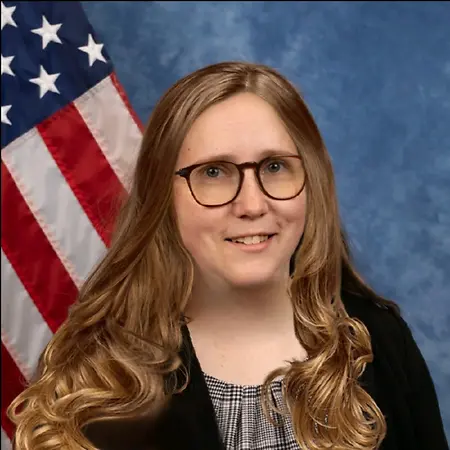
Sarah Flood, RN, MSN, CPHQ, serves as Patient Safety Section Chief at the U.S. Department of Veterans Affairs, VA Eastern Colorado Healthcare System in Aurora, Colorado. In this leadership role, she oversees key patient safety initiatives, including the Patient Safety Program, Fall Prevention Program, and Safe Patient Handling and Mobility Program. Sarah leads efforts to identify risks, coordinate root cause analyses, conduct proactive risk assessments, and implement continuous process improvements that enhance the quality, safety, and reliability of care provided to Veterans. She collaborates closely with frontline healthcare teams and Executive Leadership to promote a culture of transparency, accountability, and psychological safety. With more than 15 years of healthcare experience and over a decade as a registered nurse, Sarah has built a distinguished career centered on leadership, quality improvement, and patient advocacy. She began her nursing journey through travel nursing, where she gained diverse clinical experience and developed the confidence and adaptability that shaped her leadership path. During her career, she advanced through roles including Staff Registered Nurse, Assistant Nurse Manager, and High Reliability Organization Coordinator before becoming Patient Safety Section Chief. Her expertise includes high reliability organization principles, healthcare quality, risk management principles, staff development, infection prevention awareness, and evidence-based practice implementation. Sarah earned her Master of Science in Nursing (MSN) in Innovation, Leadership and Administration in Healthcare from the University of Colorado Anschutz Medical Campus following her Bachelor of Science in Nursing (BSN) from Colorado Mesa University. She holds a Certified Professional in Healthcare Quality (CPHQ) Certification, along with Lean Six Sigma Yellow and Green Belt certifications, and is an active member of the National Association for Healthcare Quality (NAHQ), Sigma Theta Tau International Honor Society of Nursing, the CU Anschutz Alumni Association, and the VA Virtual Aspiring Supervisor (VASP) Mentorship Program. Sarah attributes her success to grit, determination, and perseverance, overcoming significant personal challenges to achieve her educational and professional goals. Her passion is creating environments where healthcare professionals feel empowered to speak up, collaborate, and drive meaningful improvements that lead to safer, more compassionate care for Veterans.
Her Interview
Ten minutes with Sarah
01What do you attribute your success to?
I attribute my success to grit, determination, and an unwavering commitment to perseverance. Coming from a fifth-grade education and taking the initiative to pursue my own education required resilience, discipline, and a strong belief in myself. Through hard work and dedication, I have overcome challenges and continued to grow both personally and professionally. Perseverance has become my trademark, shaping who I am and driving me to keep moving forward, no matter the obstacles I face.
02What’s the best career advice you’ve ever received?
The best career advice I have ever received is to never make a promise I cannot keep and to always remember where I came from. I believe integrity and authenticity are the foundation of success, and keeping my word has helped me build trust throughout my career. I have also learned that when standing in front of an audience, I should never apologize for taking their time. I am there because I have valuable knowledge, experiences, and insights to share, and people are there because they need to hear what I have to say. This mindset has given me the confidence to embrace my voice and the impact I can make.
03What advice would you give to young women entering your industry?
Build authentic connections across all services... clinical, finance, informatics, facilities... because keeping patients safe is a team sport. Trust your intuition and emotional intelligence; they’re not ‘soft skills,’ they’re leadership competencies. Learn financial and operational basics early. When you can articulate the business case for safety, quality, and culture, you become impossible to ignore. Most importantly, don’t wait until you feel 100% ready. Leaders often underestimate their readiness. Take the leap, and grow into the role as you go.
04What are the biggest challenges or opportunities in your field right now?
Patient safety is under pressure from a few dominant forces: rising diagnostic errors, persistent preventable harm, workforce burnout, and fragmented systems that make it hard for staff to reliably deliver safe care. Infections, medication errors, inequities, and rural access gaps continue to drive avoidable harm, while lack of psychological safety threatens to hide the true scale of risk. Even with decades of safety work, the environment has become more complex. More technology, sicker patients, tighter staffing. And that complexity amplifies the consequences of system failures.
At the same time, the opportunities are unusually strong. AI can reduce diagnostic misses, integrated systems design can eliminate failure points, and better reporting cultures can finally give leaders the visibility they need to intervene early. Patient engagement is proving to be a real safety lever, and value‑based models are aligning financial incentives with safer care. For operational leaders, the biggest opportunity sits at the intersection of environment, workflow, and culture; designing systems that make the safe thing the easy thing, every time.
05What values are most important to you in your work and personal life?
The values that guide me—both in my work and in my personal life—are creativity, continuous learning, community, and supporting others through coaching, friendship, and positivity. As an artist, I express myself through oil, pastel, and charcoal painting, and I stay actively involved in local art organizations. I have occasional opportunities to showcase my work with the Brighton Art Community, which gives me a meaningful way to connect with other artists and share my art.
Music is another central part of my life. I’m a bluegrass musician, playing upright bass, guitar, mandolin, fiddle, and banjo. I also enjoy teaching violin and guitar casually, passing knowledge forward and inspiring others.
Beyond the arts, I value dedication, connection, and a little friendly competition. Bowling is one of the ways I nurture that, and I participate in three leagues that keep me engaged and connected.
I’m also committed to supporting victims of domestic violence and contribute to the Joyful Heart Foundation on an ongoing basis.
Together, these experiences reflect my commitment to creativity, lifelong growth, and building meaningful, supportive connections within my community.
Join Influential Women and start making an impact. Register now.