Her Story
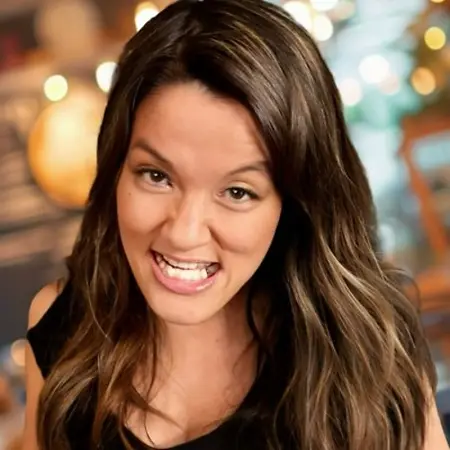
About Sarah
I've been working in journalism marketing for 8 years as a freelance journalist. My main work involves pitching to editors and writing pieces for various publications. I earned my Master's in Journalism in 2018, and I'm proud to be a member of the Asian American Journalists Association as well as the Alumnus Association of Barnard College. Growing up as an Asian American woman with a physical disability has profoundly shaped my career. It taught me early on that sometimes I need to work twice as hard to get half as far, and that reality has made me more resilient and determined in my work. I'm guided by three core values: integrity, passion, and inclusion. These principles inform everything I do, both professionally and personally. Outside of journalism, I'm deeply interested in wellness and fitness, and I'm an avid reader and writer. I also give back to the community through volunteer work with the cerebral palsy community, which is very important to me.
Her Interview
Ten minutes with Sarah
01What do you attribute your success to?
I attribute my success to my upbringing as an Asian American woman with a physical disability. Growing up with this identity taught me a hard but valuable lesson: that sometimes I need to work twice as hard to get half as far. This reality hasn't discouraged me, but rather it has shaped my work ethic and my determination. It's made me resilient and given me a unique perspective that I bring to my journalism work. Understanding what it means to face barriers and to have to push harder than others has been fundamental to who I am as a professional and how I approach every story I write.
02What’s the best career advice you’ve ever received?
The best career advice I ever received was that your five-year plan will probably not work out, so you need to be more flexible. This advice has been invaluable in my career as a freelance journalist. It taught me not to be too rigid in my expectations and to be open to opportunities that might not fit into a predetermined path. In journalism especially, where the industry is constantly evolving and opportunities can be unpredictable, this flexibility has allowed me to adapt and thrive rather than being disappointed when things don't go exactly as planned.
03What advice would you give to young women entering your industry?
My advice to young women entering journalism is this: no matter the political climate, there will always be a need for true and accurate journalism. I know the industry can feel uncertain and the landscape is constantly shifting, but the core mission of journalism remains essential. Don't let the challenges or the noise discourage you from pursuing this career. The world needs journalists who are committed to truth and accuracy, and that need isn't going away. If you have that commitment and passion for the work, there will always be a place for you in this field.
04What are the biggest challenges or opportunities in your field right now?
I think both the biggest challenge and opportunity in journalism right now is AI. It's a double-edged sword. On one hand, some companies will choose to replace us with AI, which is obviously concerning for journalists everywhere. But I believe that's a short-sighted approach. In the long term, smart companies will realize that we work better alongside AI rather than being replaced by it. AI can be a powerful tool to enhance our work, help with research, data analysis, and efficiency, but it can't replace the human judgment, ethical considerations, and storytelling ability that journalists bring. The key is learning how to work with this technology rather than seeing it as purely a threat.
05What values are most important to you in your work and personal life?
The values that are most important to me in both my work and personal life are integrity, passion, and inclusion. Integrity is the foundation of everything I do as a journalist - without it, the work has no meaning. Passion drives me to pursue stories that matter and to keep pushing forward even when the work is challenging. And inclusion is critical because I believe everyone's stories deserve to be told and everyone deserves to see themselves represented in the media. These three values guide my decisions, shape the stories I choose to tell, and inform how I interact with sources, editors, and the communities I write about.
Join Influential Women and start making an impact. Register now.