A reflective essay honoring the Stonewall uprising and celebrating the Black and Brown trans activists whose courageous resistance and lifelong community care made modern LGBTQIA+ rights possible.
Her Story
About Sarah
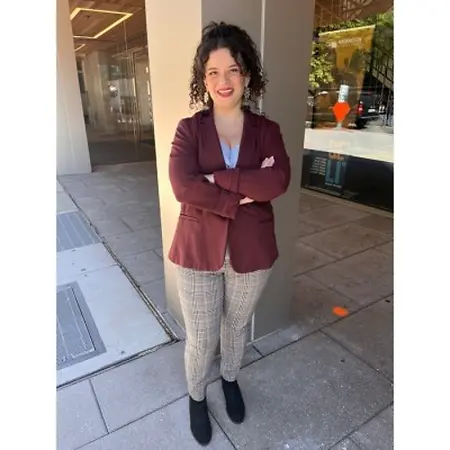
Sarah E. Leone is a social work professional and grassroots advocate serving as a Senior Associate on the Grassroots Impact Team with RESULTS and RESULTS Educational Fund. With nearly a decade of experience in social services and advocacy, she works with volunteer advocates across the United States, equipping them with tools, training, and support to engage members of Congress on anti-poverty policies such as Medicaid and SNAP. Her work is centered on strengthening civic participation and ensuring marginalized voices are represented in national policy conversations. Her career began in direct service roles, including victim advocacy in domestic violence shelters and support for survivors of human trafficking. She later transitioned into refugee and immigrant services during the COVID-19 pandemic, helping communities access healthcare and essential resources. These experiences shaped her commitment to addressing systemic inequities and strengthening access to basic needs through policy change and civic engagement. In addition to her advocacy work, Sarah has spent years organizing and educating communities across Indiana on voter rights, civic engagement, and social justice issues. She is deeply committed to intersectional advocacy, particularly in areas impacting Black, Brown, Indigenous, Disabled, and justice-impacted communities. Her work continues to focus on building collective power, advancing equity, and creating sustainable pathways for systemic change.
Her Interview
Ten minutes with Sarah
01What do you attribute your success to?
When I think about my success, I honestly attribute it to my family. I come from a family of immigrants from my mom and my dad's side, and they both had very different stories of how they got to the United States, and how some of them even left and went back to their original home countries because they didn't like it. I think my stubbornness and my nonstop sheer will comes from them. If I feel very passionate about something, I definitely feel like I get that from them, and that's what motivates me. There's a lot going on in the United States right now that's a hot mess, to be honest with you, and a lot of it there's not an immediate fix, but I think the best thing we can be doing is just continuing to be in the pursuit of justice, while also utilizing our rights and using our voices. I definitely think I got that from my family and the people that helped raise me, too. I grew up very much in a village raised as a child situation, where I grew up with great aunts, great-uncles, great-grandmothers, great-grandfathers, and that really has helped shape me into the person that I am today.
02What’s the best career advice you’ve ever received?
The best career advice that I've ever received came from somebody that's also in the social work field, and they said that it's okay to put the work down, it will be there tomorrow. That has stuck with me for almost a decade now, just because they're right. I think sometimes, especially in the social work field, we get burnt out so quickly from lack of pay, lack of resources, lack of help for our clients, and so I think being able to just say, I need a break, I need to sort of refill. My mom grew up saying, like, you know, we have to refill our love cups, and sort of reconnect with what makes us tick and what motivates us. I think that's probably the best advice I've been given.
03What advice would you give to young women entering your industry?
I would definitely say it's okay to be nervous, it's okay to be scared, but don't get comfortable with that feeling. What you want to do is make sure that you ask yourself every day, what are you scared about? You start remembering, or you start thinking, you know what? I don't have anything to be scared about. You start owning your power, you start stepping into your own truth. I think for particularly women and non-males and people that don't necessarily fit into a binary, too, you living in your truth and living your life, that really is you leading the way for a lot of people, and so that's something to be proud of, and I think that's something we should be celebrating. It's okay to make mistakes, and it's also okay to call out the injustices or maybe the imbalances that you see in the workplace. I had a few experiences early in my career that I feel like really could have taken me away from the social work field, but I pushed through it, and I'm forever grateful that I did.
04What are the biggest challenges or opportunities in your field right now?
I think a lot of social workers right now are facing lack of opportunities. When the president shut down a bunch of projects last year, he decided to take away loan opportunities for people pursuing degrees that come out to helping people, really - social workers, nurses, doctors, lawyers. Those are some barriers that a lot of us are experiencing that are considering or were considering going back to school. There's a lot of suppression happening of people speaking up and speaking out, especially if you have mixed legal status. A lot of people are being targeted, and so I've been on the lookout, trying to figure out how I can best support my community members outside of the social work community, people that do organizing. I think there's a lot of cynicism out there because so many bad things are happening in the United States, and I think that can sometimes be detrimental to your health if you're already struggling with something physically. A lot of my friends that are practicing direct service work have clients that are really struggling and don't know how they're gonna feed their families. I think there's a lot of work to be done, and some of these bureaucratic barriers are just not helping. A lot of the laws and different things across the country in regards to women and non-males, we're starting to become oppressed, and a lot of things are - it feels like we're turning back the clock to the 1950s. It's very difficult, I think, now more so than in a lot of times in the last 50 years to be a woman, to know that we have these rights and to have had them, and now to see them being taken away from us by people that we trusted. I think it does make everybody who is a woman or identifies as trans, non-binary, a lot of us are on edge, and I think it is something that we do need to be open about, because I think there is community when we come together and we talk about what we're struggling with. Also, members of Congress need to be answering their phones a lot better than what they've been doing lately. Their constituents are trying to get ahold of them. I've emailed an office up to 10 times before I got a response.
05What values are most important to you in your work and personal life?
I think some values that are most important to me are just the fight and the journey towards equity for all. I grew up coming from mixed ethnicities, and I grew up heavily and closely identifying with my Mexican American and Indigenous heritage. I think through there, I learned the value of community, and that children and everybody benefits from being raised by a village. From that, I think it has really shaped the way that I see and how I practice my work and how I engage with people, making sure that they have a connection to communities near them, and if they don't, helping them understand what that could be. Intersectionality is a value and also a framework that I heavily admire and use in my everyday life, because I think we cannot - there can't be liberation if we're all not free. I think it's extremely important for all of us to continue to see the human race and just as everyday human beings. Collectively, we have to see one another as being worthy of our love and attention. There can be multiple things going on at the same time, and it's very much okay for you to take a break, to step back, but it's also alright for you to challenge yourself and take that next step or take that leap that maybe you were afraid to do so before. Everything I've done is very much ingrained in social justice. One of the best things that I've included in my life as a value is understanding that it's okay if you don't know something, but the important thing is that you ask questions. You don't assume, you don't judge, and when you move through the world that way, you open yourself up to so much more than you previously had access to.
Her Content Hub
Articles by Sarah
57 years ago
Honoring the Legacy of Stonewall and the Black and Brown Trans Activists Who Fought for Our Freedom
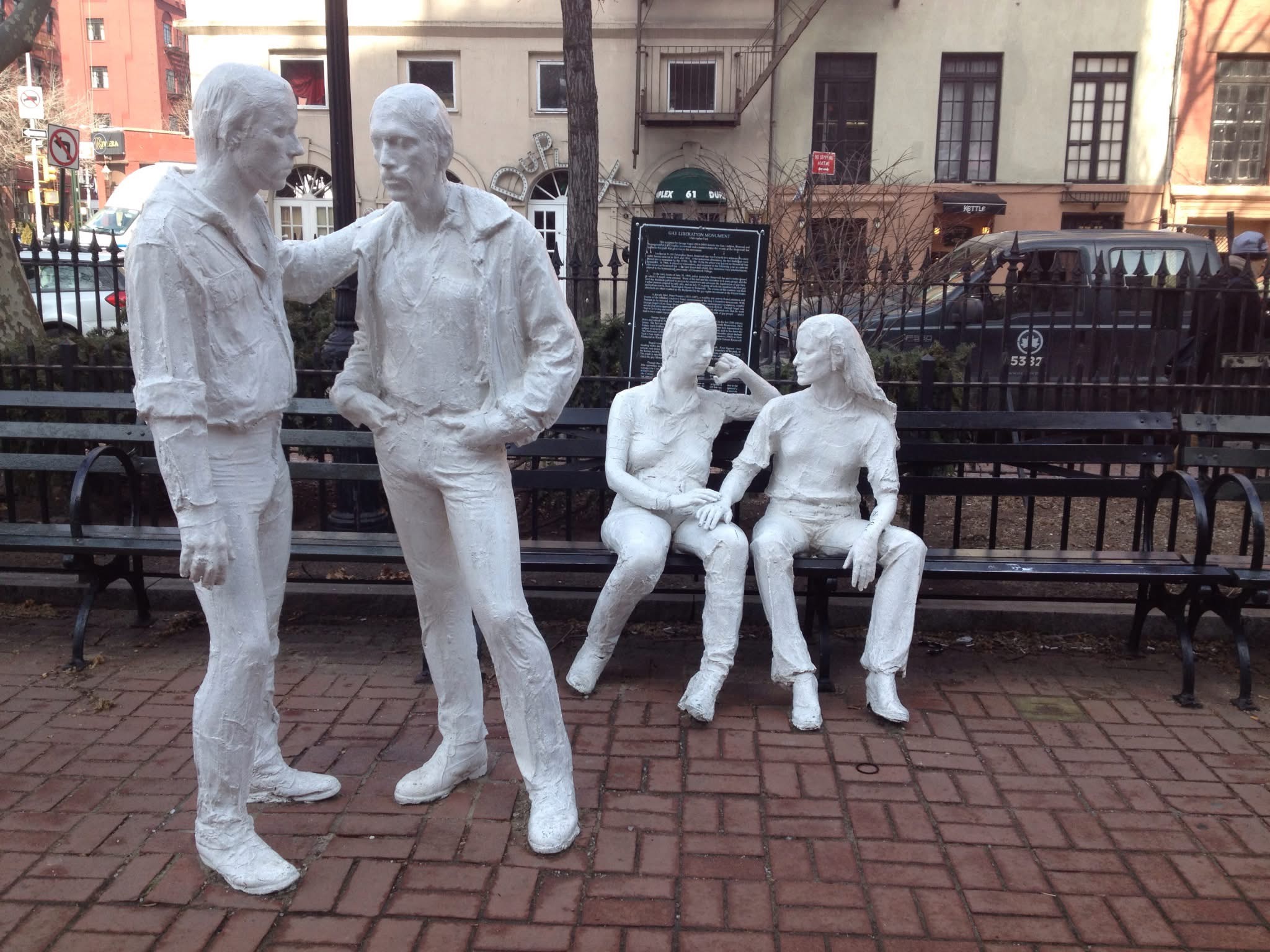
This is a photo of Gay Liberation, a sculpture by George Segal that honors the gay rights movement and commemorates the events of June 28, 1969, at the Stonewall Inn, located in New York City’s Greenwich Village.
The Stonewall Inn
The Stonewall Inn, located at 51–53 Christopher Street, was originally two adjacent stable houses built in the 1840s. By the 1960s, Stonewall had opened as a private club, bar, and dance hall that, like many places in Greenwich Village, served the gay community at a time when LGBTQIA+ people were criminalized, policed, and denied safety in public life.
In the early hours of June 28, 1969, police raided the Stonewall Inn. Thirteen people were arrested, and the community fought back. Word of the raid and the resistance spread quickly. The next day, hundreds gathered to protest the crackdown and advocate for the legalization of gay bars. More protests followed in early July, and on July 27, activists organized one of the first gay and lesbian marches from Washington Square to Stonewall.
The events of that summer are often remembered as a flashpoint for the modern LGBTQIA+ rights movement in the United States.
We Must Remember
When we think about Stonewall, we must remember the Black, Brown, trans, gender-nonconforming, queer, migrant, and working-class people who fought, organized, cared for one another, and built community when the world refused to protect them.
Marsha P. Johnson
Marsha P. Johnson was a Black trans woman, drag queen, and beloved community leader in Greenwich Village. She is widely remembered as one of the people who resisted police violence and helped ignite a larger movement. Alongside Sylvia Rivera, she cared for LGBTQIA+ community members who were unhoused, abandoned, criminalized, sick, and dying during the HIV/AIDS crisis, when so many doctors, families, institutions, and systems turned away.
Sylvia Rivera
Sylvia Rivera was a Latina transgender woman and activist born in New York. She fought on the frontlines for queer and trans liberation and later worked with Marsha P. Johnson to advocate for the most vulnerable members of the community, especially trans people, street queens, unhoused youth, and those pushed to the margins even within the broader LGBTQIA+ movement.
Stormé DeLarverie
Stormé DeLarverie was a butch lesbian performer and activist from New Orleans whose resistance to police brutality during the initial Stonewall raid is often remembered as one of the sparks that moved the crowd into action. Her courage, protection, and lifelong care for the community are part of this history as well.
Miss Major Griffin-Gracy
Miss Major Griffin-Gracy was a Black trans woman, Stonewall veteran, formerly incarcerated organizer, and lifelong advocate for transgender women of color, incarcerated people, and those pushed out of safety and belonging. Her life’s work reminds us that liberation is not just about rights on paper. It is about survival, protection, dignity, housing, healthcare, community, and care.
The queer community would be nowhere without Black and Brown trans activists
What I know now, definitively, is that the queer community would be nowhere without Black and Brown trans activists. My rights as a polyamorous, pansexual cis woman did not appear out of nowhere. They were fought for. They were organized for. They were protected by people who risked their safety, their freedom, their bodies, and their lives.
Because of their painstaking, heartfelt, community-rooted work, I get to love who I love. I get to live with who I want to live with. I get to wave my Pride flag with joy, glee, and sometimes foolishness—but also in grief, reverence, and remembrance of our elders and ancestors.
And still, the fight is not over.
The LGBTQIA+ community is under attack: our rights, our safety, our healthcare, our families, and our way of life. This is especially true for our trans community. Gender-affirming care is being dismantled across the country. Trans people, especially Black trans women and trans women of color, continue to face devastating levels of violence.
There is a wave of hate happening.
But there is also a wave of love.
A wave so big it can overflow this stolen land we live on and change hearts, minds, communities, and hopefully systems.
We have to care
We have to engage in our communities in an authentic and genuine way. We have to show up. We have to be transformational in the way we move. We cannot take and take and give nothing in return.
We have to protect and support Black and Brown LGBTQIA+ communities, migrant communities, local businesses, organizers, artists, and caretakers.
We have to care.
It all starts there—just by caring.
When I was 17 years old
When I was 17 years old, I visited New York City for a show choir competition. I took this photo in Greenwich Village, and it was the first time I learned about Stonewall.
I read the plaque, and I remember feeling like I knew a lot about LGBTQIA+ history. I had prided myself on knowing important milestones.
But of course, I didn’t know everything. I certainly did not know what I know now.
When I look back at this photo, I think about how much history I was standing inside of without fully understanding it yet. I think about Marsha, Sylvia, Stormé, Miss Major, and so many others whose names we know—and whose names we may never know. I think about the people who fought so that the rest of us could live more freely.
And I remember them today as I continue doing my part to fight for queer rights in all of our communities: trans, nonbinary, gay, lesbian, intersex, bisexual, queer, asexual, pansexual, and everyone still fighting to be safe, seen, loved, and free.
Join Influential Women and start making an impact. Register now.