An arts leader and conductor explores how her prestigious family heritage inspires her mission to build community connection and accessibility through music, reflecting on leadership as service.
Verified Member
Influential Woman · Music and Performing Arts
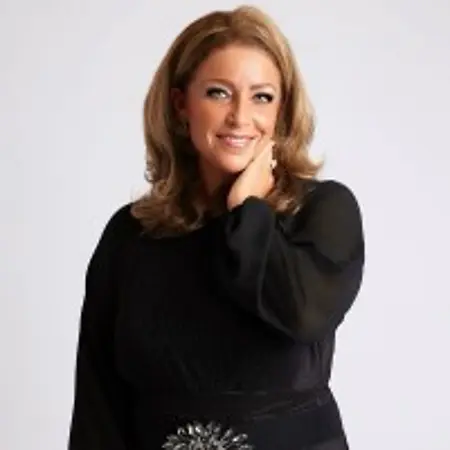
Sarah Lyn Pearson
Founding Music Director and Conductor, The Cleveland Orchestra and Chorus of Tennessee
Cleveland, TN 37311
1Article published
7Awards received
Her Story
About Sarah
Sarah L. Pearson is an internationally recognized American conductor and multi-award-winning artist known for her refined musical voice, expressive clarity, and compelling artistic leadership. With over 15 years in the professional music field, she began her journey in academic education before fully transitioning into conducting after completing her dual master’s degrees. Pearson brings a distinctive approach that blends conducting excellence, collaborative leadership, and innovative programming, driven by a singular vision to create performances where musical artistry and human connection are inseparable. For her, music is not merely performance—it is connection, identity, and storytelling at its core. Throughout her career, Pearson has appeared with leading orchestras across the United States and Europe, including the Buffalo Philharmonic Orchestra, Juilliard Symphony Orchestra, Symphony of Northwest Arkansas, Lviv Philharmonic Orchestra, New Symphony Orchestra of Bulgaria, and the Bohuslav Martinů Philharmonic Orchestra. In 2016, after facing repeated barriers as a female conductor, she founded the Cleveland Orchestra and Chorus of Tennessee from the ground up—now entering its tenth anniversary season. She also serves as Music Director and Conductor of The Cleveland Pops, where she recently celebrated her tenth year, and has been Assistant Conductor of the Symphony of Northwest Arkansas since 2018, contributing to its education programs, family concerts, and serving as cover conductor. Pearson continues to expand her presence across Europe, building a dynamic international career highlighted by her debut at Carnegie Hall in May 2024, with a return engagement scheduled for 2027. In addition to her conducting work, Pearson is a dedicated educator and mentor. She serves as a professor of music at Cleveland State Community College, where she teaches and directs ensembles, and leads a thriving orchestra program of approximately 150 students in grades 6 through 12 at Chattanooga School for the Liberal Arts. Her role as a conductor extends far beyond the podium, encompassing leadership, education, and artistic vision across multiple organizations. Known for her discipline and commitment, Pearson begins her day at 5 a.m. to prioritize personal well-being before teaching and leading rehearsals and performances. Through every aspect of her work, she remains deeply committed to developing the next generation of musicians while creating meaningful, transformative musical experiences for audiences worldwide.
Her Interview
Ten minutes with Sarah
01What do you attribute your success to?
I attribute my success to tenacity and a deep sense of purpose. I’ve never been someone who gives up easily, but more importantly, I believe my work is part of something larger than myself.
My goal is to help shape a future where orchestral music feels relevant, accessible, and reflective of the world we live in today. That vision is grounded in my faith, my upbringing, and the legacy of my family—it’s something that has always guided me and continues to sustain me, especially in the more challenging moments.
And there are challenges. Building and sustaining an organization requires constant problem-solving—whether it’s finding musicians, securing funding, or creating opportunities with limited resources. I’ve dedicated years of work to this, often without financial compensation, because I believe deeply in the mission. For me, it’s not just about where things are now—it’s about what they can become. And I’m committed to seeing that vision through.
02What’s the best career advice you’ve ever received?
One of the most meaningful pieces of advice I’ve ever received came from my mentor, Bob Bernhardt, who would often tell me: ‘Don’t forget to breathe. What I’ve come to understand over time is that he wasn’t just talking about breath—he was talking about presence, awareness, and control.
In conducting, and in leadership more broadly, there’s constant pressure—expectation, responsibility, decision-making in real time. It’s easy to become overwhelmed or reactive. But learning to pause, to ground yourself, and to stay internally steady changes everything. And that has stayed with me, especially in the most challenging moments of my career. Because leadership isn’t about eliminating pressure—it’s about how you carry it.
For me, ‘breathing’ has become a discipline. It’s how I stay focused, how I support the people around me, and how I lead with intention rather than urgency. That ability to center yourself—it’s what allows you to step into difficulty with clarity and strength.
03What advice would you give to young women entering your industry?
I would tell young women entering conducting that we are stepping into a moment where leadership is evolving—and the arts have the power to lead that shift. We’re not just conducting music—we’re redefining what leadership looks like on the podium.
So first: keep showing up. Don’t give up on yourself, even when it’s difficult. My mentor, JoAnn Falletta, always emphasized the importance of developing a thick skin. Rejection is inevitable in this field. I’ve faced it throughout my career—but I’ve learned that not every ‘no’ is a loss. Sometimes rejection is protection—and redirection toward what you’re truly meant for.
But purpose also requires discipline. This work demands focus, preparation, and a willingness to do the hard, daily grind of becoming better. And it matters—because music is one of the most powerful ways we tell human stories. We don’t just conduct concerts—we create experiences that invite people in, that make them feel seen, and that connect communities.
So stay committed. Stay grounded. And trust that your voice belongs here.
04What are the biggest challenges or opportunities in your field right now?
One of the biggest challenges in the field right now is rebuilding audience engagement—especially with younger generations. Coming out of the pandemic, orchestras lost a lot of momentum at a time when many were just beginning to reach new peaks in audience development. While live performances have returned, audience habits have shifted. People became accustomed to the convenience of digital access, and we’re now facing the challenge of inviting them back into the concert hall. But within that challenge lies a tremendous opportunity. We have the chance to redefine what the concert experience feels like—not just as something you attend, but something you truly experience. For me, that means creating deeper points of connection before, during, and after the performance.
Through my Inside the Music program in Arkansas, I’ve focused on building a 360-degree concert experience. Students and audiences are introduced to the music ahead of time through listening materials, composer insights, and interviews, so they arrive feeling prepared and invested. We also focus intentionally on middle and high school students—because that’s a critical moment when they’re already engaged in music, but often disconnected from the professional orchestral experience. Through mentorship, our principal players work directly with students in schools, helping prepare them for auditions and building relationships. Then we bring them into the concert hall—not just as audience members, but as participants in the experience—often alongside their families. Because when you engage a student, you also engage a household.
Ultimately, I believe the opportunity in front of us is to shape a future where orchestral music feels relevant, accessible, and reflective of the world we live in—and where audiences don’t just attend, but feel a sense of belonging.
05What values are most important to you in your work and personal life?
The values that matter most to me are connection, intentionality, and care. I believe that how you lead in your professional life should be a reflection of how you live your personal life. For me, that starts at home—with my family—and carries into every space I step into.
I’m intentional about creating environments where people feel supported, valued, and seen. Because when people feel cared for, they show up differently—they engage more deeply, they contribute more fully, and they grow. I also value discipline and personal responsibility. Impact doesn’t happen by accident—it comes from showing up consistently and doing the work.
I want others to see that while the path may not be easy, it is possible with commitment and purpose. At the heart of everything I do is a belief in collaboration. I don’t see leadership as standing apart—I see it as bringing people together. Inviting others to the table, giving them a voice in the process, and building something collectively—that’s where real impact happens.
Her Content Hub
Articles by Sarah
Carrying Forward a Legacy of Service Through Music
How a descendant of America's founding legacy is reshaping what service means through music and community leadership.
Carrying Forward a Legacy of Service Through Music
By Sarah Pearson for Influential Women
May 12, 2026
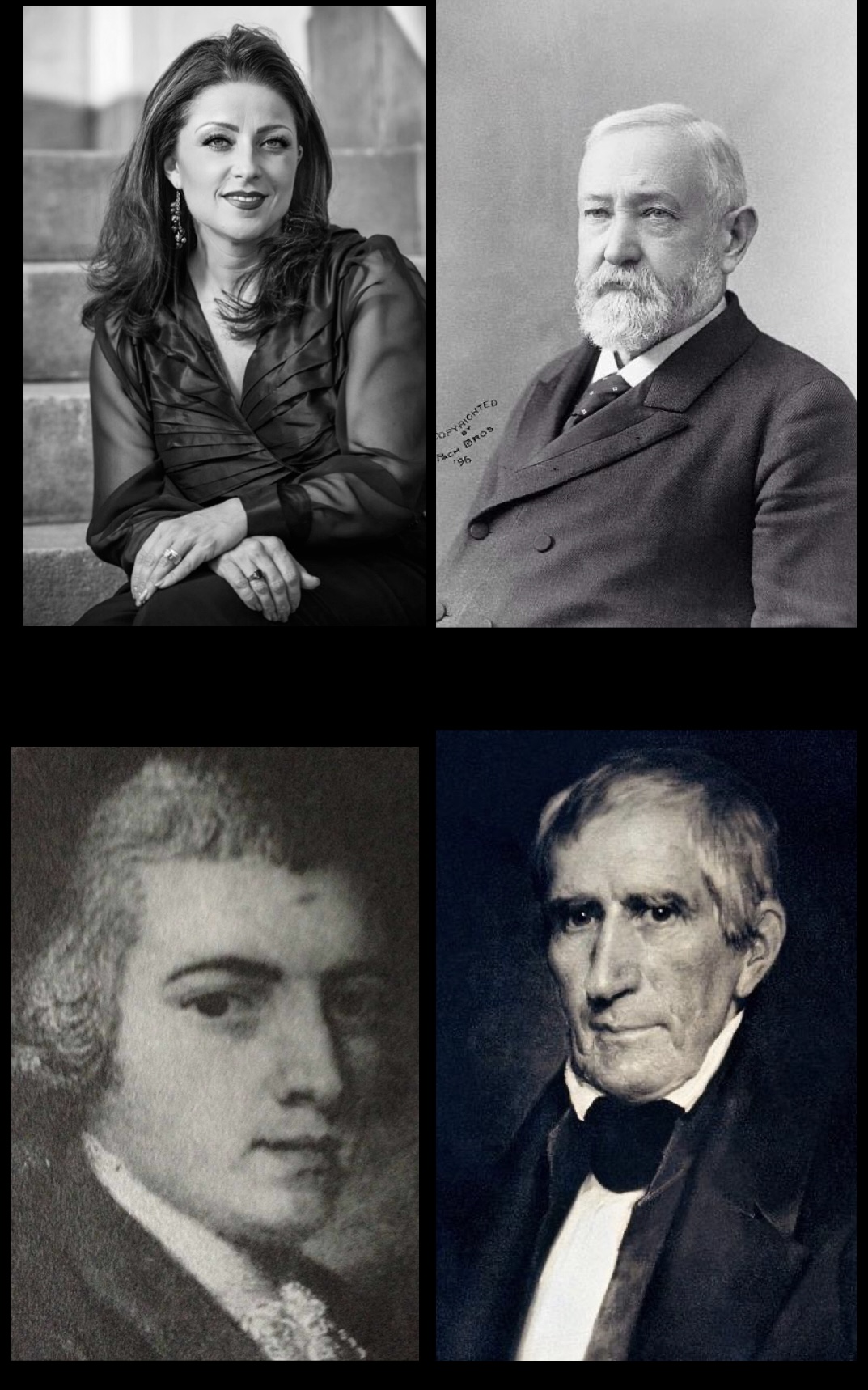
When people hear that my family lineage traces directly back to one of the Founding Fathers of the United States, they often assume the story is about prestige, politics, or historical recognition. But for me, it has always meant something much more personal: responsibility.
My direct ancestor, Benjamin Harrison V, was a signer of the Declaration of Independence, a revolutionary leader, and the fifth governor of Virginia. His son, William Henry Harrison, became the ninth President of the United States, and his grandson, Benjamin Harrison, later served as the nation’s 23rd president. My great-grandmother, Opal Agnes Harrison, was part of that presidential family legacy and spent part of her childhood connected to life in the White House.
History has always been present in my family story, but I was raised to understand that legacy is not simply something you inherit—it is something you choose to carry forward.
For me, that calling has taken shape through music.
As a conductor, educator, and arts leader, I have dedicated my career to building connection through the arts. Conducting is often misunderstood as control, but in reality, it is the art of listening, collaboration, and bringing people together around a shared purpose. Every rehearsal, every performance, and every educational experience is an opportunity to create unity in a world that often feels divided.
I see profound parallels between leadership in public service and leadership in music. Both require vision, empathy, communication, and the ability to inspire people toward something larger than themselves. In music, individuals from different backgrounds, perspectives, and experiences come together to create one unified voice. That, to me, is one of the most powerful reflections of what community can and should be.
Throughout my career, I have worked to make the arts more accessible, welcoming, and relevant to modern audiences. I believe deeply that orchestras, bands, choirs, and arts organizations should not feel exclusive or distant. Music belongs to everyone. Some of the most meaningful moments in my work have come from watching a student discover confidence for the first time, seeing an audience member moved to tears by a performance, or witnessing a community unite around a shared artistic experience.
Recently, I was honored by the city of Cleveland for my impact as an arts leader and educator in the community through music and leadership. I was also recognized in Chattanooga as a conductor and music director, contributing to the cultural growth of the region through the arts. Those moments were deeply meaningful to me—not because of recognition itself, but because they affirmed the purpose behind the work: creating connection, opportunity, and inspiration for others.
I often reflect on the idea that America itself is still an ongoing story. The ideals expressed in our founding documents were powerful, but each generation is tasked with continuing the work of shaping what those ideals look like in practice. I believe leadership today is less about authority and more about service—about creating spaces where people feel seen, valued, and connected.
That philosophy guides my work every day.
Whether I am conducting a concert, mentoring students, developing arts programs, or engaging new audiences, my goal is always the same: to leave spaces better than I found them and to help people experience the power of shared humanity through music.
History lives through people—not only through the names written in textbooks, but through the choices we make with the opportunities we inherit. At the end of the day, I believe legacy is not simply about where we come from. It is about how we choose to serve others moving forward.
For me, that service happens through music.
#conductlikeagirl
Join Influential Women and start making an impact. Register now.