Her Story
About Sarah
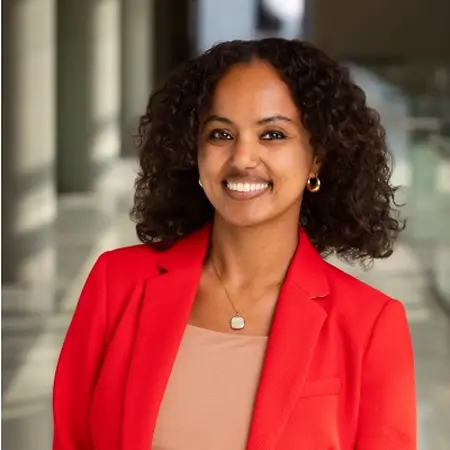
Sarah Yoseph is a lecturer in mathematics at Loyola Marymount University in Westchester, California. With eight years of experience as an educator, she has taught at community colleges and now at this private university, where she also earned her undergraduate degree. Her educational path included four years at Santa Monica Community College before transferring to Loyola Marymount University, followed by a master's degree at Claremont Graduate University. Sarah is committed to inclusive teaching practices and pedagogical wellness, as demonstrated by her participation in a year-long HHMI cohort through the Howard Hughes Medical Institute focused on access, inclusion, and wellness in STEM fields. She also remains connected to the BEAM program, a summer math camp for marginalized middle school students that she first joined after completing her master's degree. In her teaching, Sarah emphasizes creating welcoming and accessible classroom environments, drawing on advice such as prioritizing comprehension over completion and slowing down to support student understanding.
Her Interview
Ten minutes with Sarah
01What’s the best career advice you’ve ever received?
From the beginning, the oldest, and the first piece of advice a lot of newer instructors like myself, when I first started, is to slow down. I don't know what it is that we feel like we need to share everything all at once and cram students' heads with as much information, but slowing down and giving information in very digestible pieces is always better, or I think the phrase of, Comprehension over completion is the guiding. So even if you don't get through everything, it's better students understand 70% of everything, rather than knowing or, like, hearing 100% of everything.
02What advice would you give to young women entering your industry?
Something that I'm learning more about now, myself, so I love to stay a student while I am the instructor, so there's already, I guess, advice in that sentence as well, is always keep learning. But something I'm consistently learning is about a term called pedagogical wellness. And so, we've gotten to the point where we have students in the math classrooms... now I'm really more interested in the wellness of the students and the instructor themselves, so making sure, are we building lessons that take care of the students' psychological safety? Are we making sure we are well as the instructor?
03What are the biggest challenges or opportunities in your field right now?
The challenges that my colleagues and I always sort of lament together about is how do we get the students to the office hours? How do we help them, sort of, especially with math, destigmatize the feeling of, I don't know, making a mistake, feeling like, you know, I'm not a math person, is what we hear all the time... I want my students to know I'm on their side, I'm their advocate, I want We want them to feel comfortable... making ourselves, the subject, the course, as welcoming, inviting, and accessible as possible for students, especially those who may have experienced any sort of academic trauma.
Join Influential Women and start making an impact. Register now.