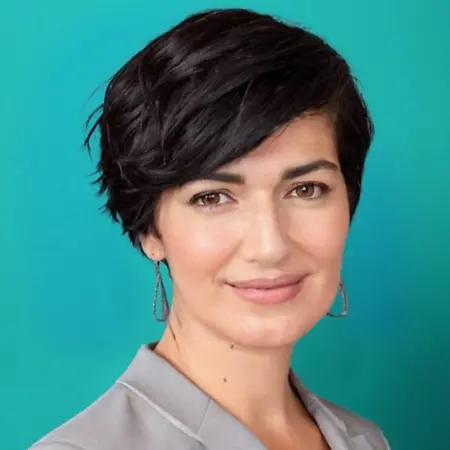
Her Story
About Sasha
I've been in the nonprofit space for over 10 years, with my current agency role spanning almost 3 years. Prior to working as a communications consultant, I worked for the V Foundation for Cancer Research as the Assistant Director of Donor Relations, where I was responsible for supporting our executive board, signature events team, and development team. I created stewardship programs and made sure that all of the donors for the V Foundation were feeling special and rewarded by giving to the organization. I was in the business of basically thanking donors and making sure that their gift-giving felt rewarding to them. Before that, I worked in hospitality management in hotels and restaurants, with several stints in the event management and production space, working with properties on special events and coordinating different special experiences. I was always in a space of dealing with clients, managing expectations, and making sure that everybody had a wonderful experience anywhere they went, coordinating a lot of details and a lot of moving parts. Now, I manage roughly a dozen clients, meeting with them on a weekly or bi-weekly basis to ensure their needs are met. I manage a team of designers and other writers who are putting together all the different collateral pieces or programmatic materials that they need to support their campaign efforts. I consider myself almost like an air traffic control between what the client needs and how we can help them, making sure that everything is on time, on track, and meets their goals.
Her Interview
Ten minutes with Sasha
01What do you attribute your success to?
I attribute my success to always driving myself forward and never giving up. I think it's really important to have goals, you know, set a goal, be able to work towards it, know what goal you want, being able to identify that or spend some time with somebody and talk it through. But I would say just always reaching higher, and pushing myself forward, and teaching my kids to be able to do the same, just never giving up, moving forward in a way that's positive, keeping a positive frame of mind is important. All of those things work together so you don't get discouraged as you go through life.
02What’s the best career advice you’ve ever received?
The best career advice I think I've ever received has been, don't take anything personally. That's been something that I feel like I've been challenged by in life, professionally and personally, but working to make sure that everybody meets me wherever, as deeply as they've met themselves, so not everybody can always act the way that I would think that they can act. It's really important as a reminder not to take anything personally. And then the other thing that kind of goes along with that, in addition to not taking it personally, is being able to advocate for myself in the workplace. That was really good advice that somebody gave me along the way. If you want a promotion, you need to be able to ask for it, you need to demonstrate why you think you deserve it, so I feel like that's helped me to develop a backbone.
03What advice would you give to young women entering your industry?
I would say be patient with your learning and adaptability. Sometimes the things that you plan for don't always end up working out the way that you intended, but there's always a way forward that you can find a workaround, or you can ask somebody for help. Don't be afraid to ask for help and support, particularly from people who you identify as mentors early on. I feel like the majority of people, especially when they're more senior in their roles, have a lot of bandwidth to give to be able to support people who are more junior or who need a little bit of extra advice or mentorship. Just being available to know that you don't know everything, and that it's okay to ask, and it's okay to explore, and it's okay to change your mind. If you decide to go into one field and you try it out, and you find out that this isn't really something that works for me, I don't think that any of the skills that I've learned along the way in the different types of roles I've ever lost. So even if I change job roles completely, or companies, or even industries completely, none of the education or the mentorship or learning is out the door. I just use it, and I build upon it. So, don't be afraid to be inventive with your professional story, and just keep building your own way of being, and however that looks for you. Don't be afraid to try things, and ask questions, and just be as adventurous as you can.
04What are the biggest challenges or opportunities in your field right now?
I would say the biggest challenges are just being able to keep differentiation at the core. A lot of universities are fundraising for scholarships and fundraising for the same thing, so it's really important to make sure that we help with messaging that keeps someone feeling that specialness and how they would stand apart from other peers in the industry. When I'm helping healthcare clients, obviously, the biggest challenges or hurdles are working with a variety of teams that are really burnt out, and they're having a hard time generating more energy or more fundraising dollars. So giving them the tools and the tactics to be able to feel more confident and inspired in what they do, so they can continue to do a good job. I would say that burnout is probably the biggest outlier for why teams have a lot of turnover in the nonprofit world. A lot of my role is just making sure that somebody has the space to be able to tell me what is bothering them, and what their issues are, and I can create that space and hold space for them to be able to arrive at a place where they feel a little bit less burdened by the things that they have to do. So it's kind of very much like a counselor role.
05What values are most important to you in your work and personal life?
The values that are most important to me in work and in personal life are mutual respect, having compassion for others, and attention to detail. Being a good and active listener is really important in communications. You have to be able to ask good questions, lead people and folks to places where they need to be able to identify their truth, and so being able to listen to them and guide them in a respectful and compassionate way always leads to really good results in relationship.
Join Influential Women and start making an impact. Register now.