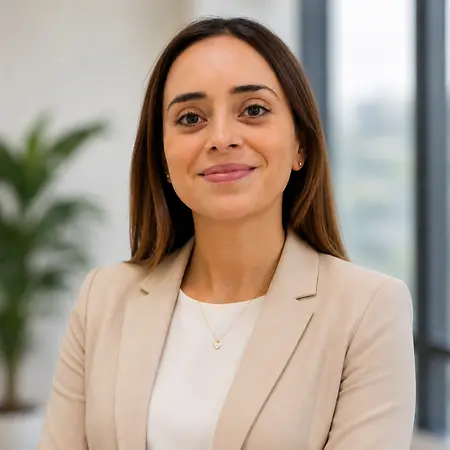
Her Story
About Scarlett
My work has always been guided by a simple belief: healthcare and opportunity should never depend on where someone was born, how much money they have, or the barriers they face in life. Throughout my career in public health, education, and community health, I have remained committed to creating systems that are more equitable, compassionate, and accessible for historically underserved populations.
Growing up in a small community in Chile taught me early on the value of resilience, empathy, and collective care. Watching my mother raise our family with strength and dignity despite significant challenges shaped the way I understand leadership today. It also taught me that education and public service can become powerful tools for breaking cycles of inequality and creating lasting social change.
As a woman working in public health leadership and policy, I have often had to navigate environments where innovation, decision-making, and authority were not equally accessible to everyone. Those experiences strengthened my commitment to advocating for inclusive leadership, ethical decision-making, and policies centered on human dignity. I believe meaningful leadership is not measured by titles, but by the ability to create opportunities for others, amplify unheard voices, and improve people’s everyday lives.
Motherhood, migration, caregiving, and academic life have all deeply influenced my perspective on health equity. Living between cultures while supporting my family across countries has reinforced my understanding that health is never only clinical; it is emotional, social, economic, and deeply human. These experiences continue to shape my research interests, particularly in dementia care, caregiving, and the realities faced by low-income families navigating chronic illness with limited support and resources.
Through my PhD journey and professional work, I hope to contribute to a future where healthcare systems are designed not only to treat disease, but also to recognize people’s stories, cultural contexts, and lived experiences. My goal is to continue building bridges between research, policy, and community voices in ways that foster trust, inclusion, and long-term social impact.
Above all, I hope my journey reflects that it is possible to pursue ambitious dreams while remaining grounded in compassion, integrity, and service to others.
Her Interview
Ten minutes with Scarlett
01What do you attribute your success to?
I would say resilience has been one of the biggest reasons behind my success. There was a moment last year when I was sitting next to my bed crying because I felt I had to choose between my dream and my family. I had just received the opportunity to pursue my PhD in the United States through the Fulbright Program, but at the same time I was pregnant and my mother had been diagnosed with dementia. It was one of the hardest moments of my life.
I seriously considered giving up my scholarship because I felt overwhelmed by guilt, fear, and uncertainty. But then I thought about everything I had worked for throughout my life, and I thought about my mother. I knew that if she were healthy, she would want me to continue pursuing my dreams and creating opportunities for myself and for future generations of women. That realization changed everything for me.
Now that I am a mother myself, I feel an even greater responsibility to lead by example for my daughter. I want her to grow up knowing that women can pursue education, leadership, motherhood, and purpose all at the same time, even when life becomes difficult.
Being a Latina international student in the United States has also brought many challenges: financial instability, cultural adaptation, discrimination, uncertainty, and balancing motherhood while pursuing a PhD. But through all of it, I have continued moving forward with faith, resilience, and a strong sense of purpose.
I truly believe I am here not only for myself, but also to help open doors for other women who come from backgrounds where opportunities are limited. My goal is to contribute to a future where women, especially those from underserved communities, do not have to struggle so hard just to access education, leadership, and healthcare opportunities.
02What’s the best career advice you’ve ever received?
The best career advice I have ever received came from my mother. She always told me that no matter how difficult life becomes, I should never stop believing in my dreams or my ability to achieve them. That advice became especially meaningful during one of the hardest moments of my life. When I received my Fulbright scholarship to pursue my PhD in the United States, I was also pregnant and my mother had just been diagnosed with dementia. Many people told me that maybe life was giving me a sign that I should step away from my professional goals, and that as a woman I should focus only on caregiving and motherhood.
But my mother taught me something different. She taught me that women should not have to choose between caring for others and pursuing their purpose. She reminded me that following our dreams can also be an act of love, courage, and leadership.
That perspective gave me the strength to continue my journey. Today, my daughter is one of my greatest motivations. I want her to grow up knowing that being a woman should never limit the size of her dreams. I want her to see that even when life is difficult, it is still possible to pursue education, leadership, motherhood, and service with commitment, resilience, and compassion.
The advice my mother gave me continues to guide every part of my career and my life: believe in your purpose, keep moving forward, and never allow fear or circumstance to define your potential.
03What advice would you give to young women entering your industry?
My advice to young women entering public health, education, or any leadership field is to never underestimate the value of your voice, your perspective, or your ability to create change. Women are often the invisible force sustaining families, communities, institutions, and entire societies. We lead, care, create, innovate, and build resilience, even in the most difficult circumstances.
One of the most important things I have learned is that leadership is not defined by titles or status. You do not need to be a CEO, a famous researcher, or hold the highest position in a company to make an impact. Every woman, in every role, has the power to influence others, open doors, and create change through her work, integrity, compassion, and courage.
As women, many of us grow up facing visible and invisible barriers—social expectations, discrimination, financial limitations, or the belief that our dreams should come second to everyone else’s needs. But every time a woman chooses to pursue her goals despite those obstacles, she creates possibilities not only for herself, but also for the women and girls who are watching her.
I want young women to know that they do not need permission to dream big. Your value is not determined by stereotypes, by fear, or by the limitations others place on you. There will always be people who doubt your abilities, question your ambitions, or underestimate your potential. What matters most is that you believe in yourself, even during the moments when the path feels uncertain.
For me, success is not only about personal achievement. It is about helping create a world where future generations of women do not have to fight so hard just to access opportunities, education, leadership, and respect. Every barrier we break today becomes a bridge for another woman tomorrow. Never stop believing that your voice, your story, and your work matter. The world needs more women who lead with strength, empathy, integrity, and purpose.
04What are the biggest challenges or opportunities in your field right now?
One of the biggest challenges in public health right now is the rapid global increase in dementia and Alzheimer’s disease as populations continue to age. We are experiencing a major epidemiological transition worldwide, and over the next several decades, dementia is expected to affect millions more families across every country and healthcare system.
In both Chile and the United States, dementia has become one of the leading causes of mortality among women, surpassing many diseases that historically received greater public attention. Yet despite the growing prevalence, many healthcare systems are still not fully prepared to respond to the social, economic, and caregiving impact that dementia creates for families.
One of the greatest public health concerns is that dementia does not affect only one individual; it transforms the lives of entire families and communities. Many families, especially low-income households, face enormous barriers in accessing early diagnosis, treatment, long-term care, transportation, caregiver support, and mental health resources. These inequities often become even more severe in underserved communities where healthcare access is already limited.
Another critical issue is the disproportionate impact on women. Women are more likely to develop dementia, but they are also more likely to become caregivers for parents, spouses, or relatives living with the disease. Across many countries, the majority of unpaid caregiving responsibilities continue to fall on women, creating significant emotional, financial, and professional burdens.
At the same time, I also see a major opportunity in this field. Public health researchers, policymakers, and healthcare systems now have the chance to redesign dementia care in a more equitable, community-centered, and accessible way. We have the opportunity to create policies that support caregivers, improve access to healthcare and early interventions, reduce disparities, and build systems that recognize caregiving as both a healthcare and social justice issue.
I believe how we respond to the growing dementia crisis over the next few decades will define the future of health equity around the world.
05What values are most important to you in your work and personal life?
The values that guide both my professional and personal life are resilience, dignity, kindness, integrity, and service to others. I believe these values are deeply connected and shape the way we lead, care for people, and create meaningful change in the world.
Resilience has been one of the most important values throughout my life. Many of the opportunities I have today came after moments of uncertainty, sacrifice, and hardship. Resilience, for me, does not mean pretending life is easy; it means continuing to move forward with purpose, compassion, and hope even during difficult moments. It is what allowed me to pursue education, leadership, motherhood, and public service despite many personal and structural barriers.
Dignity is another value that strongly influences my work in public health. I believe every human being deserves to be treated with respect, regardless of their income, background, education, gender, age, or health condition. Much of my work has focused on improving healthcare access because I believe healthcare systems should protect human dignity and not reinforce inequality or exclusion.
Kindness is equally important to me. In both leadership and everyday life, I believe kindness is not weakness—it is a form of strength. People remember how they are treated, especially during vulnerable moments. Whether working with patients, students, families, or colleagues, I try to lead with empathy, humility, and compassion.
Leadership, to me, is not about power or titles. It is about responsibility. It means using your voice, knowledge, and opportunities to create positive change and to open doors for others who may not have had the same opportunities.
One idea that deeply guides my life is the quote often attributed to Mahatma Gandhi: “Be the change you wish to see in the world.” I truly try to live by that principle every day. I want my work, my leadership, and my personal actions to contribute to a society that is more equitable, accessible, compassionate, and supportive for future generations, especially for women, caregivers, underserved communities, and families who often feel invisible within systems of power.
Join Influential Women and start making an impact. Register now.