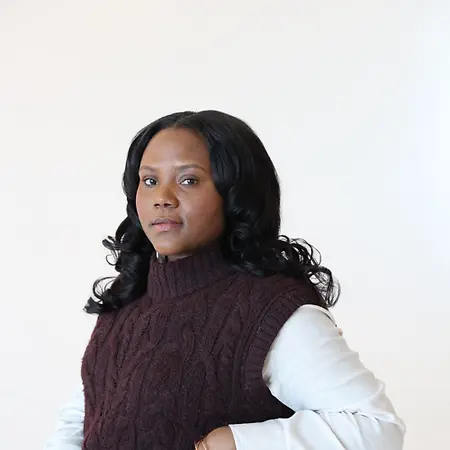
Influential Woman · Healthcare Media Legal Advocacy
Shabieko Ivy
Medical Social Worker Host of In Conversation with Shabieko Ivy Future Attorney
Brooklyn, NY 10026
Her Story
About Shabieko
I'm from China and started my design education years ago. As a designer, I've always been thinking about what kind of content we need to focus on. After a few years, I realized that doing infographics is what really satisfies me because it helps people engage with content that might otherwise be too difficult to access. Scientific papers are really interesting, but the text-heavy stuff is really hard to get, so my job is mainly to deliver medical content and scientific research to the public in a way they can understand. I have a full-time job at The Epoch Times, which is a medium that's very popular in America. I work in the health team where I co-work with a lot of doctors and PhDs. They tell me about their research, I read their papers, and I catch all the information. Then we come up with infographics and illustrations and art related to this industry. Before that, I was a freelance artist in the illustration industry. I drew a children's book myself called 'The Whisper of the Summit,' which is about self-journey and mental health. It's inspired by a Tibetan story, and I'm really interested in mental health because mental health is really highlighted with the physical. When I do illustration books, I feel like the storytelling artists can do is really important to society. I treat myself as a bridge - I'm very glad to help the scientific industry connect to art and design. Although I feel it's quite different, I'm really glad to be the person who helps people know what scientific research is about and how academic knowledge can help everyday people.
Her Interview
Ten minutes with Shabieko
01What do you attribute your success to?
I think patience is one of my most important characteristics. Sometimes people from different industries are very specialized in their own industry, but it's hard to be open-minded or put themselves in others' shoes. For myself, I always tell myself to be patient to everyone and patiently treat different knowledge and industry information. I think this patience has really helped me bridge the gap between the scientific world and the artistic world, allowing me to work effectively with doctors, PhDs, and researchers while translating their complex work into something the public can understand and appreciate.
02What’s the best career advice you’ve ever received?
The best career advice I've ever received is to be open and keep talking. Keep being involved in the industry. Ask people when you don't have any ideas - just ask. I think this advice has been crucial for me because it's helped me stay connected to both the scientific and artistic communities, and it's allowed me to learn from experts in different fields. By staying open and asking questions, I've been able to grow as a bridge between these two worlds and create work that truly serves people.
03What advice would you give to young women entering your industry?
The advice I would give is to live up to your fingerprint. Each of us have different fingerprints - none of us are the same. I think oftentimes, as young women, we always want to compare ourselves, we always want to say, well, they're doing this, and I'm not up to speed. I find that the more we spend time comparing what I don't have, where I'm not, where I lack, it kind of distracts you from where you need to be. So my biggest advice is just try your own path. Know that you were given a unique path than everybody else. Know that you have a unique path - what is your purpose? What do you like? You might not find your purpose overnight, you might have to do some trials and errors, like what I did. I did not want to do certain careers until I had certain experiences. So I would tell women to just trust the timing of your life, and know that there's no rush. I've learned that the more you rush, you end up in hot water. The more you rush, you're not trusting the timing of your life. Trust the process, because ultimately it's gonna make sense. Maybe not right now, but it's gonna make sense.
04What are the biggest challenges or opportunities in your field right now?
I think the biggest challenge right now is that people's attention spans are getting shorter and shorter. Video is the new trendy thing, but we all want to deliver precious, valuable content. For academic research, the material is pretty heavy and text-heavy. So the challenge is how to really find the most important message from the research and from the very valuable papers, and how to convert them into public-friendly design. It's about taking complex scientific information and making it accessible and engaging for people who have limited time and attention, while still maintaining the integrity and importance of the research.
05What values are most important to you in your work and personal life?
I treat myself as a bridge, and that's really important to me. I'm very glad to help connect the scientific industry to art and design. Although these fields feel quite different, I'm really glad to be the person who helps people know what scientific research is about and how academic knowledge can help everyday people. I believe in patience - being patient with everyone and patiently treating different knowledge and industry information from various fields. I also value being open-minded and putting myself in others' shoes, which I think is essential when working across different disciplines. My spiritual practice as a Falun Gong practitioner also guides my values and how I approach my work and life.
Keep Exploring
More Influential Women · New York
Join Influential Women and start making an impact. Register now.