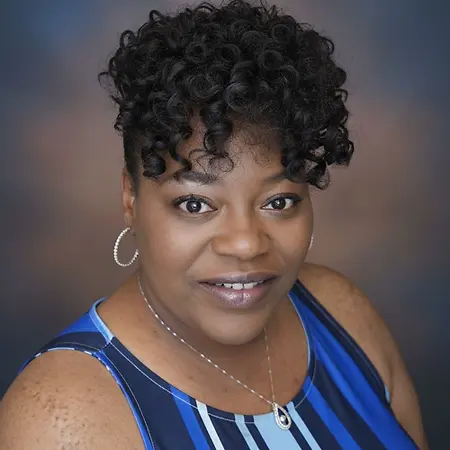
Her Story
About Shakea
Cleared Headspace, LLC is a telehealth psychotherapy practice founded by Shakea “Kea” Roper, LSCSW, LCSW. The practice provides accessible, individualized mental health services to adults navigating anxiety, depression, mood concerns, racing thoughts, life transitions, relationship challenges, stress, and the demands of everyday life.
Grounded in the belief that therapy should provide a safe space for honest conversation and meaningful progress, Cleared Headspace uses practical, strengths-based approaches to help clients better understand themselves, develop effective coping strategies, and make changes that fit their lives.
Through multistate telehealth practice, Cleared Headspace serves clients in Kansas, Missouri, North Dakota, Utah, Pennsylvania, and Nevada. The broader vision for Cleared Headspace continues to expand beyond individual psychotherapy to include education, empowerment, professional leadership, and resources that make mental health knowledge useful both inside and outside the therapy room.
Her Interview
Ten minutes with Shakea
01What do you attribute your success to?
I attribute my success to persistence, resourcefulness, and a willingness to seek support while still taking responsibility for the direction of my life. I learned early that my circumstances did not have to determine my future. As a teenage mother, I decided to enter a transitional living program, earn my GED, and pursue higher education because I knew I wanted something different for myself and my daughter.
I have also benefited from people who helped me recognize possibilities I could not always see for myself. Those experiences taught me the importance of both personal agency and meaningful support. Throughout my career, I have continued to set new goals, remain open to learning, and move forward even when the path has not been straightforward. I believe success has come from that combination: accepting support when it is available, creating opportunities when they are not readily available, and continuing to make progress rather than waiting for perfect circumstances.
02What’s the best career advice you’ve ever received?
The best career advice I’ve received is to remain open to opportunities, even when they do not look exactly like the path I originally envisioned. My career in social work has taken me through many different settings and populations, and each experience has added something valuable to how I practice, lead, and understand people today.
I have also learned not to wait until I feel completely ready before taking the next step. Growth often requires being willing to learn as you go, to ask questions, to seek guidance, and to trust the experience you have already gained. Some of the most important opportunities in my career have come from being willing to take that next step and see where it leads.
03What advice would you give to young women entering your industry?
My advice to young women entering social work is to remember: progress, not perfection. You do not have to have your entire career figured out when you begin, and you do not have to know everything before you take the next step.
Social work offers so many different paths, populations, and opportunities. Be willing to explore them. Ask questions, seek supervision and mentorship, learn from your experiences, and give yourself permission to change direction as you discover what fits you.
Most importantly, do not let the belief that you have to be perfectly prepared keep you from moving forward. Some steps will be big, and others will be small, but they all count. Focus on continuing to learn, grow, and make progress. Perfection is not the goal—progress is.
04What are the biggest challenges or opportunities in your field right now?
One of the biggest challenges in behavioral health and social work is access. People may recognize that they need support and still face barriers related to cost, insurance, location, provider availability, transportation, or finding a professional who understands their experiences. At the same time, the professionals providing those services are often working within systems that are understaffed, overextended, and difficult to navigate.
I also see tremendous opportunity. Telehealth has expanded how and where we can reach people, and there is growing recognition that mental health support does not have to exist only within the traditional therapy room. We can use education, community-based programs, technology, prevention, and other accessible resources to give people tools before they reach a crisis.
I believe the future of the field requires us to do both: continue providing strong individual care while also examining and changing the systems that influence who receives support, when they receive it, and what that support looks like.
05What values are most important to you in your work and personal life?
The values most important to me are authenticity, personal agency, connection, fairness, and progress. I believe people should have the space to be honest about who they are, what they need, and what they want for their lives without feeling that they have to perform or fit someone else’s expectations.
I value supporting people without taking away their ability to make their own choices. Whether in therapy, leadership, friendships, or community, I believe in providing information, creating opportunities, offering support, and then respecting people’s right to determine what is best for themselves.
Connection is also very important to me. I believe people need people, but meaningful connection requires more than simply being around one another. It requires honesty, reciprocity, respect, and a willingness to show up for each other.
Finally, I believe strongly in progress, not perfection. Growth does not always happen in a straight line, and success does not require getting everything right. What matters to me is continuing to learn, being willing to make changes when something is not working, and leaving people, organizations, and communities better than I found them.
Join Influential Women and start making an impact. Register now.