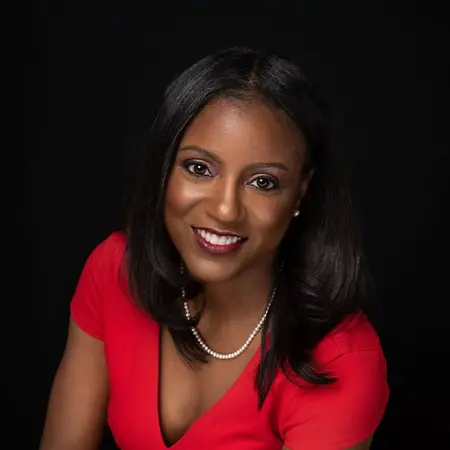
Her Story
About Shanika
Shanika Asher is an enterprise operations executive and strategic-level business leader who transforms strategy into measurable business results across Fortune 500 organizations. With more than 15 years of leadership experience spanning EY, Accenture, and AT&T, she has built a career leading enterprise operations, financial strategy, governance, and business transformation, helping executive teams accelerate growth, strengthen operational performance, and execute strategic priorities at scale.
In her current leadership role at EY, Shanika oversees internal operations for a large U.S. business portfolio, leading strategic planning, financial forecasting, governance, vendor strategy, advanced analytics, and enterprise performance management. Throughout her career, she has also led and supported global initiatives, partnering with executive leaders across multiple regions to strengthen operating models, improve decision-making through data-driven insights, and deliver measurable business outcomes. Known for bringing structure to complexity, Shanika is a trusted advisor who aligns people, processes, technology, and financial strategy to achieve lasting business impact.
Apart from her corporate leadership, Shanika is passionate about financial empowerment and increasing access to financial education. Through her work outside the corporate environment, she helps individuals and families build financial confidence and encourages long-term financial well-being. She also serves on nonprofit boards and supports initiatives focused on mentorship, economic opportunity, and community development. Whether leading enterprise operations or serving her community, Shanika is committed to making a meaningful impact by helping people and organizations reach their full potential and achieve lasting success.
Her Interview
Ten minutes with Shanika
01What do you attribute your success to?
I attribute my success to courage, persistence, and a willingness to create opportunities rather than wait for them.
One of the most defining moments in my career came when I was trying to transition from a background in science into business. Breaking into a new field wasn't easy, and instead of waiting for someone to give me a chance, I created one. I started a gelato business from the ground up and spent five years building it into an award winning business recognized as one of Atlanta's best. It was one of the hardest things I've ever done, but it taught me lessons that continue to shape my leadership today: how to solve problems quickly, make difficult decisions, understand every aspect of running a business, and lead with resilience.
That experience gave me the confidence to bet on myself and reinforced a belief I still carry today: your career doesn't have to follow a straight line. Some of the greatest opportunities come from having the courage to pivot, embrace uncertainty, and keep learning. Although I ultimately returned to corporate leadership, I brought with me an entrepreneurial mindset and a broader understanding of strategy, finance, operations, and customer experience.
I encourage others not to be afraid of taking an unconventional path. Every experience, even those that seem unrelated, can become an advantage. My background in science taught me how to think analytically, my entrepreneurial journey taught me how to lead through uncertainty, and together they prepared me to make a meaningful impact as an enterprise operations leader.
Sometimes the opportunity you're waiting for doesn't appear. Sometimes you have to create it yourself.
02What’s the best career advice you’ve ever received?
The best career advice I've received didn't come from one person. It came from several people who shaped me in very different ways, but 3 specially come to mind.
One of the most influential leaders in my career was my former boss, Alistair Bruce. He taught me the difference between a mentor and a sponsor, and he became both. A mentor offers guidance and advice, but a sponsor advocates for you behind closed doors, creates opportunities, and uses their influence to help you grow. Watching him lead with compassion, empathy, and authenticity fundamentally changed how I think about leadership. He showed me the kind of leader I aspire to be.
Outside of work, my mom has been my greatest source of encouragement. She believed in me long before I fully believed in myself. Even during my toughest moments, she never told me what to do. Instead, she asked thoughtful questions that helped me discover the answers for myself. Her quiet confidence in me gave me the courage to keep moving forward.
The third person is one of my closest friends, Erica Crenshaw. When I was preparing for a career in medicine, she challenged me to consider a different path. She encouraged me to pursue business instead, even though it meant having a difficult conversation with my parents and stepping away from the career I had always planned. She saw something in me that I couldn't yet see in myself. To this day, whenever I thank her, she simply smiles and says, "It was always in you. I just saw it first."
Looking back, these three people taught me that great leaders don't just give advice. They believe in you before you believe in yourself, challenge you to think bigger, and create opportunities for you to become the person you're capable of being. Their influence continues to shape not only my career, but also the leader I strive to be for others.
03What advice would you give to young women entering your industry?
My advice to young women entering this industry is simple: be intentional, be persistent, and don't be afraid to reach out.
One of the best lessons I've learned is that successful people are often more willing to help than we assume, but it's up to us to take the first step. If you reach out to someone you admire and don't hear back the first time, don't give up. Follow up respectfully. Persistence demonstrates initiative, and initiative opens doors.
I also encourage women to find someone who is already where they aspire to be. A mentor or sponsor can provide invaluable perspective, help you navigate challenges, and accelerate your growth by sharing lessons they've already learned. While you'll still face obstacles of your own, you don't have to navigate your journey alone.
Finally, remember that leadership is about creating opportunities for others. As we advance in our careers, we have a responsibility to develop the next generation of leaders. I know I won't be in my current role forever, and part of my responsibility is preparing someone else to succeed after me. That's how strong organizations—and strong leaders; are built.
Never underestimate the power of one conversation, one email, or one connection. The person you're hesitant to reach out to today may become the mentor, sponsor, or champion who helps shape your future.
04What are the biggest challenges or opportunities in your field right now?
One of the biggest opportunities in my field right now is helping organizations successfully navigate the rapid pace of change. Advances in artificial intelligence, evolving workforce expectations, and increasing demands for operational efficiency are reshaping how businesses operate. The organizations that will thrive are those that view these changes not as disruptions, but as opportunities to rethink how they work, empower their people, and create greater value.
At the same time, one of the biggest challenges is balancing innovation with execution. It's easy to get excited about new technologies, but lasting success comes from implementing them thoughtfully, with the right governance, processes, and people in place. Technology alone doesn't transform an organization, leaders do.
I believe today's leaders must combine strategic thinking with operational discipline while remaining adaptable, empathetic, and committed to continuous learning. The ability to bring people through change, rather than simply managing it, will be one of the defining leadership qualities of the future.
05What values are most important to you in your work and personal life?
The values that guide both my professional and personal life are integrity, servant leadership, stewardship, continuous growth, and leading by example.
Integrity is the foundation of everything I do. I often ask myself, "Am I leading with integrity?" because I believe trust is built through consistency between what we say and what we do.
I also believe deeply in servant leadership. Leadership is not about titles or authority. It is about creating an environment where others can succeed. While I may be responsible for leading teams, I see my role as supporting, developing, and removing obstacles so others can perform at their highest potential.
Stewardship is another value that is especially important to me. Whether I am entrusted with people, financial resources, or an organization's strategy, I believe it is my responsibility to leave it stronger than I found it. That mindset goes hand in hand with leading by example because I never want to ask someone to do something I would not be willing to do myself.
Finally, I believe in maintaining a growth mindset. Every challenge is an opportunity to learn, every setback is an opportunity to improve, and there is always room to grow as a leader and as a person. These values shape how I make decisions, how I lead, and how I strive to make a positive impact every day.
Join Influential Women and start making an impact. Register now.