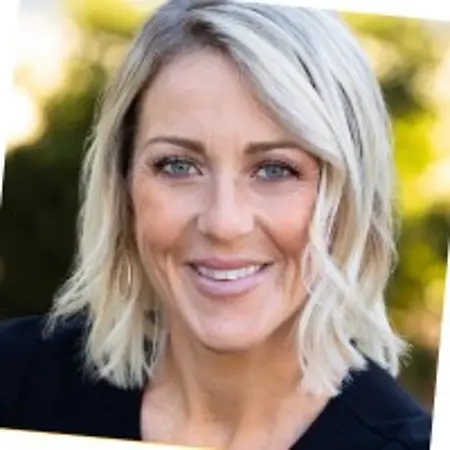
Her Story
About Shannon
With three decades of experience in construction, Shannon Mitchell has built a career grounded in hands-on expertise and operational leadership. For 15 of those years, she specialized in flooring and finish work, developing a strong eye for precision, sequencing, and field execution. Eight months ago, she transitioned into millwork, bringing a deep foundation of construction knowledge into a new discipline that still feels familiar in its demands for accuracy, coordination, and craftsmanship. Even in a new space, she continues to approach each day as a learning opportunity, steadily expanding her technical understanding while applying decades of practical insight.
Throughout her career, Shannon has been known for solving complex field challenges and elevating quality standards under pressure. She is confident reading construction drawings, assessing feasibility, and identifying when teams are overcomplicating solutions. In one instance, when a highly detailed fixture required fluorescent green grout and multiple experienced installers were unsure how to proceed, she drew on her background managing large-scale tile operations—previously overseeing hundreds of installs weekly—to guide the team to a workable solution. What initially took several days to refine eventually became an eight-hour production process, reflecting her focus on turning uncertainty into repeatable execution.
In senior leadership roles, Shannon has also driven significant organizational transformation, particularly around operational structure and talent development. As a former Senior Vice President, she re-evaluated role alignment within a large construction organization and identified opportunities to better recognize the capabilities of office-based staff who were already performing managerial-level responsibilities. By restructuring roles and promoting internal talent—particularly women—into leadership positions, she helped shift both representation and compensation structures in a meaningful way. Her leadership philosophy centers on hiring and developing people based on strengths, building teams where individuals are positioned to excel while complementary skills are supported across the organization.
Her Interview
Ten minutes with Shannon
01What do you attribute your success to?
I attribute my success to over 30 years in construction, building a strong foundation in an industry that hasn’t always been easy for women to navigate.
From an early age, I was encouraged by my father to step into that world without hesitation. He was an electrician, and when we built our house while I was in third grade, I was right there with him, pulling wire, installing outlets, and using power tools. There was never a sense that I didn’t belong. His message was simple: you can do everything that you set your mind to. That mindset stayed with me.
I also grew up with two brothers, so I never really focused on being the only woman in the room. Most of the time, I don’t even notice it unless someone points it out. That perspective allowed me to focus on the work, build my skill set, and move forward with confidence.
Along the way, I’ve been fortunate to have strong mentors who helped shape how I lead and how I think about the business.
As my career evolved, I was able to transition into millwork and apply what I had learned in construction to improve processes, solve complex challenges, and create more efficient ways of working. I’ve always believed in leading from the front, understanding what people actually do, not just what their title says. That hands-on approach builds credibility and allows me to make better decisions.
I’m also very intentional about how I build teams. I hire for strengths. I’d rather put people in positions where they can excel and bring in others to complement those areas, rather than expecting one person to do everything. When people are operating in their strengths, performance improves, collaboration gets stronger, and the entire team moves faster.
That combination, experience, a willingness to step into challenges, and a focus on building strong teams, has been the foundation of my growth and the results I’ve been able to drive.
02What’s the best career advice you’ve ever received?
Growing up, the rule in our house was simple: “If it won’t kill you…try it.”
My dad would always ask, “What’s the worst possible thing that could happen?” If the answer wasn’t death, I was encouraged to go for it. That mindset stayed with me. It built a willingness to take risks, make decisions, and keep moving forward instead of overthinking every outcome.
That approach has carried into my career. I’ve had people tell me, “You don’t make mistakes,” and I always laugh. I probably make more mistakes in a day than most people make in a week... because I’m making more decisions. That’s part of the job.
The difference is, I don’t get stuck on it. If something doesn’t work, I acknowledge it, adjust, and move forward. As long as no one is harmed, it’s not a failure, it’s feedback. It’s part of figuring out the right path.
To me, growth comes from action. You try things, you learn quickly, and you refine as you go. That willingness to step forward, even without perfect certainty, is what creates momentum, and ultimately, better outcomes.
03What advice would you give to young women entering your industry?
The first piece of advice I give to young women is to be intentional in how you present yourself.
We are often evaluated on more than just our work, so how you show up matters. When you feel put together, you carry yourself differently. That confidence shows. It’s not about dressing for attention, it’s about dressing in a way that aligns with how you want to be perceived. At the same time, don’t be afraid to be feminine. If that’s what makes you feel your best, lean into it. Just be practical and prepared for the environment you’re in.
The second is to be clear and confident in your communication.
Say what you mean, simply and directly. The moment you add words like “I think” or “I hope,” you introduce doubt. Clear language creates clarity, and clarity creates results. The same applies when you’re delegating, set expectations in a way that people can act on.
The last, stop trying to prove that you belong.
If you’re in the room, you belong there. When you believe that, other people feel it too.
04What are the biggest challenges or opportunities in your field right now?
There are a few consistent challenges in millwork and construction that require strong operational discipline to manage well. Supply chain variability and fluctuating material costs can impact both timelines and budgets. You have to stay ahead of that with proactive planning, strong vendor relationships, and clear communication with clients so there are no surprises.
Workforce is another real challenge. Skilled labor in specialized trades is limited, and that puts pressure on production, installation quality, and schedules. For me, that’s not just a hiring issue, t’s a leadership and training opportunity. Companies that invest in developing their people, cross-training teams, and creating clear standards will always outperform those that rely on tribal knowledge.
At the same time, I see a significant opportunity in how we use technology. Automation, standardized engineering, and advanced design tools can completely change the way we operate. When you move from manual, one-off processes to systems-driven production, things like parametric design, CNC optimization, and real-time project visibility, you create consistency, speed, and scalability.
The key is not just having the tools, but actually adopting them. That requires leadership, accountability, and a willingness to challenge “the way we’ve always done it.” When teams are aligned around systems and supported with the right training, you reduce errors, improve throughput, and create a much more predictable outcome for the client.
Overall, while there are real pressures in the industry, I see them as opportunities to build stronger systems, develop better teams, and lead with more intention. The companies that focus on that will continue to grow and differentiate themselves.
05What values are most important to you in your work and personal life?
My number one value is kindness.
There is a belief, especially for women, that we have to be loud or aggressive to be heard. I don’t subscribe to that. You can be direct, you can be clear, and you can still be kind. In fact, I believe kindness makes accountability stronger, not weaker.
I can have a difficult conversation, even let someone go, and still treat them with dignity. I don’t need to exaggerate or tear someone down. I stick to the facts, I’m transparent, and I deliver the message with respect. People respond to that. When you lead with kindness, people want to do their best work. They collaborate more, they take ownership, and they hold themselves accountable because they feel respected.
Alongside kindness, I value respect, accountability, integrity, honesty, transparency, and strong communication. Those are the foundations of trust. I lead with empathy, and my goal is always to inspire and empower people, not just manage them.
I also believe that how I show up as a leader starts with how I take care of myself. Maintaining my well-being is important to me because it allows me to show up fully for my team. I bake on Sundays...it’s something I genuinely enjoy. I’ll come up with an idea, write it down, and then create it. It’s both creative and grounding.
I also spend time on the water as often as I can. Kayaking gives me space to reset. When I’m out there, I’m completely disconnected, and it brings me back to center. Even something as simple as putting my feet in the ocean helps me reset quickly.
Giving back is also important to me. I’ve been involved with Sleep in Heavenly Peace, where I helped build over 1,000 bunk beds for children who would otherwise be sleeping on the floor. That kind of work matters to me. It’s about making a tangible difference.
At the core, my values guide how I lead, how I make decisions, and how I show up every day...with clarity, consistency, and respect for the people around me.
Join Influential Women and start making an impact. Register now.