Influential Woman · Mental Health and Wellness
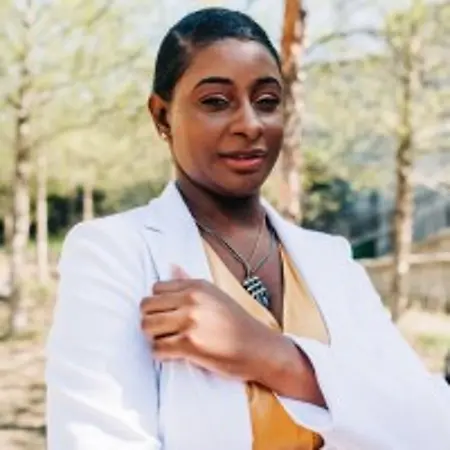
Sharday Fields, LCSW
Founder/Owner, Edifiers
Atlanta, GA 30308
Her Story
About Sharday
Sharday Fields, LCSW, is the Founder of Edifiers and the Mindset Coaching Vault, bringing over a decade of experience in mental health and wellness to individuals and communities. As a Licensed Clinical Social Worker, she specializes in supporting first-generation individuals aged 25 and older as they navigate anxiety, depression, trauma, and life transitions. Her approach blends evidence-based practices—including Cognitive Behavioral Therapy (CBT), Motivational Interviewing (MI), Eye Movement Desensitization and Reprocessing (EMDR), Solution-Focused Therapy, and Dialectical Behavior Therapy (DBT) with mindfulness—within a compassionate, Christian faith-centered framework designed to foster self-esteem, resilience, and positive life choices.
Through Edifiers, Sharday provides tailored mental health services to clients across Georgia, Florida, North Carolina, South Carolina, and California, with mindset coaching available globally. She is committed to empowering individuals from culturally diverse backgrounds to manage stress, reframe unhelpful thought patterns, and gain insight into how past experiences influence present challenges. Her work balances structured and flexible interventions, ensuring support aligns with each individual’s goals, values, and circumstances.
Sharday’s commitment to mental wellness extends beyond individual therapy. She has extensive experience in community mental health, working with individuals, couples, families, and groups from childhood through adulthood. She has also led and supported homeless and transient mitigation efforts focused on trauma-informed outreach, stabilization, and connecting individuals to practical supports with dignity and respect. Through her leadership and clinical work, clients report strengthened faith, increased self-awareness, and meaningful progress toward balanced, fulfilling lives.
Sharday holds a Master of Social Work from Albany State University and a Bachelor of Social Work from Jacksonville State University. Her professional background is complemented by project management certifications and a strong commitment to lifelong learning.
Her Interview
Ten minutes with Sharday
01What do you attribute your success to?
I attribute my success to my faith in Christ. There have been many seasons when I lacked resources, support, or certainty, and my faith sustained me through those moments. It strengthened my confidence, renewed my ability to trust myself, and sharpened my decision-making—particularly when navigating relationships and leadership. I have also learned to view mistakes as lessons rather than dwelling on minor setbacks. Counting it all joy means recognizing that growth comes through experience, and as long as I am learning and moving forward, I consider that success.
I also attribute my success to self-disclosure used with intention and care. Being transparent about the ebbs and flows of life helps normalize the human experience and offers perspective. It allows others to reframe their challenges and see what is achievable rather than feeling stuck or discouraged. Finally, my work is driven by a genuine desire to see others succeed, while remembering that growth in others requires continued growth in myself. I am a lifelong learner, and that commitment keeps my work grounded, reflective, and effective.
02What’s the best career advice you’ve ever received?
The best advice I received was, “Do what you love and you’ll never work another day in your life and be willing to have a niche.” Early in my career, I worried that narrowing my focus meant leaving people’s needs unmet. Over time, I realized that even if I attempted to address every pain or trauma, I could not help everyone effectively. I had to be honest about where I was most effective and where I was being called to serve.
I was also told that this field doesn’t choose you, that it isn’t a calling, and that “your people don’t find you.” My faith, work, and life experience proved otherwise. When I aligned my work with purpose, the right people found me. I experienced less exhaustion and burnout because I was working within my calling. After several cycles of trial and reflection, I learned to quiet feelings of defeat and truly listen for God’s guidance. Through that process, I relearned who I was, how I serve best, and why purpose matters just as much as clinical skill.
03What advice would you give to young women entering your industry?
I would advise young women entering this field to first establish clear personal and professional values, as those values will guide decision-making when roles, expectations, or boundaries become unclear. Seek out mentors who model integrity, competence, and balance, and learn from their experiences rather than trying to navigate the field alone. It is equally important to understand your worth and advocate for yourself in a profession that is emotionally demanding and often undervalued. You do not need to have everything figured out before you begin. Clarity is built through action by showing up, making informed decisions, learning from mistakes, and continuing to move forward with intention. Over time, this process builds confidence.
04What are the biggest challenges or opportunities in your field right now?
From my experience, one of the biggest challenges is pacing. There are short-term goals and long-term goals, and I am very solution-focused—so are my clients. What I’ve learned is that it takes process to progress. People want relief quickly, but sustainable change requires trusting the journey and allowing the work to unfold.
Another major challenge is the way tech companies market themselves as mental health companies and promote therapy as cheap, fast, and transactional. While access is important, this messaging creates unrealistic expectations. Therapists are burned out and undervalued, while clients experience therapy fatigue and commitment issues because they have to start over again. There is also growing pressure around scaling to meet demand, often without clarity, depth, or respect for the ongoing nature of the work. Therapy does not require a demand to “graduate.” The work needs to be intentional with clearly defined goals.
This gap is also an opportunity to create to meet a need. It brings back the joy of the field. That is why I developed a coaching program focused, Developing Identity and Relationships with Personal Values, to teach self worth and value matching. When offerings are built with purpose, it's felt and known, both by other professionals who want to collaborate and by clients who are seeking something meaningful. When God places ideas on your heart, He will give you the ability to carry it out.
05What values are most important to you in your work and personal life?
The values that guide both my life and my work are faith, integrity, growth, purpose, transparency, rapport, and value matching. Faith keeps me grounded and steady, especially when working in complex, high-need environments. Integrity matters to me because people deserve honesty, consistency, and accountability; when these are both given and received, healing occurs. I place a strong emphasis on transparency and rapport so individuals feel genuinely seen, heard, and respected. Value matching is central to both my work and personal life, helping people align who they are with how they live and relate to others. Growth and purpose remind me to continue learning, evolving, and creating with intention.
Join Influential Women and start making an impact. Register now.