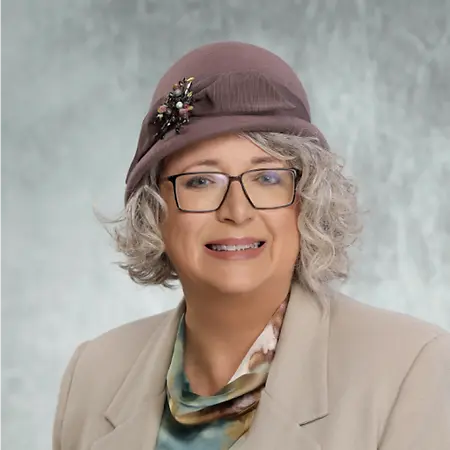
Her Story
About Shelli
I’m a communicator, connector, and community builder at heart. Throughout my career, I’ve been driven by a passion for leadership and creating pathways for others to step into opportunities and succeed.
I began my career in sports broadcasting, breaking barriers as the first female sports reporter to cover AHL hockey in Hershey, Pennsylvania. From there, I went on to work with NPR and PBS, and later led an international, multicultural, multilingual television station serving the Seattle, Washington and Vancouver, BC markets. In that role, I focused on regional expansion and developing in-language advertising solutions that connected businesses with diverse audiences.
One of the most meaningful chapters of my career was helping bring the AMBER Alert program to Northwest Washington. Through my work and involvement with the Washington State Emergency Communication Commission, I contributed to what became a statewide, life-saving system.
I later spent eight years with the Bellingham Chamber of Commerce, where I developed professional development programs, events, and fundraising campaigns—all rooted in my passion for helping businesses grow and thrive.
Today, I’m the founder of Manifest-Marketing, where I work as an AI business consultant. I specialize in providing role-specific and department-based AI training that goes far beyond content creation. I help organizations streamline workflows, reduce repetitive tasks, and use AI as a strategic partner for smarter decision-making and sustainable growth.
I’m also the founder of the empowHER Community for Women in Business, a nonprofit created to redefine networking through authentic connection, mentorship, and professional development. Through flexible networking experiences, leadership programs, and student mentorship initiatives, we’re building welcoming spaces where women can grow, lead, and celebrate one another—while supporting the next generation of female leaders.
At the heart of everything I do is a simple belief: when women are seen, heard, and supported, they don’t just succeed—they lift their entire communities with them.
Her Interview
Ten minutes with Shelli
01What do you attribute your success to?
When I think about what has shaped my success, it always comes back to the women I’ve surrounded myself with—and the belief that we’re stronger when we support one another.
I’ve been guided and inspired by women who shared their knowledge, opened doors, and encouraged me to grow. That’s why I’m so passionate about creating those same opportunities for others through mentorship, connection, and community.
For me, success has never been about doing it alone—it’s about building something meaningful together and helping each other rise along the way.
02What’s the best career advice you’ve ever received?
The best career advice I’ve ever received is to learn everything you can at every job you have. Say yes to opportunities to step in for someone else. If you’re asked to take on a task that isn’t in your job description, see it as a chance to grow rather than a burden. Every new responsibility builds skills, confidence, and perspective you’ll carry with you throughout your career.
Being positive, cooperative, and willing to learn is often noticed more than you realize—even if it isn’t acknowledged right away. Over time, that attitude pays dividends in ways you may not expect.
Equally important is this: don’t be afraid to reach for the stars. If you have a dream job or a long‑term goal, don’t let circumstances—or other people’s limitations—define what’s possible for you. Dreams evolve as we grow, and that’s okay. What matters is continuing to dream, staying curious, and consistently working toward what you want.
And remember, you don’t have to do it alone. Women’s professional groups and communities exist to lift one another up. The relationships and connections you build in those spaces can open doors, provide support, and profoundly shape your career path.
03What advice would you give to young women entering your industry?
My advice is to identify a niche early and commit to it. Look for an area—especially one that’s underserved—where you can add value and get your foot in the door. Establishing yourself through a niche helps you build credibility and secure your place before others recognize the opportunity and flood the space. AI is a perfect example of this approach. Because it impacts nearly every industry and role, the possibilities are incredibly broad, and it’s not difficult to find a focused area where your skills and experience can stand out.
I would also strongly encourage finding a mentor and joining a professional women’s network. Having a supportive community makes a tremendous difference, especially in fast‑moving or male‑dominated fields like AI. The relationships you build through these networks can provide guidance, encouragement, referrals, and mentorship throughout your career, helping you navigate challenges and grow with confidence. You don’t have to figure it all out on your own—and you shouldn’t.
04What are the biggest challenges or opportunities in your field right now?
One of the biggest challenges facing the AI industry today is perception. For many people, AI is framed as a battle of good versus evil. Roughly half of the people I speak with believe AI will eventually replace their jobs, exploit their data, or even scam them financially. These fears are often fueled by sensational headlines and misinformation rather than firsthand experience or practical understanding. As a result, some business leaders hesitate to adopt AI at all, believing that allowing it into their organization is risky or irresponsible.
For some, that perception will evolve as they gain exposure to ethical, transparent, and human‑guided uses of AI. For others, skepticism may persist indefinitely—and that’s okay. Not every organization will be an early adopter. However, what’s important to recognize is that fear-based resistance often stems from a lack of education, not from AI itself.
On the other side of that divide are the organizations that are enthusiastic—and intentional—about AI adoption. These businesses are integrating AI thoughtfully into their workflows and are seeing efficiency gains far beyond what they expected. Perhaps even more compelling is the human outcome: when AI is used to eliminate repetitive, low‑value tasks, employees are able to focus on strategic, creative, and meaningful work. The result is not only higher productivity, but also increased job satisfaction, stronger engagement, and improved retention.
When it comes to opportunity, the AI landscape is expanding at an extraordinary pace—particularly with the rise of industry‑specific AI solutions. We are seeing specialized tools emerge for healthcare, legal, finance, marketing, education, manufacturing, and nonprofit sectors, among many others. These platforms are evolving almost weekly, creating strong demand for roles in implementation, training, operations, ethics, integration, and strategy.
This rapid growth opens the door to thousands of career paths—not just for data scientists or engineers, but for professionals who understand business processes, user experience, and human decision‑making. As AI becomes more embedded across industries, the greatest opportunities will belong to those who know how to bridge technology with real‑world application—ensuring AI serves as a strategic partner rather than a standalone solution.
05What values are most important to you in your work and personal life?
Open, honest communication is the key to all relationships. If you're honest with your clients/customers/employees/employers, you demonstrate a level of integrity that isn't forgotten. It builds your reputation.
Join Influential Women and start making an impact. Register now.