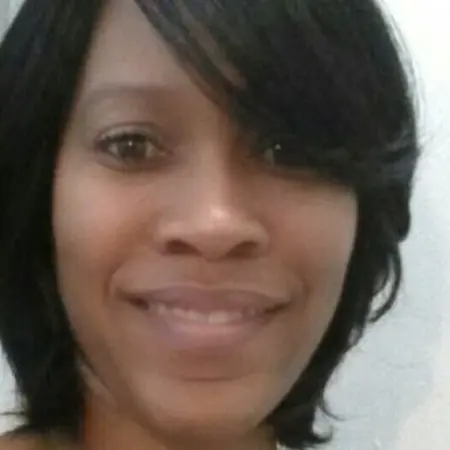
Her Story
About Shemi
I've been in education for 15 years, with the last 9 years as an elementary school science teacher for 3rd and 4th graders at Cleveland Mastery Charter Schools in Philadelphia, where I've been for 10 years total. I teach 180 students every single day, working through the Amplify curriculum which is workbook-based, so I really have the students getting strong in their reading and writing while simultaneously working with the reading teacher. As Science Fair Team Captain for 8 years, I put together all the schematics for our science fair every year, and from my second year of doing it, I mentioned it to our leadership and now my little fair has grown network-wide across all 24 Mastery Charter Schools. It's almost required now that students participate in an end-of-year science project, which is absolutely amazing because it gives them character, critical thinking skills, they become very analytic, they become team players, and they know how to cheer on their peers. Before becoming a teacher, I worked in healthcare for 22 years and wanted to become a hospital administrator, but God saw otherwise and said no, I want you to go this way. I started substitute teaching after being laid off from one of my healthcare jobs and found a new love for teaching elementary school students, and I've been doing it ever since. I use my healthcare background and certifications in medical assisting, phlebotomy, and electrocardiography to bait children into the healthcare field, and I've had students dissecting frogs in my summer science program where I write my own curriculum.
Her Interview
Ten minutes with Shemi
01What do you attribute your success to?
In all honesty, there's two things. One is my daughters. When they came home when they were younger, they complained about, oh, we don't like science, and our science is boring, and so I'm doing little things at home because I was home with them, and I'm like, well, when I become a science teacher, if I was your science teacher, I would do this. If I was your science teacher, I would do that. And it just spilled over into the classroom. The second thing is seeing when students come in and we're about to do a lesson, their eyes light up. Like, oh, we're about to do science, we're gonna do an experiment! And then when I actually pull out the activity for the science experiment, and I can see that they get it, it clicks. I love to see that click, like, oh, I get it. They're like, oh, Ms. Edwards, look at me, I got it, I got it! And I'm like, good! I said, now, show your shoulder partner that you got it. And then next thing you know, they all get it, and they go home, and they're telling their parents, look what I learned today! And then, I know that they're conveying that because at report card time, parents come and tell me, my kid is learning. My kid loves your class. And so, every year when I say, I'm quitting, I never quit because kids love science.
02What’s the best career advice you’ve ever received?
My dad told me that as long as it doesn't feel like work, you will love what you do every day. He asked me, does it feel like work? Does it feel like you're getting up and you're punching the clock? And I said, you know, Daddy, I said, no, it doesn't. And he was like, good, now you have a career that you will love until you teach your last kid. And 9 years later, I still stand on it. You gotta love what you do.
03What advice would you give to young women entering your industry?
Be patient and show compassion. Because you never know the background of that student until you get to know them. Get to know the student. Patience and compassion, it got me through 9 years.
04What are the biggest challenges or opportunities in your field right now?
The biggest challenges are the diversity of learning. Meeting a student where they are. Because you have so many different learning styles and students that have a deficit, maybe, in reading or writing. So, in science, sometimes I have to differentiate on 2 to 3 different levels for 180 kids every single day. I have 3 classes of 3rd grade, and 3 classes of 4th grade every single day. And so, some of them are on a low reading level, some are on the medium, some are on the high, and you gotta meet those students where they are in order for them to get it. Especially if you know a third grader is on, like, a preschool level of reading, or if they have a learning disability or writing disability, how do you get through to those kids to make sure they get it? Can they go home and explain to mom, Mom, guess what I learned in science today? That's the part that requires a lot of patience.
05What values are most important to you in your work and personal life?
Honesty and teamwork. If you are honest about who you are, your work ethics, and the things that you do every day to accomplish small goals, you'll be a better team player, not only for the people that you work with, the students that you work with, you have to be a team player for yourself. You have to know when to slow down. You have to know when to charge in, you have to know when to speak up, you have to know when to not say anything. And you have to advocate for yourself. So, you have to learn how to be a team player. I use the team lead for everybody else, and I'm like, wait a minute, I have to cheer for myself also, or I won't make it.
Join Influential Women and start making an impact. Register now.