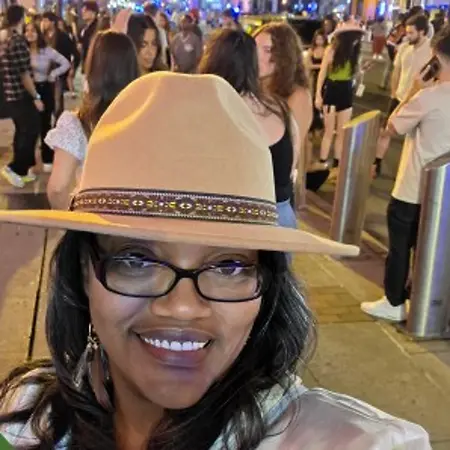
Her Story
About Shequita
Shequita Cotton is a clinical mental health counselor specializing in substance use, where she supports clients in developing sustainable lives of recovery rather than temporary sobriety. With eight years in the mental health field, she previously taught middle school for 13 years and worked as a high school career counselor, experiences that sparked her passion for addressing mental health challenges after observing students' struggles. She transitioned to Rosecrans as an admissions counselor for four months before advancing to a drug and alcohol counselor role. Cotton is pursuing her second master's degree and is a member of the American Counseling Association, Sydney Gamma Rho sorority, and Gamma Sigma Sigma Honorary Sorority, while considering the National Honorary Society. She attributes her success to the encouragement of family and friends and values family, openness, honesty, transparency, and faith in her work and personal life. Cotton advises aspiring professionals that Rome was not built in a day, emphasizing the importance of planning, sacrifice, and strategic thinking.
Her Interview
Ten minutes with Shequita
01What do you attribute your success to?
I attribute my success to the enrichment of my friends and family. There are key significant people who have always inspired me to go above and beyond. Even when I get discouraged, some of their words of encouragement and inspiration rings out. For family and friends, definitely.
02What advice would you give to young women entering your industry?
Rome wasn't built in a day. Think about that for a moment. Let that resonate with you. Because we try to build everything in one day sometimes. But Rome wasn't built in a day. It took planning. It's a sacrifice. It took strategic thinking. So taking your time to build something that will last, it's worth all the planning and all the personal sacrifices that you will make.
03What are the biggest challenges or opportunities in your field right now?
The political side of things. A lot of people don't believe in mental health. We need more mental health workers, but everybody focus on substance use, but they don't focus on the mental side of what causes it. The challenge of getting more support and funding for the field itself. More clinicians and psychologists. Breaking out into the field itself, the application process alone is challenging. Just because you pass a state board does not necessarily mean you'll be a productive counselor. More of the bureaucracy of it.
04What values are most important to you in your work and personal life?
Family values. Being open and honest and transparent. Having faith that anything is possible.
Join Influential Women and start making an impact. Register now.