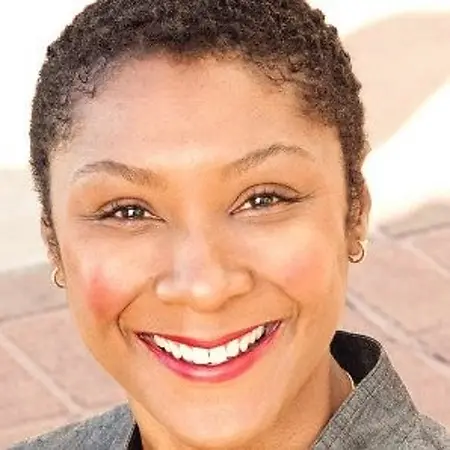
Her Story
About Sheridan
Sheridan Gaines is an experienced Chaplain based in Cedar Hill, Texas, currently serving at Trinity Hospice in Irving. With more than a decade of service in spiritual care, she has dedicated her career to providing compassionate, nonjudgmental support to patients and families navigating end-of-life transitions. Her clinical background includes chaplaincy work within hospice settings, Texas Health Resources, Veterans Affairs North Central Texas Health System, and Clinical Pastoral Education at UT Southwestern Medical Center, where she developed advanced competencies in pastoral counseling, interdisciplinary care, and spiritual assessment. She has completed approximately 2,800 hours of Clinical Pastoral Education, reflecting her commitment to professional excellence in chaplaincy.
Her journey into ministry began during her undergraduate studies at Dillard University, where a pivotal mentorship experience with Dr. Bivens led her to apply for the Lana H. McCord Summer Internship through the General Board of Higher Education and Ministry of the United Methodist Church. Selected as one of six interns, she began itinerating nationally at a young age, speaking to large congregations and traveling for over a decade in ministry. She remains a lifelong ambassador for the General Board. One of her most notable professional experiences includes providing spiritual care to a dignitary’s family during a deeply sensitive end-of-life situation, an experience that reinforced her philosophy that chaplaincy requires both strong ethical boundaries and deeply human presence.
Sheridan’s work is deeply shaped by personal and professional experiences that have strengthened her empathy and resilience. She has shared sacred moments with veterans who disclosed long-held life stories, and she draws from her own lived experience of significant personal loss, including the deaths of both her parents, as well as her understanding of mental health within her family. These experiences inform her commitment to compassionate care and advocacy. Currently, she is pursuing a Master of Arts in Public Policy at Southern Methodist University, where she is developing a program focused on housing and holistic support for homeless veterans. With established partnerships across organizations such as HUD-VASH, the VA, Housing Forward, and the Dallas Housing Authority, she is working toward securing grant funding to launch a transitional housing initiative, with a long-term vision of helping veterans heal, share their stories, and even publish children’s books as part of their recovery and legacy-building journey.
Her Interview
Ten minutes with Sheridan
01What are the biggest challenges or opportunities in your field right now?
The biggest challenges I face are whether or not I'll have buy-in from the public, especially from neighborhoods where I plan to place the houses for homeless veterans, and what the trade-offs will be. I've done research on where to place them so it shouldn't bother anybody, but community acceptance is a major concern. I'm learning about zoning, buy-in, trade-offs, and cost-benefit analysis through my master's program in public policy or public administration. It's a learning curve, and I don't know everything, which is why I'm in school. The broader challenge in mental health and veterans care is that we don't talk about it enough. Six out of 10 people have some type of mental health challenge, yet we're ashamed and don't discuss it. There is not one person in the world who doesn't have somebody in their family with a mental health situation. If we would just talk about it, the shame factor would go away. We need to stop pointing fingers and have empathy and compassion for people experiencing homelessness and mental health challenges. My hope and goal is to house homeless veterans and give them a program so they can heal, and eventually help them write children's books to share their stories.
02What values are most important to you in your work and personal life?
The most important values to me are empathy and compassion. These are the two biggest things you need as a spiritual care provider and spiritual counselor. If you don't have either of those two things, you don't need to be a chaplain. I learned empathy through personal experience, watching my father die from supernuclear palsy and caring for him as he turned into a shell of himself. As a hospice chaplain, you're watching somebody die, but you have to be able to see the good in it, the grace in it, the mercy in it, the grace and mercy of God. You have to be able to see the good and the bad in it, but you've got to take that bad and turn it into good as you're ministering to that family member. You have to take something ugly and make it beautiful with your words, your actions, your being. In chaplaincy, you walk a very fine line and can't cross boundaries. You have to be very careful with your words, but they need to flow at the same time. It's a dance. The dignitary I served told the CEO that I didn't intrude, which was the greatest compliment I've ever gotten. I also deeply value openness about mental health. Both my sister and I have bipolar disorder 1, and I'm not ashamed of telling anybody about that. We need to open up and talk about mental health, stop the shame, and have empathy and compassion for others. Stop pointing the finger and saying you don't have anything to do with it, because yes, you do. It does affect you. My whole goal is to help house homeless veterans and give them a program so they can heal, because I have something innately in common with them through our shared mental health challenges.
Join Influential Women and start making an impact. Register now.