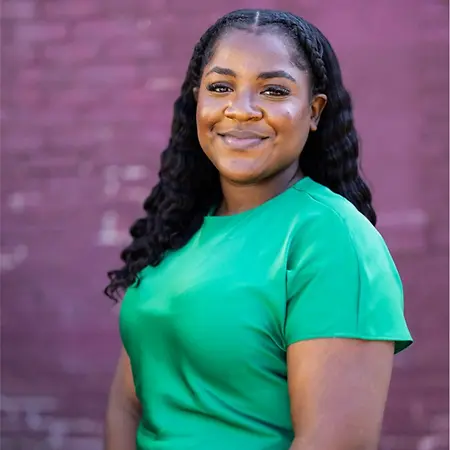
Her Story
About Sherika
Sherika Casseus is a higher education and student affairs professional whose journey began as a first-generation college student navigating college without a family roadmap. Early in her academic experience, she joined TRIO Student Support Services, a program that helped her understand how to succeed beyond grades alone by emphasizing engagement, resource utilization, and building meaningful connections on campus. Through this support, she developed a deeper understanding of higher education as a space shaped by opportunity, community, and access, and began to see how intentional guidance could transform a student’s trajectory.
Her experience in TRIO became a defining moment in her career path, as she discovered a passion for helping other students navigate the same challenges she once faced. Encouraged by mentors, she stepped into student affairs work and committed herself to expanding the social, economic, and professional capital of underserved BIPOC students. Over five years in the field—including three years working in a student leadership office during her undergraduate studies—she built extensive experience in student engagement, leadership development, program coordination, and civic engagement initiatives that support student belonging and success.
Sherika holds a Master’s in Higher Education Student Affairs from Salem State University, where she also earned her Bachelor’s degree in Education with a focus on community and non-traditional educational pathways. Grounded in a philosophy of servant leadership, she believes that leadership is defined by care, access, and empowerment of others. Her work is driven by a commitment to ensuring students recognize their potential, connect with resources, and envision futures they may not have previously thought possible—including graduate study and doctoral pathways.
Her Interview
Ten minutes with Sherika
01What do you attribute your success to?
My success comes from the support I received as a first-generation college student through TRIO Student Support Services, which completely changed my trajectory. When I entered college, I didn't have a roadmap - my family didn't know the system, and I didn't understand how to navigate higher education. TRIO connected me with an advisor who taught me that doing well in college wasn't just about grades, it was about getting involved and taking advantage of all the resources and opportunities available on campus. That guidance was life-changing because I didn't even know programs like TRIO existed until they reached out to me. Through that experience, I realized I could become an advisor myself and help other students excel the same way I was helped. The people in my network showed me I could go as far as getting my PhD - something I never imagined when I started my bachelor's degree. I didn't go into my undergrad thinking about anything after that, but now I'm even thinking about getting my doctorate. TRIO literally saved my life and expanded my horizons tremendously. It really does work, and it's so necessary because we don't have that support from our families since they don't know the system. But those of us who have gone through it, we know it, and it's so important to support other students coming through as well. That's why I'm a testimony of all the support that goes into the TRIO program and how successful it is.
02What advice would you give to young women entering your industry?
I would tell anyone entering this field to focus on their why and do it for their why. Don't come into student affairs because you think it's easy, because it's not - it's a labor of love, and you have to have your heart in it in a healthy way. There are a lot of challenges that come with this work because you're dealing with so many different types of people, and everyone is carrying different burdens. When you're working with students, you're actually dealing with their burdens as well, even if those burdens don't come forward in the front-facing conversation - they're innate inside of them. If you don't have a real reason for why you want to be in this field, don't do it because of convenience, because it's not a convenient type of job. You have to have patience with others because you're dealing with all different types of people who are coming to you with different burdens. You need genuine passion for helping students and understanding that they face personal, financial, and emotional challenges beyond just academics. You have to be prepared to support the whole student experience and remain committed to service and advocacy work.
03What are the biggest challenges or opportunities in your field right now?
The biggest challenge facing students in higher education right now is financial. Economically, it's really tough for underserved students and BIPOC students because life is expensive. We talk about the American dream of getting a full-time job, a house, and a car, but there are so many disparities that BIPOC students face just to even get across the stage and get their bachelor's degree. Economics is probably one of the biggest barriers because how are you going to be focused on school if you've got to pay for it as well? You won't be able to get the full experience if you're worried about your bills, your family at home, or if you're the main breadwinner. A lot of us have to contribute to our families back home, and it's not easy to be focused when you're going through financial disparities. School is expensive, period, and it's not easy to just get loans. You can't be fully focused if you're dealing with financial challenges, and many students are balancing education with family financial responsibilities. That's why programs like TRIO are so important - they help improve access, persistence, and student success despite these obstacles.
04What values are most important to you in your work and personal life?
The most important value to me is service and the belief that leaders are actually servants. In my work at the Office of Student Leadership and Community Engagement, we operated on the principle that to be a leader, you have to service others. That's why I'm so proud of events like our Day of Action, where we were able to spark that servitude in students and get them engaged in serving the local community. Beyond my professional work, I live out this value by serving as a minister on the leadership board at my local Haitian American church, where I support community engagement and service initiatives. I'm also deeply committed to visibility and representation - the fact that I encountered people who looked like me and had similar backgrounds who went far in life made success feel more attainable for me. Now my goal is that through my visibility, somebody else can be encouraged. I believe in expanding educational opportunities and horizons for underserved communities, helping students see possibilities they might not have imagined, just like my mentors did for me. My personal mission is to support the social, economic, and professional advancement of underserved BIPOC students in whatever way I can, because I want to provide the same transformative support I received.
Join Influential Women and start making an impact. Register now.