In an AI-saturated marketing landscape, this article explores why human connection, authentic perspective, and emotional intelligence have become the most irreplaceable competitive advantages for brands and leaders.
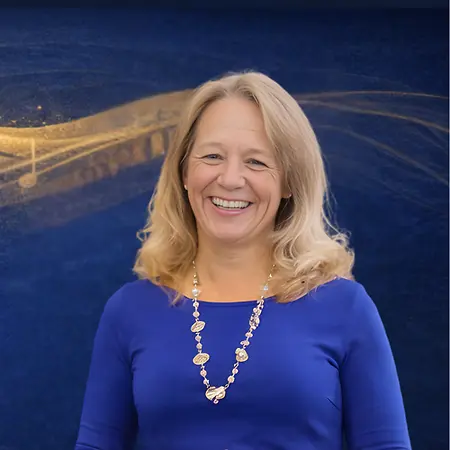
Influential Woman · Marketing, Speaker, Author, Coach
Sherry Grote
CEO and Founder, The Harmony Hero Initiative
Powder Springs, GA
2Years experience
1Article published
1Award received
Her Story
About Sherry
If you had told me twenty years ago that my greatest leadership training would happen at a hospital bedside, I would not have believed you. But for twelve years, I showed up there, caring for my husband after a brain stem stroke, while simultaneously building a marketing career from manager to CMO and raising a family. Life was not asking me to choose. It was asking me to integrate.
That journey is where the Harmony Hero Initiative was born. I spent 25 years learning how to cut through the noise in marketing. I spent another season learning something harder: how to lead when the noise is coming from inside your own life. Both taught me the same thing. You cannot fight every wave. But you can learn to ride them with your whole self intact.
That is the work I do now. For marketing leaders who need strategy that actually converts.
For executives navigating the invisible weight of complexity.
For anyone who is tired of feeling like two different people trying to survive in two different worlds.
You are one leader. And you are more powerful than you know.
Her Interview
Ten minutes with Sherry
01What do you attribute your success to?
People have always found their way to me in the middle of the storm. Not after it. Not once things settled. In the middle of it. And for a long time, I wondered why that was, because my circumstances were just as chaotic as theirs.
What I've come to understand is that stability is not the absence of chaos. It is something you carry inside it. My faith has been the anchor that kept me from being swept away when everything around me was moving. That groundedness, that deep inner calm, is not something I manufactured. It was given to me, and I have chosen every day to tend to it.
Success, to me, has never been about surviving the waves. I have weathered a lot of them. A husband's brain stem stroke. Three parents in their final seasons. A career that kept climbing while life kept demanding. I survived all of it. But survival was never the goal. The goal was to bring someone with me. To be steady enough in my own footing that someone else could hold onto me while they found theirs. That is what I measure my success by. Not the titles I earned or the stages I have stood on, but the people who are still standing because something in my steadiness gave them permission to believe they could weather it too.
02What’s the best career advice you’ve ever received?
Progress over perfection. Three words that rewired the way I lead.
I am a recovering perfectionist. I will always be a recovering perfectionist. And for a long time, that perfectionism felt like a strength. It looked like high standards. It felt like excellence. What it actually was, more often than I care to admit, was a brake pedal disguised as a virtue.
A leader I deeply respected called it out. He told me plainly: if you want to get where you want to go, people need to see you moving. Not polished. Moving. In a world where a digital campaign can be updated in ten seconds, waiting for perfect is not discipline. It is delay. The cost of inaction in a digital environment is almost always higher than the cost of a fixable mistake.
That reframe unlocked something in me. It also unlocked something in every team I led afterward, because I passed it on. When leaders give their people permission to ship something good and improve it in motion, the whole team accelerates. Confidence builds. Momentum compounds. And the perfectionism that once strangled progress quietly loosens its grip.
That leader went on to champion my path from marketing director to vice president, and eventually toward the CMO seat. I do not think that was a coincidence. He saw something in me that I could not see yet, and the first thing he did was teach me to get out of my own way.
03What advice would you give to young women entering your industry?
Marketing sits at the intersection of art and science, and women who learn to move fluently between those two worlds become irreplaceable.
Do not let anyone convince you that you have to choose between being creative and being analytical. The most powerful marketers I have encountered are the ones who can feel what a brand needs and then prove it with data. Both matter. Both belong to you. Do not let the culture of any organization shrink you into one lane when you were built to move across all of them.
Get comfortable being the person in the room who asks the question nobody else will ask. Marketing is fundamentally about understanding people, and the willingness to dig deeper, to question an assumption, to challenge a brief that does not quite ring true, that instinct is a gift. Do not train yourself out of it to seem more agreeable.
Your life experience informs your marketing mind in ways that cannot be replicated by someone who has only studied it in a classroom. The seasons that stretched you, the complexity you have navigated, the moments where you had to lead without a roadmap. All of it sharpens your ability to connect with an audience, because connection comes from having lived something real.
Bring all of it. Every room you walk into is better because you are in it. Act like you know that.
04What are the biggest challenges or opportunities in your field right now?
Every generation of marketers has faced a disruption that changed the rules. Digital ended the print monopoly. Social media dismantled the broadcast model. Mobile rewrote the customer journey. Each time, the marketers who thrived were not the ones who resisted the change, but the ones who understood what the change could not replace.
AI is this generation's disruption. And what it cannot replace is the same thing that has always mattered most: the human being on the other side of the message.
We are living in an artificial everything world. AI writes the copy, generates the images, schedules the posts, scores the leads, and predicts the next move. And all of that capability is genuinely useful. But there is a cost accumulating quietly beneath the efficiency. The cost is sameness. When everyone is using the same tools trained on the same data to reach the same audiences, the output starts to converge. The edges disappear. The personality flattens. And the audience, who came to marketing to feel something, feels nothing.
The human advantage is not a sentiment. It is a strategy.
It is the leader who can read a room and redirect a campaign that the data said was performing but the culture said was tone-deaf. It is the creative director who pushes back on a brief because something about it feels wrong before the numbers confirm it. It is the CMO who understands that a brand is not a set of assets. It is a living relationship with real people who have real lives and are paying attention to whether you see them.
Empathy is not soft. Curiosity is not inefficient. Ethical judgment cannot be automated. These are your competitive edges in a world where the machine can produce anything but cannot stand for something.
The marketers who will define the next decade are the ones who lean into their humanity with the same discipline they bring to their data. Who treat presence as a skill worth developing, perspective as a differentiator worth protecting, and genuine connection as the highest-leverage investment a brand can make.
In an artificial everything world, be something real. That is not a tagline. It is the whole strategy.
05What values are most important to you in your work and personal life?
I have been asked what I value, and the honest answer is that I learned my values the hard way. Not in a classroom or a leadership retreat, though those have their place. I learned them in the gap between who I needed to be professionally and what was happening personally, and discovering those two things did not have to be in opposition.
Here is what that journey taught me:
People before polish. The most important thing in any interaction is the human being in front of you. Not the deliverable. Not the metric. The person. When you lead with that, everything else tends to fall into alignment.
Faith as a foundation, not a footnote. My belief system is not separate from my work. It informs my ethics, my patience, my capacity to hold space for others in their hardest moments. It is woven into everything.
Truth-telling as a form of respect. Comfortable lies are not kindness. Honest, caring, direct conversation is. I would rather have a hard conversation that moves someone forward than an easy one that leaves them stuck.
Progress as a practice. Perfection is a destination that keeps moving. Progress is something you can measure, celebrate, and build on. I choose progress, in my work and in my growth as a human being, every single time.
Legacy over achievement. I am not interested in what I have accomplished alone. I am interested in who I helped get somewhere they could not have reached without someone believing in them first. That is the only ledger that matters to me at the end of the day.
Her Content Hub
Articles by Sherry
In an Artificial Everything World, Your Humanity Is the Strategy
Why Your Humanity Is Your Most Irreplaceable Marketing Asset in an AI-Driven World
I was sitting in a strategy session recently when someone on the team said, almost proudly, "We can just have AI write the whole campaign." The room nodded. The timeline shrank. The budget held, and something quietly left the building.
I have been in marketing for over 25 years, and I have watched this industry reshape itself around every major disruption—from digital to social to mobile—adapting alongside every single one of them. AI is not different in that regard. The tool is remarkable, the efficiency is real, and the capability is genuinely impressive.
But I keep coming back to the same question, the one I think every marketing leader and every woman building influence in this space needs to sit with right now:
When everything can be generated, what becomes irreplaceable?
The Noise Problem Nobody Is Talking About Honestly
Content volume has exploded, and brands that once struggled to publish consistently are now producing at a scale that would have required entire agencies just a few years ago. The feed is fuller, inboxes are more crowded, and ads are sharper and more targeted than ever before. Yet somehow, audiences feel less reached than ever.
That is not a coincidence. That is a consequence.
When everyone uses the same tools, trained on the same data, to reach the same people, the output starts to converge. The edges disappear, the voice flattens, and what was supposed to be a personalization revolution has quietly produced a sameness epidemic. Consumers are swimming in content and starving for connection, and most brands have not yet reckoned with the gap between those two things.
This is the central crisis of marketing right now. We optimized for output and forgot about resonance.
What the Machine Cannot Do
Let me be clear about something, because this matters. I am not arguing against AI. I use it, I teach my clients to use it, and the ability to compress timelines, test variations, and surface insights that would otherwise stay buried is genuinely valuable. Used well, it is a force multiplier; used exclusively, it is a slow erasure of the very thing that actually drives human behavior.
AI can produce language, but it cannot produce meaning. It can generate a headline, yet it cannot feel the weight of what an audience actually needs to hear right now. It can optimize a campaign, but it cannot sit across from a grieving customer, a burned-out employee, or a skeptical buyer and read what is happening beneath the surface.
That capacity—the ability to sense what is unspoken, to lead with empathy before you lead with data, and to tell a story that makes someone feel genuinely seen—is the human advantage. And in an artificial-everything world, it has become the rarest and most powerful differentiator a brand or a leader can possess.
The Season That Taught Me This
I did not learn this in a marketing textbook. I learned it in a hospital room.
For the last twelve years, I cared for my husband after a brainstem stroke while simultaneously rising from marketing manager to Chief Marketing Officer and, eventually, founding my own company—all while raising two amazing children and walking three parents through the final seasons of their lives. There was no clean separation between the personal and the professional. There was only one life, asking me to show up fully in every room I entered.
What that season built in me was something no algorithm can replicate. It built the capacity to hold complexity without collapsing, to stay present when everything was uncertain, and to lead from a place of calm conviction rather than frantic reaction. Grief and growth happening at the same time will do that to you, if you let them.
And here is what I discovered on the other side of it: that capacity made me a better marketer. Because marketing, at its core, is not about content. It is about connection. It is about understanding what another human being is carrying and offering something that genuinely meets them there.
Every boardroom skill I developed sharpened my bedside presence, and every lesson I learned at the bedside deepened my boardroom instincts. I stopped seeing them as separate worlds and started seeing them as the same muscle, trained in different rooms and serving the same fundamental purpose.
The Practical Edge of Being Human
So, what does the human advantage actually look like in practice? Here is what I tell my clients—and what I try to live out in my own work every day.
Lead with your perspective, not just your output. AI can generate content, but only you can generate a point of view that is unmistakably yours, shaped by your specific lived experience, your values, your failures, and your wins. That perspective is the one thing your audience cannot get anywhere else, so protect it, develop it, and put it at the center of everything you produce.
Read the room before you read the data. Metrics matter, and they always will, but the most important thing happening in any campaign, culture, or client relationship is often the thing the dashboard cannot measure. Develop the discipline of presence, ask better questions, and listen for what lives beneath the words. The insight you find there will outperform any A/B test result.
Make your story the strategy. In a world full of generated content, the most disruptive thing you can do is be undeniably, specifically real. Your origin story, the path that brought you to this work, the season that broke you open and rebuilt you stronger—that is not a personal detail to tuck into a bio. It is the most powerful marketing asset you own.
Build trust before you need it. AI can accelerate almost everything in the marketing funnel except this one thing. Trust is still built slowly through consistency, honesty, and the willingness to show up as a full human being rather than a curated brand persona. The relationships you invest in before you need them are the ones that carry you when the landscape shifts again.
The Women Who Will Lead This Era
The women who will define the next decade of marketing are not the most automated. They are the most integrated.
They know how to move between the analytical and the emotional, the strategic and the intuitive, and they bring empathy into the boardroom without apologizing for it because they understand that empathy is not a soft skill. It is the skill that converts strangers into loyal advocates, transforms siloed teams into collaborative cultures, and turns good campaigns into movements that actually mean something.
They have stopped waiting for permission to take up space with their full selves because they understand that the complexity they carry, the perspective they have earned, and the humanity they have refused to surrender—that is the whole competitive advantage. Not a portion of it. All of it.
In an artificial-everything world, the most radical thing you can do is be something real.
That is not a tagline. That is the strategy, and it has never been more valuable than it is right now.
Join Influential Women and start making an impact. Register now.