Influential Woman · Life Sciences and Biotechnology
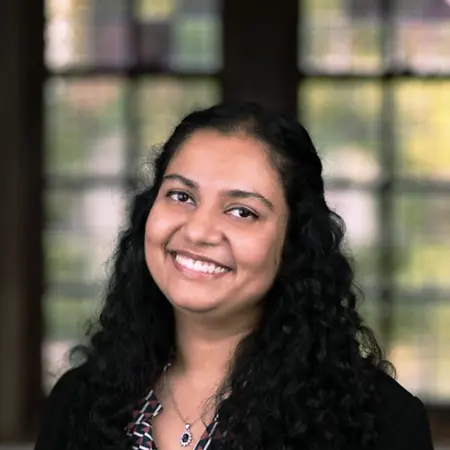
Shrishti Singh, Ph.D.
I-Corps
Licensing Fellow Life Sciences / Strategy Analyst, University of Michigan
Ann Arbor, MI 48105
Her Story
About Shrishti
Shrishti Singh, Ph.D. is a life sciences innovation and technology commercialization professional based in Ann Arbor, Michigan, currently serving as a Licensing Fellow in Life Sciences at the University of Michigan Innovation Partnerships Office. In this role, she evaluates early-stage biomedical and life sciences inventions for patentability, conducts prior art and market analyses, and assesses commercial viability to support technology transfer and venture creation. She works across multidisciplinary teams managing intellectual property strategy, licensing opportunities, and business development efforts that bridge academic research with real-world healthcare and industry applications.
Her academic and research foundation is rooted in biomedical engineering, with a Ph.D. from George Mason University, where her work focused on developing advanced diagnostic and therapeutic technologies for early cancer detection, particularly breast cancer. During her doctoral and postdoctoral training, she engineered a proprietary targeted contrast agent for biomedical imaging and contributed to publications, patents, and translational research initiatives. She also co-founded NearView Biosciences, where she served as CEO and led efforts in preclinical development, fundraising, and commercialization, securing funding through programs such as the National Science Foundation I-Corps program and other non-dilutive sources.
Beyond research and entrepreneurship, Dr. Singh has built a career at the intersection of innovation strategy and life sciences commercialization. She has worked extensively in technology transfer, supporting faculty inventors in transforming lab discoveries into market-ready solutions through licensing, startup formation, and industry partnerships. Her expertise spans intellectual property analysis, regulatory pathways, market assessment, and venture development. Across her roles, she is recognized for combining deep scientific training with entrepreneurial and analytical skills to accelerate the translation of biomedical innovations into impactful healthcare technologies.
Her Interview
Ten minutes with Shrishti
01What do you attribute your success to?
I attribute my success to hard work, perseverance, and learning from my failures. I have also benefited from rigorous translational training (PhD/postdoctoral work), intensive entrepreneurial training through NSF I-Corps, and the guidance of mentors who have helped me build resilience and navigate setbacks.
02What advice would you give to young women entering your industry?
I would advise young women entering my industry to prioritize lifelong learning and to not take failures personally. In a fast-paced commercial environment involving business development, technology assessment, and executive decision support, confidence and adaptability are essential. The work often includes negotiating with stakeholders, developing business strategies, and navigating complex decisions, all of which come with a learning curve. It is important to believe in your abilities while staying open to growth, and to view setbacks as valuable lessons rather than personal failures, using each experience to strengthen resilience and improve future decision-making.
03What are the biggest challenges or opportunities in your field right now?
Key challenges in my field include the difficulty of commercializing early-stage biotech innovations and the persistent barriers underrepresented founders face in accessing venture capital. At the same time, there are significant opportunities in strengthening institutional support systems—such as new biomedical units that improve bench-to-bedside translation—and in developing more equitable pathways that enable diverse founders to secure funding and bring innovations to market.
04What values are most important to you in your work and personal life?
The values most important to me in my work and personal life are resilience, purpose, and service to others. I value the ability to persevere through challenges, learn from setbacks, and continue moving forward despite uncertainty, including my own experiences with immigration and entrepreneurial efforts. I am also guided by a strong commitment to mentorship and paying forward the support I have received from others. My goal is to use my experiences—both successes and failures—to demonstrate what is possible and to support and empower others, particularly young women, in their own professional journeys.
Join Influential Women and start making an impact. Register now.