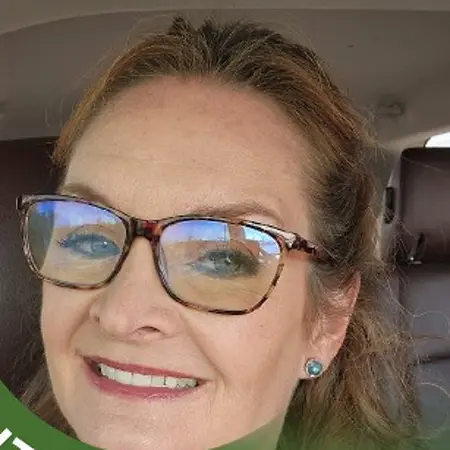
Her Story
About Stacey
I've been in my field for 25 years. As a first-generation college student, I became a police officer after graduation, but I always hated leaving situations, especially with juveniles, not knowing what happened. I realized I really wanted to be more at the front end of preventing juveniles from going down the wrong path versus arresting them, which led me to the education field. A job opened up teaching criminal justice and forensics, and that's what I've been doing ever since. My work has morphed into teaching college and creating curriculum and courses for students. Right now, I'm getting my doctoral degree in forensic science. My typical day involves catching up on current events because I think keeping topics relevant and tied into current events is really important, then developing coursework and curriculum to really engage students. I focus on developing active learning strategies and teaching students not what to think, but how to think, to be critical thinkers. Years ago, I received an award from the FBI for the work I've done in creating programs in criminal justice, which was probably one of my most notable achievements.
Her Interview
Ten minutes with Stacey
01What advice would you give to young women entering your industry?
My advice to other women is not to be critical of other women. I think that we all have to support each other and throw a hand down to lift each other up, and not to judge other women. We are all fighting battles. Be a mentor, take younger women in and bring them along this journey.
02What are the biggest challenges or opportunities in your field right now?
At the teaching level, post-COVID teaching is a little trickier, especially with AI. AI is really a challenge, but we just have to show kids how to use it responsibly and how it won't take over. I mean, it's here to stay. I feel like a high school teacher years ago when they said calculators are going to be the death of math, and they aren't. And that's just how AI is right now. In the field itself, I guess it's really understanding why police do what they do, and then how to, as a police officer, get through the implicit biases we all have.
03What values are most important to you in your work and personal life?
I think with everything going on in the world right now, it's really teaching students not what to think, but how to think, to be critical thinkers, and also how cognitive bias and echo chambers resonate in their lives, and how to identify those, and how to sift through social media. I mean, that doesn't sound like it's very criminal justice related, but I think it's very criminal justice related in that when you go in to arrest someone or an investigation, you need to not be biased and fall into your own echo chamber. And so that's really what's important to me, really being a critical thinker.
Join Influential Women and start making an impact. Register now.