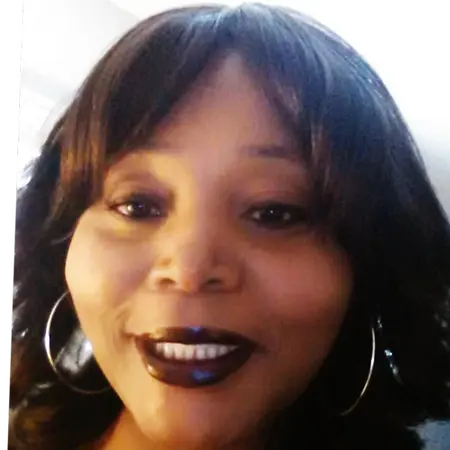
Her Story
About Stacey
Stacey Joseph is a dedicated educator with over 25 years of experience supporting families of students who are marginalized, undereducated, and disproportionately represented in special education programs. A first-generation college graduate, Stacey began her academic journey at a community college and went on to earn her bachelor’s degree, teaching credential, and Master of Science in Special Education from CSU Long Beach. Navigating the challenges of higher education without parental guidance, she developed not only academic expertise but also resilience, determination, and a deep understanding of what it takes to succeed in complex educational environments.
Her inspiration for teaching came early in life when visiting her best friend’s kindergarten classroom. A young African-American girl sat on her lap as she read to the class, and Stacey felt a profound calling to represent and advocate for students of color in education. This pivotal moment, combined with her experiences overcoming obstacles as a first-generation student from a family of six, shaped her lifelong commitment to equity, inclusion, and the success of every child she serves. Over her career, she has honed expertise in literacy, instructional design, educational technology, coaching, and classroom instruction, applying these skills to uplift students, families, and fellow educators.
Currently, Stacey is the Founder and Educational Strategist at Joseph Legacy Educational Solutions, where she guides families through the IEP and 504 processes, ensuring each student’s unique needs are met. Previously, she served as an Education Specialist with ABC Unified School District for over a decade, building strong family partnerships and supporting diverse learners. She takes pride in her work in special education, a field known for high turnover, and feels deeply called to serve these students. Stacey’s passion, perseverance, and dedication to creating equitable educational opportunities continue to inspire students, families, and colleagues alike.
Her Interview
Ten minutes with Stacey
01What do you attribute your success to?
My Lord and Savior, Jesus Christ, number one. And the second would be my hard-working parents. If it had not been for their sacrifice and their hard work, I wouldn't be where I am today, I really wouldn't. My parents were teenage parents, and they had six of us. Neither one of them went to college. My dad didn't even finish high school, but they had that determination and that belief in God. They provided a stable home with morals and ethics. We were raised to believe in God, to go to church every Sunday, to be hard workers and independent. All those values that they instilled in me - resilience, persistence, don't give up - watching how they came up and they had less than I had, I couldn't give up. I saw how they struggled, and I know how my grandparents struggled and what my ancestors had to go through, so how could I complain? How could I give up knowing my history? There's no way that I could give up, so I just had to fight and keep on going and keep on going.
02What’s the best career advice you’ve ever received?
The best career advice that I've ever received is to be a person that's adaptable to change. Life in general is always changing - it's not only good career advice, it's just good advice in general. You have to be able to be flexible and know how to go with the flow, because any minute, you can get a curveball thrown at you, and you have to know which way to go. So be flexible and be ready to be adaptable to change at any time.
03What advice would you give to young women entering your industry?
The advice that I would give them would be to seek out someone that they could really identify with that would be really supportive for them, to help them navigate through the system, because it's very difficult. Especially when you go for an advanced level degree like teaching, you have to take all these tests, you have to take all these prep classes, so it's a very difficult process. I feel like these kids or these young adults, they need a mentor. That's something I would like to do with my business as well - start a teacher mentoring program for kids of color, for young adults of color, to help them navigate through that process, because it's rough. I remember going through it and thinking, am I going to be able to do this? Am I going to be able to finish? People who have had generational families who have gone to college, who have professors and all this kind of stuff - my mom was a teacher, my grandma was a teacher - they have an advantage because they know the system, they know the process, and it's easier for them. So young women entering this field need an advocate, they need a mentor, and I would say that would be my number one piece of advice.
04What are the biggest challenges or opportunities in your field right now?
The biggest challenges I would say is reaching kids who have been marginalized, kids who come from challenging socioeconomic backgrounds. A lot of times they don't see people in classrooms, they don't see people in administration that look like them, so it's hard for them culturally to adapt to the environment. I feel like teachers don't understand these kids culturally, so that's one of the major challenges, and that's something I would like to do eventually with my business - figure out how I can help more young people of color go into the teaching career. There's a definite need for it, especially with African Americans and Latino American boys. Those are the highest population of kids that end up dropping out and not making it through the educational system. I feel like it's because we don't have the people here that know how to communicate with them and relate with them. The curriculum needs a lot of updating and revamping because it's culturally inappropriate for a lot of our kids. It's not interesting to them, they don't take to it, and that just causes behavior problems. Then they want to say these are bad kids and start writing all this stuff in their files, and that closes doors. They call it the school-prison pipeline, because a lot of kids of color don't get the education, so they have no choice but to go out into the world and start committing crimes. We need to update our staffing with more multiculturalism, and we need more multiculturalism in curriculum - more diversity.
05What values are most important to you in your work and personal life?
The values that are most important to me are basically my motto - I just want to try and always do the right thing. That was what my parents taught me. Being a person that was raised in the church, that's something that was drilled in me from infancy, from almost from birth. Treat people right, the golden rule - treat others as you would have them treat you. Go out in this world and be of service, do good things, help your neighbor. That's just the way that I was raised, and that's what's been instilled in me since I was very young.
Join Influential Women and start making an impact. Register now.