Influential Woman · Power Utility Construction | Procurement & Contract Management | Supply Chain Management
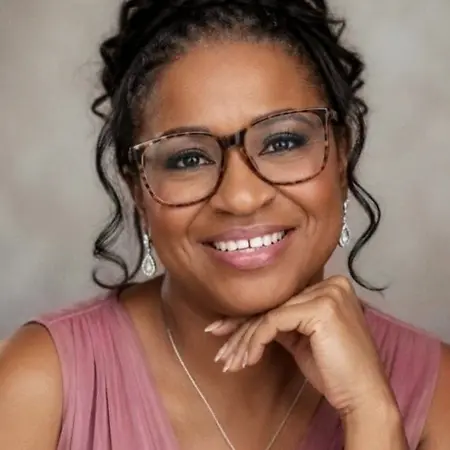
Stacey Williams-Humphries
Contract Negotiation Specialist | Commodity Manager, Stacey Williams Humphries
Las Vegas, NV 89122
Her Story
About Stacey
Stacey Williams is a seasoned procurement and contract management professional with over 21 years of experience navigating the complexities of supply chain, vendor relations, and critical infrastructure agreements. She was recently a Commodity Manager at NV Energy — part of Warren Buffett's organization — she led a team of 15 in contract drafting, purchase order processing, and training and development, while personally overseeing a portfolio of approximately 21 active contracts at various stages of negotiation and review. Her career began in 2005 when a chance assignment as an administrative assistant on a construction project introduced her to the world of procurement, sparking a passion that would define her professional journey. Holding a Bachelor of Business Administration from California Coast University and dual certifications in Federal and Commercial Contract Management through the National Contract Management Association at Villanova University, Stacey has built a credentials portfolio as intentional as it is impressive. Stacey excitedly and willingly became an independent contractor July 2026.
What distinguishes Stacey beyond her technical expertise is the caliber of her professional character. She has managed high-stakes situations ranging from complex multi-party negotiations to real-time emergency procurement responses — including coordinating resources during a severe windstorm that left 35 utility poles down across multiple areas of the city simultaneously. Her ability to remain composed, strategic, and solution-focused under pressure has earned her the company's STAR Award on multiple occasions annually. Equally telling is the way she approaches relationships: on her very first day in a leadership role, she was tasked with terminating three employees and handled each situation with such professionalism and genuine care that one of those individuals later became a close personal friend — a testament to the standard she holds herself to in every interaction.
Stacey is equally committed to shaping the next generation of supply chain professionals. She actively mentors two emerging professionals, equipping them with practical contract negotiation skills, AI tool proficiency, and the confidence to engage with attorneys and senior stakeholders. Her philosophy on mentorship was forged early — when someone once tried to limit her access to training, she responded by pursuing every certification available to her, a decision that changed the course of her career. That same conviction fuels how she invests in others today. Outside of her professional life, Stacey volunteers at Fresh Start Baptist Church, where she has served in the food pantry and supports the church's educational partnership with a seminary program. Whether in the boardroom, at the negotiating table, or in her community, Stacey Williams leads with expertise, intentionality, and an unwavering commitment to kindness.
Her Interview
Ten minutes with Stacey
01What do you attribute your success to?
I attribute my success to leading with kindness and intentionally building genuine, lasting relationships. One of the most defining moments of my career came on my very first day in a leadership role, when I was faced with the difficult task of terminating three individuals. One of those individuals — someone I had met that very morning — I had to let go by noon. Rather than simply processing the termination and moving on, I worked closely with him and his business partners to ensure he was fully transitioned into another department a full week ahead of the required deadline. Years later, that same person became one of my closest friends. That experience cemented something I carry with me every day: you can handle one of the hardest professional situations with dignity and respect, and still walk away with a meaningful relationship. I work alongside engineers at a power company, and when critical situations arise — when things go wrong — emotions run high. My approach is always to work through it together, to show up with empathy, and to remember that I would want the same consideration if I were the one affected. Success, to me, is not measured solely by outcomes or achievements. It is rooted in how you treat people along the way — consistently, not just when it is convenient.
02What’s the best career advice you’ve ever received?
The most formative advice I ever received was, ironically, bad advice — and it shaped everything about how I lead. Early in my career, I was told by a colleague that I did not need to attend a particular training, that they would simply teach me what they felt I needed to know. I took that as a personal challenge. I refused to allow anyone to place a ceiling on my professional growth, and I went on to pursue every certification and educational opportunity I could access. That moment of discouragement became the fuel behind earning my certifications in federal and commercial contract management through the National Contract Management Association at Villanova University. Today, I carry that lesson directly into how I mentor others. I work with two young professionals, and I am intentional about giving them every tool, every resource, and every opportunity to grow — including teaching them how to effectively use AI tools, how to communicate confidently with attorneys, and how to understand the strategic priorities of our organization. I want to ensure that if I were no longer in my role tomorrow, they would be fully equipped to carry the work forward. The real lesson is this: never let anyone limit what you are capable of learning, and never be the person who limits someone else.
03What advice would you give to young women entering your industry?
Keep going. Pursue the education, earn the credentials, and never stop expanding your knowledge — regardless of what anyone else tells you. There will be people along the way who suggest you do not need certain training, or that they will simply tell you what you need to know. Do not accept those limits. When I encountered that early in my career, I responded by getting certified in everything I could. That decision changed the trajectory of my professional life. I want young women entering this field to know that your expertise is worth developing fully. Be curious, ask questions, and invest in both your technical skills and your professional relationships. Build a network grounded in authenticity and mutual respect. Work with integrity, show up consistently, and never underestimate the long-term value of treating people well. And equally important — know that you are allowed to have boundaries. You can lead with kindness and still hold firm on what you will and will not accept. Confidence and compassion are not opposites; in this industry, they work best together.
04What are the biggest challenges or opportunities in your field right now?
The most significant challenge — and simultaneously the greatest opportunity — facing our field today is the responsible and strategic integration of artificial intelligence. Pricing pressures and tariff management will always be part of the procurement landscape, but if the sole focus is on securing the lowest cost, that function can increasingly be automated. What cannot yet be automated is judgment. AI has not reached the level of contextual forecasting required to anticipate real-world emergencies. I have managed situations where we had 35 utility poles down across three separate sides of a city simultaneously, in the middle of 80-mile-per-hour wind conditions, with emergency crews unable to be in multiple locations at once. No algorithm predicted that. What it took was a person — someone who could assess the situation in real time, direct resources, and make rapid procurement decisions. That said, AI is a remarkable tool when applied correctly. I use it regularly to analyze contracts, identify red lines, flag areas misaligned with our company's priorities, and surface the issues that most need direct negotiation — all without having to read every document manually. The professionals who will thrive in this field are those who learn how to direct AI effectively, because the value will no longer lie in executing the task — it will lie in knowing what task to give it.
05What values are most important to you in your work and personal life?
Kindness is the value I return to above all else — in every professional interaction and every aspect of my personal life. I genuinely believe that everyone is navigating a journey we may not fully see, and that awareness shapes how I show up for people. At the same time, I have learned that practicing kindness does not mean absorbing everyone else's difficulties. It is entirely possible — and necessary — to protect your own energy while still treating others with grace and respect. I live that balance out professionally and personally. At work, I am mindful that any given vendor may be one payment away from a significant business challenge. Taking the time to understand the "why" behind a difficult negotiation, doing the research, and working toward a solution — that approach has consistently produced better outcomes than hardline positioning. It also builds the kind of trust that sustains long-term partnerships. In my personal life, I hold the same standard. I approach people with warmth and I expect the same in return, and when that boundary needs to be reinforced, I do so without apology. Choosing kindness is not passive — it is a deliberate, daily decision, and it is the most defining aspect of who I am and how I operate in the world.
Join Influential Women and start making an impact. Register now.