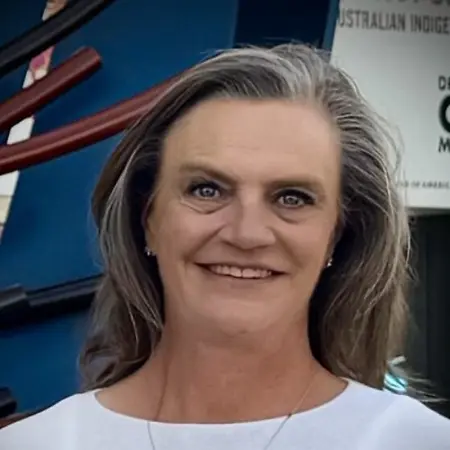
Her Story
About Stacy
My main area of expertise is instructional leadership. A typical day for me involves being deeply engaged in classrooms - I'm in a classroom observing teachers every single day, providing feedback and support. I'm a visible principal, really available to teachers and students throughout the school day. I focus heavily on data-driven instruction, looking at what I see in classrooms and being really responsive to the instructional needs our teachers have. I spend significant time planning professional development, engaging in data cycles, and building solid pre-teach plans. After three years at Odyssey, I'm incredibly proud that our recent survey data showed shared responsibility as one of our highest ranking items - it means we've created a microcosm of a school where all the professionals are learners with a powerful, healthy, and accountable culture. Everyone believes it's their responsibility to improve classroom instruction every second of every day. We've implemented systems like Accountability Buddies, where teachers partner with colleagues who teach very differently to learn new tricks of the trade. We've opened up our environment so everybody feels compelled to learn and improve.
Her Interview
Ten minutes with Stacy
01What do you attribute your success to?
I attribute my success to making a ton of mistakes along the way. I think my success lives in the fact that I'm a learner, and I am courageous, and I make many mistakes. I've been in spaces where it was really humbling - there are moments when you think you get it, and then you start to dive into some of the complexities of these really large problems we're grappling with. It really helped me become much more open to learning and thinking about how when something works, I don't just repeat it next time - I celebrate and then dive into next steps. How do we make it better? How do we continue on this journey to just plain excellence for kids?
02What’s the best career advice you’ve ever received?
One of my very dear friends who was an executive coach in Colorado education always brought this element of herself into her professional development and interactions with staff. She would ask me questions like, 'does that feel good in your head and heart?' I appreciated how personal she made it without it being personal. There were people who gave me really thoughtful advice around being a regular human being. When I was really young - I was 30 years old when I got my first principal gig - I wasn't altogether that smart and had so much to learn. Being open to building yourself professionally and personally in concert, and allowing both of those people and those things to meld and become visible to people, is so important. Teaching is personal - teachers are putting their heart out there, their work - so creating a space in which people feel valued not just because they get good results, but because of the human being they are, is really important to me. Another critical piece of advice was about hiring: you can help people learn to be better instructors, better data miners, better system implementers, but you cannot help them be an amazing human being. They have to be there before they walk into the room. And finally, when it's not a great fit or not the right place for a person, including myself, be fearless and go after what's right for kids. You have to be fearless and always go after what's right for kids.
03What advice would you give to young women entering your industry?
I'm not one to give out tons of advice, but I know what was important to me. One of the things we don't do well enough in education is have kids set real goals - kids and families - and monitor them and share them. If the data is telling you that kids may not be learning as much as they should, yes, you should internalize it and own it, but you also need to share that with the kids. Teachers put it on themselves all the time - many times teachers will say a kid is partially proficient, and I always ask, does the kid know they are? And they're like, I don't know! It's not just the principal's responsibility to have the school turn from yellow to green. Be really clear about what you bring to the team, and bring it.
04What are the biggest challenges or opportunities in your field right now?
Throughout the years, I've lived through times when states now have report cards for schools and stronger accountability systems with really public displays of data. We've had some really great years and some pretty disappointing years. In those spaces of setbacks, there were one or two years where I was blindsided by the data. Learning how to rally the troops, regroup, and come up with a plan when you get data that doesn't show the work you thought you put in - those are the spaces where you really have to learn how to not only grieve and move on, but how do you help all the staff who put in that same level of work do that and still feel appreciated while holding them accountable. It's devastating as a leader, but it's also an opportunity to look at things. Nobody loves an autopsy, but it does give you some information.
05What values are most important to you in your work and personal life?
I value trust and honesty. I value courage and heart. But above all, I think I value joy. There has to be joy - it's so important. You gotta enjoy the little goofballs, because they're joyful, and so are the teachers. Even if you have to search for it, you need to find joy every single day, and you need to help the others around you find it.
Join Influential Women and start making an impact. Register now.