Her Story
About Stephanie
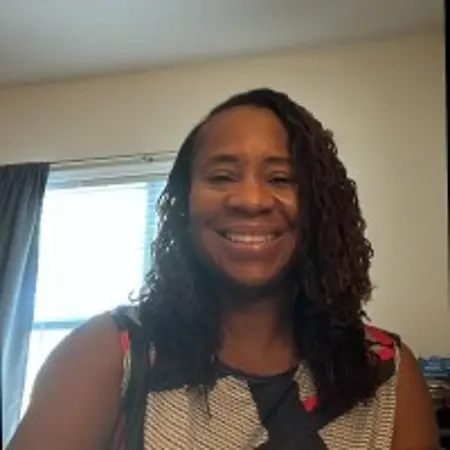
Dr. Stephanie Daniel, Ed.D, is the Department Chair of Early Childhood Education at J. Sargeant Reynolds Community College in Richmond, Virginia. Her journey in early childhood education spans over 30 years, beginning as a part-time student and childcare worker at the very institution where she now leads the program. Dr. Daniel’s path from student to educator and administrator has been fueled by her passion for working with young children and preparing the next generation of early childhood educators. Today, she oversees a fully online program designed to meet the needs of working professionals, advising students, supervising adjunct instructors, and ensuring high-quality instruction.
With extensive experience in curriculum development, program management, and professional development, Dr. Daniel has contributed to early childhood education across multiple sectors, including higher education, state government, and nonprofit organizations. Her career includes roles such as program director at Bryant & Stratton College, training and education consultant for the Virginia Department of Social Services, and professional development specialist with Capital Area Partnership Uplifting People, Inc. She is committed to providing practical, flexible, and credential-focused programs that prepare educators to succeed in diverse early childhood settings.
Dr. Daniel holds a Doctorate in Early Childhood Education from Northcentral University, a Master’s degree in Educational Leadership and Administration from Strayer University, and a Bachelor’s degree from Virginia Commonwealth University. Her work has earned her multiple recognitions, including Instructor of the Year (2023) and Staff of the Year through PTK (2024), as well as a nomination for faculty leader in teaching and learning among Virginia community colleges. As an author and advocate for high-quality early childhood education, Dr. Daniel emphasizes building relationships, supporting educators, and fostering community impact through excellence in teaching and leadership.
Her Interview
Ten minutes with Stephanie
01What do you attribute your success to?
At the heart of everything I do is a genuine love for people and an unwavering passion for young children. I have built my career on the belief that the work we do in early childhood education does not simply shape children. It shapes communities, families, and futures. That belief is what drives me every single day.
I am deeply passionate about building community, because early childhood education is not a luxury. It is a foundation. Consider this: nurses, doctors, teachers, and countless other professionals cannot show up to serve their communities without access to quality childcare programs. When those programs are strong, everything else can function. When they are not, the entire community feels it.
That reality is what gets me up every morning. I am committed to ensuring that the programs supporting our youngest learners are not just adequate, but exceptional. And exceptional programs begin with exceptional people, individuals who are investing in their own growth by pursuing higher education and preparing themselves to meet young children and their families right where they are.
I see my role as more than an educator. I am a bridge builder, a community champion, and an advocate for a profession that quietly holds the world together. When I look at my students, I do not just see future childcare workers. I see the future of early childhood education itself, and that is a responsibility I do not take lightly.
02What’s the best career advice you’ve ever received?
The best career advice I have ever received is simple: believe in yourself, and do not give up when things get hard. And they will get hard. That is not a warning. It is a promise that the work is worth it.
One of my most cherished mentors held this very position before me. As she stepped into retirement, she passed along a truth that has stayed with me ever since. She said that when you truly believe in yourself, you naturally draw people into your orbit who believe in what you are doing and why you are doing it. That shared belief, she told me, makes the work not only possible but powerful.
She also challenged me to be intentional about the people I invite into my space. The staff you choose to work alongside you must believe in the value of this work, because that conviction does not stop with them. It flows into every student they encounter, and from those students, it reaches the young children and families who depend on us most. Belief is not passive. It is a force that moves through people and produces change.
That is why it all begins with me. When I believe in myself, I am not just building my own confidence. I am creating the capacity to pour into others, so that they, too, can walk in the fullness of who they are and what they were called to do. That is the kind of legacy that outlasts any title or position.
03What advice would you give to young women entering your industry?
My advice is simple, but it is profound: trust the process. The journey will not always be easy, and there will be moments that test your patience, your confidence, and your resolve. But one of the most important lessons I have learned, both in my own life and through walking alongside my students, is that you do not have to navigate any of it alone.
So many students come to me carrying the weight of a question they are afraid to ask. They hold back because a professor seems unapproachable, or because asking for help feels like an admission of weakness. But that could not be further from the truth. Asking for help is an act of courage, and it is one of the greatest investments you can make in yourself. It all comes back to relationship. When you build genuine connections with the people around you, asking for help becomes natural, and receiving it becomes transformative.
Do not be afraid to reach out. Do not be afraid to lean on the community that has been placed in your path. And above all, do not rush the process in pursuit of the end result. The process itself is where the growth lives. It is where your character is shaped, your resilience is built, and your purpose comes into focus.
Success is not only found at the finish line. It is discovered in every step you take along the way. Keep going, keep growing, and trust that the journey is taking you exactly where you are meant to be.
04What are the biggest challenges or opportunities in your field right now?
If I am being honest, one of the greatest challenges facing early childhood education today is compensation. There are students who pour their whole hearts into this field, who genuinely love the work and the children they serve, and yet they find themselves among the most undercompensated professionals in the workforce. That tension is real, and it is one that the field as a whole must continue to reckon with.
Here is what makes that reality so striking: we are the ones laying the foundation. The doctors, the lawyers, the engineers, the leaders who will one day shape this world, all of them passed through the hands of an early childhood educator first. We are building the very ground they will stand on, and yet our compensation has not reflected that significance. Not yet.
Part of my responsibility as an educator is to be transparent with my students about this reality. If you are entering this field with the expectation of financial wealth, you deserve to know the truth so that you can make an informed and intentional decision. This work, at this moment in time, requires something deeper than a paycheck to sustain you. It requires passion. It requires purpose. It requires a genuine love for the children you will serve and the families who trust you with their most precious gift.
I do believe change is coming. I believe the tide is turning and that early childhood educators will one day be compensated in a way that truly honors the magnitude of this work. But until that day comes, the foundation of this career must be built on calling, not compensation. And for those who have that calling, there is truly no more meaningful work in the world.
05What values are most important to you in your work and personal life?
The values that guide everything I do are respect, integrity, honesty, transparency, and the intentional work of building meaningful relationships. At the heart of all of those values is communication. I remind my students often that they do not have to share every detail of their lives with me, but they must be willing to communicate. If I do not know that you are struggling, if I do not know that you need help or support, then I am not able to provide it. That connection has to exist first.
I have always believed that relationships are the foundation of everything worthwhile, and that belief is not separate from my work in early childhood education. It is the very essence of it. When we invest in people, when we see them, hear them, and show up for them consistently, we create environments where growth is possible. That is what this field calls us to do, and it is the standard I hold myself to every single day.
Join Influential Women and start making an impact. Register now.