A guide for families evaluating assisted living and memory care communities, emphasizing the critical role of dedicated on-site therapy teams in preventing falls and maintaining resident independence and safety.

Verified Member
Influential Woman · Healthcare, Senior Living, Nursing
Stephanie Haley-Andrews, RN
Owner, Apex Senior Advisory, LLC, Apex Senior Advisory
Denver, CO 80237
1Article published
11Awards received
Her Story
About Stephanie
Stephanie Haley-Andrews, RN, is a healthcare executive, clinical architect, and founder of Apex Senior Advisory Consulting, with 30 years of experience as a registered nurse across both acute care and senior living settings. She began her professional journey earning a Bachelor of Arts in English with an initial focus on marketing and communications, but ultimately returned to her calling in healthcare after realizing her passion centered on direct service to others. She went on to complete her Bachelor of Science in Nursing and built a career grounded in caring for vulnerable populations and improving health outcomes and systems of care. Her clinical background spans regional academic Level I pediatric and adult trauma systems and emergency departments, burn intensive care, emergency medical services, and trauma program management, where she developed deep expertise in high-acuity and high-risk care environments. She later advanced into executive leadership, serving as Division Director of Trauma and Emergency Medical Services for HCA Continental Division, overseeing trauma and EMS operations with P&L accountability across hospitals in Colorado and Kansas for three years. Her longstanding commitment to vulnerable populations naturally evolved into senior living, where she spent the past eight years focused on geriatric population health and system-level care improvement, in addition to resident and corporate risk reduction. In senior living, Stephanie served as Senior Vice President of Care and Clinical Services for two large organizations, most recently at Atria Senior Living for nearly four years, leading clinical strategy and operational care systems at scale. In January of this year, she launched Apex Senior Advisory, where she now is a consultant with AgeTech and senior living tech companies, financial and wealth planners, attorneys, and families to bring transparency and clinical clarity to senior care decision-making. Her work is centered on bridging the gap between complex healthcare systems and real-world understanding, ensuring families and industry partners can navigate senior living and geriatric care with confidence and informed insight.
Her Interview
Ten minutes with Stephanie
01What do you attribute your success to?
I really attribute my success to the family I was raised in. My parents instilled a strong work ethic in me from a young age. I started working when I was 13 years old as a cashier at the Denver Zoo, and I always had to contribute by getting good grades, paying for my car insurance and part of my high school tuition. My success really comes from my upbringing and my mother, who is deceased now, but she was absolutely my role model. She went into healthcare and healthcare administration and wound up being a COO for a large healthcare organization here in Colorado, then became a successful consultant upon her retirement --I have followed in her footsteps.
02What’s the best career advice you’ve ever received?
Stephanie’s journey reflects the importance of following purpose over comfort. Transitioning from marketing into nursing and then into executive leadership demonstrates her belief in aligning your career with impact and service.
03What advice would you give to young women entering your industry?
For anyone looking to become a registered nurse, it is one of the best investments you can make for your entire life, especially in the age of AI. Yes, AI can do a lot to support the medical field and the nursing field and eliminate some administrative burden, but you always will need nurses to actually provide hands-on care. The opportunities are endless. Look at me - I started out working in the burn ICU and made my way up to SVP of two successful companies with 30-40% margins, and now I'm running my own successful consulting company. There's just so much lifelong opportunity when you become an RN.
04What are the biggest challenges or opportunities in your field right now?
The biggest challenge in senior living is always staffing - finding caregivers who want to care for elderly people. There's a nursing shortage that impacts us as well. But what really drove me to start my consulting career is the major lack of transparency in senior living. It's really a black box. People are often rushed into making quick decisions for their mom or dad, and every sales director will say your mom can age in place there forever, but that's not necessarily true because all senior living falls under state regulations that dictate what conditions they can and cannot care for. There's a lack of transparency about pricing, care levels, and what people are sold versus what really is happening. On the opportunity side, there's a lot of opportunity to do better care of seniors in senior living. There's really wonderful new technology out there that can, even through some AI, do fall risk prediction and provide fall risk prediction data which can help deliver better care for seniors. This was one of my passion projects - to get good data so we could try to help increase the length of stay for residents who might be failing. We instituted fall risk identification programs and made sure we had a Medicare Part B therapy provider in all of our buildings 5 days a week working with residents to increase their balance and prevent falls, which is a leading cause of residents having to leave senior living. There is also a major disconnect in the industry with how many Memory Care apartments/units are needed (the demand well exceeds the limited supply). I've reviewed data from NIC and others, whom I believe woefully underestimate the need for secure living for people with dementia. Large and medium operators have adopted (or are beginning to adopt) neurocognitive examinations as pre-move in and move-in assessments because they are unwilling to move in a resident who is unsafe for Assisted Living apartments and really do require a secure Memory Care apartment, and will benefit from specific Memory Care programming. The Alzheimer's Association and CDC data on people who will suffer considerably from dementia is staggering. Operators are increasingly unwilling to take on the safety risk of an accidental "elopement" from an assisted living resident who could potentially be injured or killed because they weren't in the appropriate environment. It's terrible for the resident, their family, the company, the company's investors or REITs, and it's a public relations catastrophe.
05What values are most important to you in your work and personal life?
Really, it's caring for vulnerable populations. Caring for vulnerable people is super important to me. Obviously, my family -- I love my family. I have one adult son whom I'm extremely proud of. I also highly value ethical organizations. That's very important to me. I'm an enormous patient advocate, and doing the right thing for the patient is what drives me. Additionally, I'm really enjoying consulting for venture capital and private equity firms, and private companies as they are developing technologies to serve senior living operators and senior citizens who wish to stay within their home as long as possible, or may not be able to move into senior living due to financial considerations. My clients and I have found our work together to be mutually beneficial, as many of them do not understand the constraints of senior living.
Her Content Hub
Articles by Stephanie
Choosing Assisted Living or Memory Care? Ask This Question Before You Sign: “Who Is Here to Help Prevent Falls—Consistently?”
Why Consistent On-Site Therapy Should Be Your Top Priority When Choosing Senior Living Care
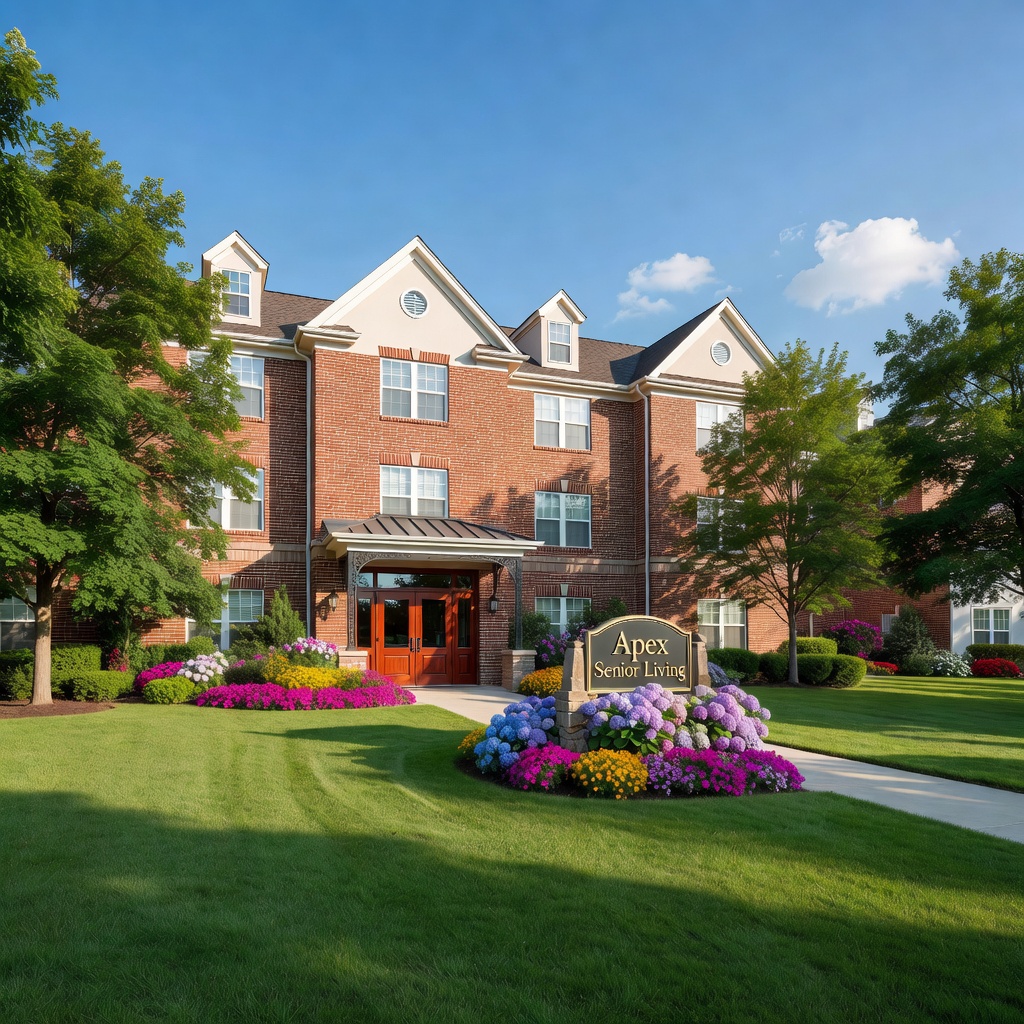
Choosing Assisted Living or Memory Care? Ask This Question Before You Sign: "Who Is Here to Help Prevent Falls—Consistently?"
Stephanie Haley-Andrews, RN
Founder, Apex Senior Advisory | Clinical Architect | Former SVP of Care (40k+ Residents) | Risk Strategy & AgeTech Due Diligence | Prolific AI User | Fierce Advocate for Seniors and Their Families
When older adults and their families evaluate assisted living or memory care communities, they typically ask the right questions:
- Is the community safe?
- How are medications managed?
- What is the staffing model?
- What activities are available?
- What happens if Mom's health changes?
- Is memory care available if Dad needs it?
There is one question we believe deserves to be near the top of that list:
Is there a dedicated outpatient therapy team—physical therapy, occupational therapy, and speech therapy—on-site at the community five days per week?
Not on call. Not occasional visitors. Not clinicians rotating through several buildings with limited opportunity to know residents, collaborate with staff, or recognize subtle changes before they become serious.
Present. Consistent. Integrated into the life of the community.
As someone who has overseen care and clinical services for more than 40,000 senior living residents over the past eight years, I have seen how meaningful this distinction can be. A consistent, on-site Medicare Part B therapy presence can support resident mobility, function, safety, and quality of life while giving families, community staff, and operators greater visibility into changing needs.
Falls Are Not an Inevitable Part of Aging—But the Stakes Are Real
Falls are among the most consequential health events an older adult can experience.
According to the Centers for Disease Control and Prevention (CDC), more than 14 million adults age 65 and older—about one in four—report a fall each year. Approximately 37% of those falls result in an injury that requires medical attention or limits activity for at least one day. That translates to an estimated 9 million fall-related injuries annually among older adults.
The consequences can be life-changing:
- Falls lead to roughly 3 million emergency department visits among older adults each year.
- About 1 million older adults are hospitalized annually because of fall-related injuries.
- Falls are the leading cause of traumatic brain injuries in this age group.
- Hip fractures, head injuries, and fractures of the wrist, arm, and ankle can permanently alter an older adult's independence, confidence, and ability to remain in their chosen living setting.
Risk and severity rise sharply with age. For adults age 85 and older, CDC data show unintentional fall death rates of approximately 373 per 100,000 for men and 320 per 100,000 for women in 2023—far higher than the rates for adults ages 65 to 74.
These statistics are sobering. But they should not lead families to believe that falls are simply unavoidable. Many fall-risk factors can be identified, addressed, and monitored, including changes in strength, balance, gait, vision, medications, cognition, footwear, the environment, and the ability to safely perform everyday activities.
That Is Where an Embedded Therapy Presence Matters
Why Five Days a Week Matters
Therapy is not just something that happens during a scheduled treatment session.
The greatest opportunity for prevention often comes from recognizing change early.
For example:
- A resident who is suddenly slower getting up from a chair.
- A new shuffle or increased unsteadiness while walking to meals.
- A decline in the safe use of a walker.
- Increased difficulty getting dressed, transferring, or using the bathroom.
- A family member noticing that Dad is no longer as steady as he was last month.
- A nurse or caregiver observing a resident struggling with an activity that was previously routine.
These observations may seem small in isolation. In practice, they can be important signals that someone needs an assessment, intervention, equipment review, staff education, or a conversation with their physician.
A therapist who is consistently present in the community has the opportunity to build relationships with residents, family members, nurses, caregivers, and leadership. They are more likely to understand a resident's baseline function—not just their status during a brief visit. That familiarity helps the care team recognize meaningful change and respond more quickly.
Physical therapists assess mobility, balance, strength, gait, transfers, and fall risk. Occupational therapists focus on the safe performance of daily activities, environmental modifications, adaptive equipment, routines, and caregiver education. Speech-language pathologists support residents experiencing changes in cognition, communication, swallowing, and other functional needs.
Together, these disciplines help create a more proactive approach to functional decline and fall prevention.
The Difference Between a Dedicated Presence and a Mobile Model
Families should distinguish between two very different approaches.
A dedicated, on-site therapy presence: Therapists are physically in the building five days per week, allowing them to build relationships, participate in the community's care ecosystem, and observe changes over time.
A mobile or intermittent therapy model: Therapists may cover several communities and visit only on scheduled days. While this model still provides valuable therapy services, it may not offer the same consistency, visibility, or opportunity for early observation and collaboration.
The difference is not merely operational. It affects how quickly concerns are recognized, how easily clinicians and community staff communicate, and whether therapy is viewed as a separate service or as an integrated contributor to resident safety and function.
For families evaluating communities, this should be a due diligence question—not an afterthought.
Questions Families Should Ask
When visiting an assisted living or memory care community, consider asking:
- Is outpatient therapy available on-site?
- Are physical therapy, occupational therapy, and speech therapy available based on resident needs?
- Is a therapist physically present in the community five days per week?
- Is the therapy team dedicated to this building, or do clinicians cover multiple locations?
- How do nurses, caregivers, and therapists communicate about changes in resident function or safety?
- How are fall risks identified and addressed?
- What happens after a resident experiences a fall or a noticeable decline in mobility?
- Does the community receive regular quality and outcomes reports from its therapy provider?
- How is therapy integrated into the resident's care plan and family communication?
- Can you share examples—without violating resident privacy—of how the therapy team has helped residents maintain safety, mobility, or independence?
A community should be able to answer these questions clearly and specifically.
A Model That Benefits Residents, Staff, and Operators
A well-designed on-site outpatient therapy partnership creates value throughout the community.
For residents, it can mean earlier identification of risk, convenient access to clinically appropriate services, and stronger support for maintaining function and independence.
For families, it can provide greater confidence that changes in a loved one's mobility or safety are being recognized by clinicians who know them and work closely with the broader care team.
For nurses and caregiving staff, a consistent therapy presence strengthens communication around therapy orders, mobility recommendations, transfer techniques, equipment, and documentation.
For operators, regular quality and outcomes reporting from the therapy provider offers meaningful visibility into utilization, interventions, resident outcomes, and opportunities for improvement. In some partnership models, the therapy provider also leases space within the community, creating an additional revenue stream for the operator.
Organizations such as EmpowerMe Wellness and Reliant Living Rehab offer excellent outpatient therapy models designed specifically for senior living communities. Families should ask each prospective community which provider it uses, how often therapists are present, and how the clinical partnership functions in day-to-day practice.
The Goal Is Prevention, Function, and Peace of Mind
No clinical model can eliminate every fall. Older adults may have complex medical conditions, changing cognition, medication effects, and unpredictable health events.
However, communities and families should not settle for a reactive approach—waiting until after a serious fall, injury, hospitalization, or loss of independence to ask whether more support was available.
The better question is:
What resources are in place today to identify risk early and support residents before a preventable decline becomes a crisis?
For many older adults considering assisted living or memory care, a dedicated on-site outpatient therapy team should be one of those resources.
When comparing otherwise similar communities, we believe a facility with a consistent, five-day-per-week therapy presence deserves serious consideration—and may belong at the very top of the list.
This article is intended for general educational purposes only and does not constitute medical advice. Therapy services, Medicare coverage, and individual clinical needs vary. Families should consult the resident's physician, therapy provider, and prospective community regarding appropriate services and coverage.
Join Influential Women and start making an impact. Register now.