Her Story
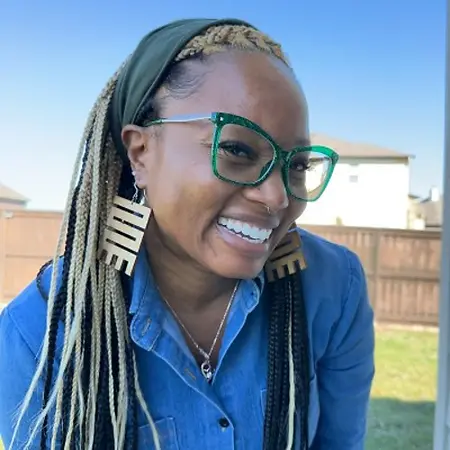
About Stephanie
Stephanie Hall-Furman is an education leader, educator, entrepreneur, leadership consultant, and school founder with 17 years of experience in education. Her professional journey began after a difficult first year of college, when she joined the United States Air Force. During her military service, she became a Military Training Instructor and discovered a passion for curriculum, instruction, mentorship, and developing people. After leaving the military, she founded a pre-kindergarten program in Hawaii focused specifically on kindergarten readiness before returning to San Antonio, where she taught middle school science and high school biology, including Advanced Placement Biology. Her classroom experience led to school administration and ultimately to school founding and educational leadership.
In 2019, Stephanie founded San Antonio Preparatory, a public charter school serving grades 5–12, with support from Building Excellent Schools. After several years in school leadership, she transitioned into instructional coaching and later expanded her work through Smart Teach Education Services and Smart Teach Solutions, focusing on educational access, equity, advocacy, consulting, coaching, mentoring, program development, curriculum design, and resource support. In 2026, she founded Committed Sports Academy, where she serves as Founder and Head of School. The private school was created to address the conflict student-athletes often face between academic development and athletic training by integrating personalized academics, competitive athletics, and intentional leadership and character development into the school day. Stephanie also serves as Founder and Executive Director of the Committed Sports Foundation, a nonprofit focused on breaking financial and access barriers so underserved youth can benefit from sports.
Stephanie's work is grounded in service, excellence, character, and meliorism—the belief that intentional human effort can leave the world better than it was found. Through the Committed Sports Foundation, she has provided scholarships to student-athletes, partnered with businesses and community organizations to provide equipment and uniforms, and developed mentorship and leadership programming. Her signature initiative, Built on the Court™, connects athletic discipline with leadership, academic achievement, and personal development. Looking toward the future, Stephanie hopes to grow Committed Sports Academy into a destination where students can pursue academic excellence and athletic development under one roof while expanding sports, mentorship, and leadership opportunities into schools and communities. Her broader mission is to create pathways that help young people discover their potential and develop into capable, confident leaders who pursue excellence, serve others, and leave the world better than they found it.
Her Interview
Ten minutes with Stephanie
01What do you attribute your success to?
I attribute my success to resilience, service, and an enduring belief in the power of education. My career did not begin with a traditional academic success story. After failing out of college during my first year, I joined the United States Air Force. That experience unexpectedly introduced me to the field that would eventually become my life's work.
During my military service, I became a Military Training Instructor, and that role taught me that leadership is about far more than giving orders. I discovered the power of curriculum, instruction, mentorship, and helping someone progress from knowing very little to becoming confident and capable. That realization sparked a lifelong passion for education.
Every chapter of my career has continued to build on that foundation. From founding a pre-kindergarten program in Hawaii and teaching science in San Antonio, to becoming an assistant principal, founding San Antonio Preparatory, working as an instructional coach, and eventually founding Committed Sports Academy, each experience has taught me something different about students, educators, families, and communities. I have learned to turn setbacks into opportunities, remain committed to my purpose, and continue building when the path is uncertain.
Ultimately, I believe my success comes from being willing to serve, learn, adapt, and keep going. My experiences have strengthened my conviction that education can transform lives, and that conviction continues to drive everything I build.
02What’s the best career advice you’ve ever received?
One of the most influential people in my professional journey has been Justina Gonzalez, whom I consider one of my greatest champions and advocates. Our relationship began when she came to work with me at Ethic Prep, but it quickly became much more than a professional connection.
Justina believed deeply in my vision and consistently made sure other people knew about my work. She shared my accomplishments, promoted my programs, connected me with opportunities, and advocated for me in rooms I was not even in. Speaking engagements, introductions, and other opportunities often came because she was willing to tell people about who I was and the work I was doing.
Even though we no longer work together, she continues to champion me and my mission. Her example has shown me the power of having someone who sees your potential, believes in your vision, and is willing to open doors for you.
For me, mentorship is not simply about receiving advice. It is about having someone who understands the nuances of a profession and is willing to share the lessons that are rarely taught through formal training. That experience has shaped how I approach leadership and how I hope to support the next generation of educators and entrepreneurs.
03What advice would you give to young women entering your industry?
The first thing I would tell young women entering education is to find someone who is seasoned in your field and learn as much as you can from that person. A seasoned professional can give you the tips, strategies, advice, and practical insight that you may not receive through formal education or professional development.
I love education to my core—it is my first love—but I also recognize that our field does not always do a strong enough job of training and developing people who are new to the profession. If you can find a woman who is willing to work alongside you and explain the things that the school may not teach you, the things communication training may not cover, or the lessons that you simply will not learn in a professional-development session, you will be much better prepared for success.
Find someone who can share the nuances of the profession with you. Learn from their successes and mistakes, ask questions, remain open to feedback, and take advantage of the wisdom of people who have already walked the path. Having the right mentor and advocate can make a tremendous difference in your career.
04What are the biggest challenges or opportunities in your field right now?
One of the greatest challenges I have encountered in education is building systems and institutions that truly meet the needs of students, educators, and families. My own career has not followed a straight line, and founding and leading schools has required resilience, persistence, and the ability to navigate uncertainty. I have learned that sometimes you have to recognize when one chapter has reached its conclusion and have the courage to build something new.
At the same time, I see tremendous opportunity to rethink how education is delivered. Student-athletes, for example, are often expected to balance demanding academic schedules with practices, travel, and competition. I founded Committed Sports Academy because I believe there is a better way. By integrating personalized academics and athletic development into the same school day, we can create an environment where students do not have to sacrifice academic growth for athletic development.
I also see significant opportunities to expand access beyond the walls of one school. Through the Committed Sports Foundation, Smart Teach Solutions, Smart Teach Education Services, and Built on the Court™, I can reach students through scholarships, school partnerships, mentorship, curriculum, coaching, and community programming. The challenge is making those opportunities sustainable through funding, strong partnerships, committed educators and coaches, and continued work to address inequities. I see those challenges as opportunities to build better systems and create more pathways for young people to discover what they are capable of becoming.
05What values are most important to you in your work and personal life?
Our core values are service, excellence, character, and meliorism—the belief that we should leave the world better than we found it.
I want to be a person of good character and someone who serves others regardless of how I am treated. I have experienced situations where I was treated very poorly, but I have worked hard to heal and to make a conscious decision not to treat people the way they have treated me. Character means choosing who I want to be even when circumstances are difficult.
I also want to pursue excellence in everything I do and in everything I bring into a space. I cannot control other people, but I can control my own character, effort, and standards. Ultimately, I want my work and my life to make a meaningful difference. I want to serve others, pursue excellence, develop strong character, and leave the world better than I found it.
Join Influential Women and start making an impact. Register now.