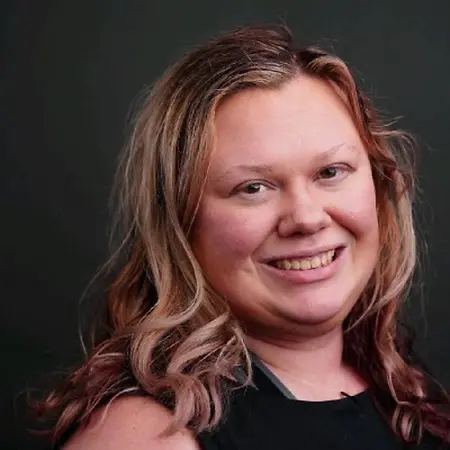
Her Story
About Stephanie
I originally knew I always wanted to work with kids. I started my college career in education, but it didn't seem like quite enough, so I took a psychology course and really fell in love with that. I switched my major over and thought I wanted to work with juveniles. After I graduated undergrad, I found a summer camp working with autistic youth. I thought it was just 8 weeks, but that experience has shaped me - I fell in love with this population. I had a really great mentor at the time who encouraged me to get a master's, so I applied and started in an accelerated 16-month program. I decided to get my licensure and then pursue my PhD, which is where I started to get the idea for Spectrum Driving. I was working with a client one day who looked at me and said, 'Stephanie, I can't drive. Don't you know I have autism?' I told him that's not the case, and my thought was, if one person felt this way, how many others feel this way? That launched my dissertation and brought me to where I am today. I come from a very supportive place - I always say I just play one little part in someone's journey. I look forward to watching someone heal, learn new skills, and feel confident in their own skin.
Her Interview
Ten minutes with Stephanie
01What do you attribute your success to?
I am very thankful I had a very supportive family. Growing up, I was diagnosed with dyslexia, so my family was very supportive in advocating for my needs in school and finding the services that I needed myself. I think through them, they led me there. They led me to also be able to advocate for myself as I got older, which I think ultimately has led to why I'm in this field, because I enjoy advocating or supporting people, learning how they can advocate for themselves, or knowing they are more than just a disability.
02What’s the best career advice you’ve ever received?
I came back from a bereavement, and my supervisor at the time was like, 'Stephanie, you give yourself 110%. You can give yourself 90%, and you're still a good clinician.' I think, you know, just taking care of yourself, and just giving the best version of yourself for that day.
03What advice would you give to young women entering your industry?
I think my biggest advice is have a seat at the table. Make room at the table. Bring it to the table, because women have great ideas. We're very creative. We have a passion, and our voice needs to be heard, or at least it should be heard more often.
04What are the biggest challenges or opportunities in your field right now?
I think there's still, when you start getting a little higher in more of the government work, there's a lot of red tape and a lot of politics that are still in place there. I think as I have personally seen as a woman, as you get up there and get more into it, there's more men in place, and I've often been mansplained things, even though I know I'm more than capable of understanding what has just been said there. So I think that is still something that typically occurs, especially as you start moving up the ladder.
05What values are most important to you in your work and personal life?
I very much value connection, I think, in both areas. Quality time at home. But I value connections, you know, not just with the clientele that I serve, but also just with my coworkers. My staff often laugh, because I always have my door open, and then I just kind of make a loop around the office in the morning, and then afternoon, just to say hi and check in with them. I'm not even asking about work, I just like to know them on that personal level, too.
Join Influential Women and start making an impact. Register now.