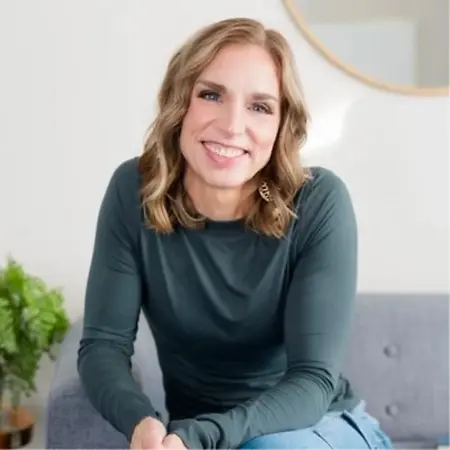
Her Story
About Stephanie
I started my career in community mental health over 15 years ago, then moved into specialized work with youth in the foster care system, providing trauma-focused cognitive behavioral therapy and supporting foster parents in helping children find safety in their placements. After working in a group practice, I took the leap about 18 months ago to open my own private practice called Living in Alignment. This has been my greatest professional achievement so far because going out on my own was scary but empowering, and it required me to get comfortable with the discomfort and vulnerability of building something independent. My practice is entirely telehealth-based, which allows me to serve clients in both Wisconsin and Utah where I'm licensed. I work specifically with high achievers and athletes who struggle with anxiety, perfectionism, people-pleasing, and overthinking. I use acceptance and commitment therapy, a mindfulness-based, values-based approach that is very action-oriented and aligns well with people who already have active, disciplined lifestyles. Beyond seeing clients, I spend time networking, learning marketing (which we don't learn in grad school), working on social media and blogging, and doing my own mindfulness and meditation practice. As a lifelong athlete myself who trains my body like I train my mind, I genuinely live what I teach. I'm passionate about helping people understand that we don't spend enough time training our minds, and that so much about performance is mental, not just physical.
Her Interview
Ten minutes with Stephanie
01What do you attribute your success to?
There was a time in my career where I had to decide whether I was going to let the fear of going out on my own keep me stuck, or if I was going to do it scared, and I chose to do it even if I was scared of the results. I built my practice not only on professional skills, but on my own personal experience. I think being willing to be uncomfortable and to move through that discomfort has been key. I work with people who are high achievers and athletes who know how to grind it out, but they hesitate when things get uncomfortable, so we have to learn to move through the discomfort and ruthlessly prioritize the things that help us grow instead of hesitating. It really comes down to leaning into discomfort instead of avoiding it.
02What’s the best career advice you’ve ever received?
Find something that you're genuinely passionate about and do more of it, and to do it scared if you have to, because the fear will cause you to freeze, and you might just have to do it scared. If the reward is big enough, the risk is usually worth taking.
03What advice would you give to young women entering your industry?
I would say to find something that you want to specialize in. I know there's a lot of people in mental health who can be a generalist, which is fine, but if there is something that you're really passionate about, be willing to specialize. It comes with discomfort because there's fear of eliminating a bunch of people that you would want to be able to help, but finding the thing that I really love and am passionate about and pursuing that has helped me to really grow both personally and professionally. I would encourage them to be bold and have the conviction to go after something that you're genuinely passionate about.
04What are the biggest challenges or opportunities in your field right now?
There's a growing demand for mental health support, especially among high performers and athletes, but there's still a stigma around asking for help. There's still hesitancy in that realm, which remains a barrier. A lot of people I work with are used to being the ones who push through and perform under pressure, so admitting that they're struggling with anxiety or perfectionism can feel like a threat to their identity, or they just don't want to admit it. Helping people to unlearn the idea that needing support is a weakness rather than a sign of strength and self-awareness is an ongoing challenge. But I think there's also an opportunity with some of the younger generations because they're more open to it. They've grown up in more of a transparent world, so they're more willing to say they need help. Because the world of athletics and high-performing people is so intense, there are more people becoming specialists in this area. I think it's an opportunity to say that we've kind of turned our eye away from this in the past, and so much about performance is mental and not just physical, so we have to learn to train our minds, not just our bodies.
05What values are most important to you in your work and personal life?
I would say personal growth, my health, and staying resilient are most important to me. Life can be hard, even when we're doing everything right, so we get to choose how we experience it. I try to live that out by staying willing to be uncomfortable, staying honest with myself, and treating personal growth as kind of a non-negotiable. As a lifelong athlete, I focus on my own health and wellness while helping others do the same.
Join Influential Women and start making an impact. Register now.