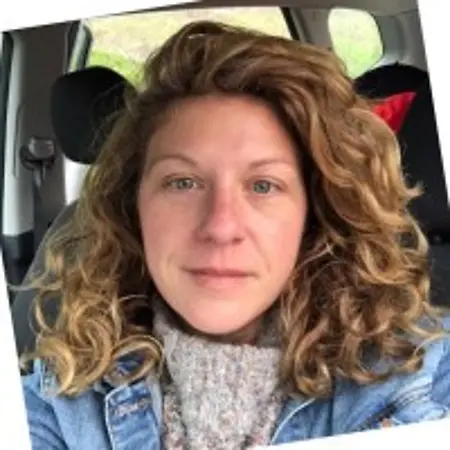
Her Story
About Stephanie
Stephanie Webb, Ph.D., is an Environmental Planner and Science-Policy Leader specializing in oceans, coasts, and fisheries. With more than 15 years of experience, she has built a career at the intersection of environmental policy, marine resource management, stakeholder engagement, and strategic planning. Her expertise spans state and federal government, academia, nonprofit organizations, and local communities, where she has led collaborative initiatives that integrate science, policy, and public engagement to address complex environmental challenges.
Inspired by a commitment to protecting coastal communities and marine ecosystems, Dr. Webb has developed expertise in environmental planning, regulatory analysis, marine spatial planning, fisheries management, climate policy, and interdisciplinary research. As a California Sea Grant Fellow, she contributed to statewide environmental policy initiatives, water resource protection, and strategic planning while collaborating with agencies, researchers, and community partners to advance science based decision making. Throughout her career, she has also led research initiatives, managed environmental programs, secured grant funding, facilitated stakeholder engagement, and developed policy recommendations that strengthen conservation outcomes and organizational effectiveness.
Dr. Webb earned a Ph.D. and M.A. in Environmental Studies from the University of California, Santa Cruz, a Master of Urban and Regional Planning from Eastern Washington University, and a bachelor's degree in Business Administration with concentrations in Finance and Economics from Missouri Western State University. She is passionate about helping organizations navigate complex environmental and policy challenges through systems thinking, collaborative leadership, and innovative problem solving. Through her work, she continues to bridge science and policy while advancing resilient communities, healthy ecosystems, and meaningful organizational change across government, academia, and community organizations.
Her Interview
Ten minutes with Stephanie
01What’s the best career advice you’ve ever received?
The best career advice I have ever received is that you cannot please everyone all the time. This is especially true when working in policy or natural resource management, where there is rarely a single, perfect solution. I have learned that there is no silver bullet, and it is important to remain open to new information, adapt when circumstances change, and be willing to change your mind when the facts support a different approach.
02What advice would you give to young women entering your industry?
My advice to young women entering the industry is to negotiate. Ask yourself, “Would a white man negotiate for this?” and do not be afraid to advocate for yourself. Look beyond salary and consider the entire compensation package, including paid time off, signing bonuses, research budgets, professional development opportunities, and other benefits. Salaries may have limits, but the overall compensation package is often negotiable, so know your value and ask for what you deserve.
03What are the biggest challenges or opportunities in your field right now?
The biggest challenges and opportunities in my field right now involve sector rivalry and conflict among stakeholders, including disagreements within the same sectors. Many complex environmental problems cannot be solved through policy alone; they require political influence, financial resources, and greater equity among stakeholders. I believe the most effective approach is to balance the three E’s: environment, economy, and equity. Addressing these interconnected priorities creates opportunities for more collaborative, sustainable, and inclusive solutions to the environmental challenges we face.
Join Influential Women and start making an impact. Register now.