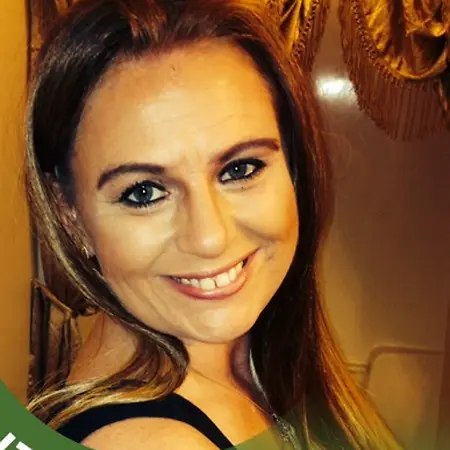
Her Story
About Stormy
Stormy Deere is a dedicated addiction counseling with and elderly caregiving professional with over 26 years of experience supporting elderly clients in their homes and three years of specialized work in addiction counseling. She currently serves as a Licensed Chemical Dependency Counselor Intern, where she provides compassionate care to patients battling opioid use disorder.
Stormy's long-term goal is to specialize in juvenile addiction, driven by a deep commitment to reaching young people before substance use takes hold. She holds an Associate degree in Addiction Counseling and is currently a junior at the University of North Texas, pursuing a Bachelor's degree in Rehabilitation Studies with a minor in Addiction Studies. She plans to complete her degree within two semesters and continue on to earn a Master's degree, ultimately working directly with at-risk youth.
Her path to this field was nontraditional—she describes it as learning "the hard way" and doing things backwards. But rather than letting her past define her, she used it as fuel. She waited until she had 20 years of sustained sobriety before entering the field, ensuring she could help others without compromising her own recovery or being triggered by the work.
Stormy's professional philosophy is rooted in kindness, humility, and active listening. She believes in never judging others, meeting people where they are, and prioritizing her own mental health through therapy—because she knows she can't pour from an empty cup. Her lived experience isn't a weakness; it's her greatest strength, and it informs every client she serves.
Her Interview
Ten minutes with Stormy
01What do you attribute your success to?
I attribute my success to learning things the hard way. I didn't take the traditional path—I did much of my life backwards, stepping away from school and only returning to college later in life. But for some people, growth doesn't come from textbooks; it comes from living, failing, and getting back up. As long as you learn from your mistakes, no experience is wasted.
Now that I'm older, I'm more focused and clear on what I want. I've been clean for 20 years, and that journey led me directly to addiction counseling—not in spite of my past, but because of it. I was treated poorly by counselors when I needed help most, and I vowed to do better for others. That wound became my mission. My success isn't despite my struggles—it's because of them.
02What’s the best career advice you’ve ever received?
The best career advice I ever received was simple but transformative: 'Do what you love, so you can love what you do.' At first, it sounded like a cliché—but over time, I realized it’s not just about passion. It’s about aligning your work with your values, your strengths, and the impact you want to have. When you genuinely care about the work, the long hours and hard days feel meaningful, not draining. It turns a job into a calling—and that makes all the difference.
03What advice would you give to young women entering your industry?
My advice to young women entering this field: listen more than you speak—sometimes that's all someone truly needs. Stay humble, and never judge; everyone has a story you haven't lived. Be mindful not to project your own experiences onto your patients—meet them where they are.
Equally important: prioritize your own mental health. See a therapist, set boundaries, and process the weight you carry—it makes you stronger, not weaker. And finally, develop thick skin. In this work, people may say hurtful things, but remember it's rarely about you—it's about their pain. Stay kind, stay grounded, and don't lose yourself in the process."
04What are the biggest challenges or opportunities in your field right now?
The biggest challenge I face right now is balancing academics with the realities of the field. I'm a straight-A student, but I also bring a lot of lived experience to the table—something many incoming freshmen lack. They often haven't yet developed the deeper understanding of why people make the choices they do. That perspective is critical in fields like social work or family services, where it's sometimes better to connect families with resources rather than immediately removing children. Bridging that gap between textbook knowledge and real-world compassion is both my greatest challenge and my greatest opportunity."
05What values are most important to you in your work and personal life?
My core values are rooted in integrity and compassion: treat others as you'd want to be treated, avoid judgment, and never take life for granted because it's short. I strive to be the person I'd want to see in the world—offering kindness without expecting it in return, though I hope to receive the same.
At the same time, I believe in maintaining healthy boundaries between work and personal life. Taking care of yourself isn't selfish—it's essential. You can't truly support others if you're running on empty, so I prioritize my own well-being to show up as my best self for everyone else."
Join Influential Women and start making an impact. Register now.