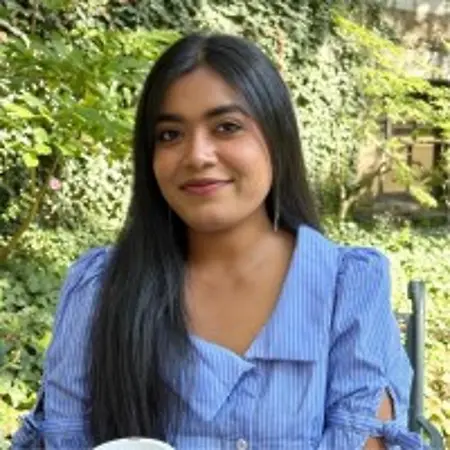
Her Story
About Sumaiya
My professional life looks a bit stressful, but also at the same time enjoyable, because I like my classroom and the diverse student community that I teach at University of Massachusetts Boston. The vibrant community these students bring to the classroom - I feel like it overweighs the stress that I am going through. I can learn a lot from students' day-to-day life and their experiences. As a graduate teaching fellow, I teach Composition 101 for undergrad students while also managing my own work as a grad student. I'm currently working on my research project for my final project, which involves arranging meetings with my supervisors and professors. In general, it's stressful, but at the same time enjoyable too. I can learn a lot, and it keeps me alive. It's a good balance of both stressful environment and making my learning journey enjoyable. I take my professional life as a teacher, as a composition teacher, very seriously, and I love what I'm doing.
Her Interview
Ten minutes with Sumaiya
01What do you attribute your success to?
First of all, I would definitely have to talk about my mom and dad, because I never had that impression from my family that I'm a girl and I cannot achieve anything because of my gender and sexuality. My parents let me feel that I can do whatever I want - my identity doesn't matter, my gender doesn't matter in that way. If you want to be a pilot, do that. If you want to join the Air Force, do that. If you want to join the academia, do that. Your identity is not gonna label what work you want to do, or what you want to achieve. So it all goes to my parents. And after my parents and my family, I would say it's my mentors and my friends who have always been there throughout my journey. I have experienced a lot of difficult times, but I have always had them by my side, supporting me - my mentors, my supervisors, my advisors, my professors, my friends, and of course, my family. So I want to dedicate myself to them.
02What’s the best career advice you’ve ever received?
The best career advice that I have received so far, I would say, is from my graduate program advisor. I can name him - it's Professor Dr. Hadi Vanath from University of Massachusetts Boston. My professor, Dr. Vanath, said that nothing comes easily, and I have to work really hard to get where I wanna go. So if someone says that it's really easy and it all depends on luck, it's not true. You have to work really hard, and that keeps me going. This motivation that, okay, I cannot solely rely on my luck and think that everything's gonna work out for me as it is. No, I have to work really hard to get or achieve whatever I want to achieve in my life.
03What advice would you give to young women entering your industry?
I know people think a lot, like, women entering into the professional academia life - people think that it's really hard for women to get in there. Somewhere it's true. I think for women it's really difficult, or not just in the academia setting, in every aspect of our life, it has been really crucial and difficult for women to achieve what they want in their life than men. To achieve that, if someone wants to enter that academia setting, I would say just believe in yourself. You have people on your side. Your identity, your gender doesn't affect something, or doesn't make you less of a man, or less of a person than other people. So just believe in yourself, keep hard working, and keep thriving - you can do this. There are many influential women, and I think women are the smartest themselves. So I would suggest keep working, do the hard work and keep trying, keep thriving, keep growing - you can do it.
04What are the biggest challenges or opportunities in your field right now?
As an international student, if I want to join the industry right after I finish my master's, the possibilities are really narrow, because we do not get the opportunities as domestic students. We have to have someone who can sponsor us for our H-1B visa, because right now I'm on my F1 visa, so I have to change my visa to H1B status in order to do a job here in the US. Otherwise, I cannot do that. So I think doing a PhD is the safest option for me to continue my journey and move forward with the ambition and the career that I want to join in or build for myself. It's a bit critical if I want to join the academia setting right now after my master's. I cannot do that, or it's quite impossible for me to get a job from a company or someone that can sponsor me with my H-1B visa status. But after doing a PhD, I'm not saying it's gonna be easier for me, but I will have more opportunities, because I can join as an assistant professor then, or as a postdoc position. So there's gonna be more opportunities open up for me after I do my PhD.
05What values are most important to you in your work and personal life?
I think the value that I have to balance my personal and professional life - in my past, I have experienced that when I value one side of my life, like my personal life more than my professional life, it kind of affects my professional life negatively or positively, whatever it is. But if there is a balance between my professional and my personal life, then I can carry both of my personality well. So it really matters a lot that you train yourself in a way that you can distinguish your personal life and professional life in a way that doesn't affect each other's personality in a negative way. So it's very important, and that's what I'm - I'm not saying that I totally mastered it yet, but I'm trying to manage it and learn how to separate my personal and professional life so that I can maintain both of my life in a well manner.
Join Influential Women and start making an impact. Register now.